Patents
US Patents
6. Multicoated tunable optical devices
Published:
Abstract:
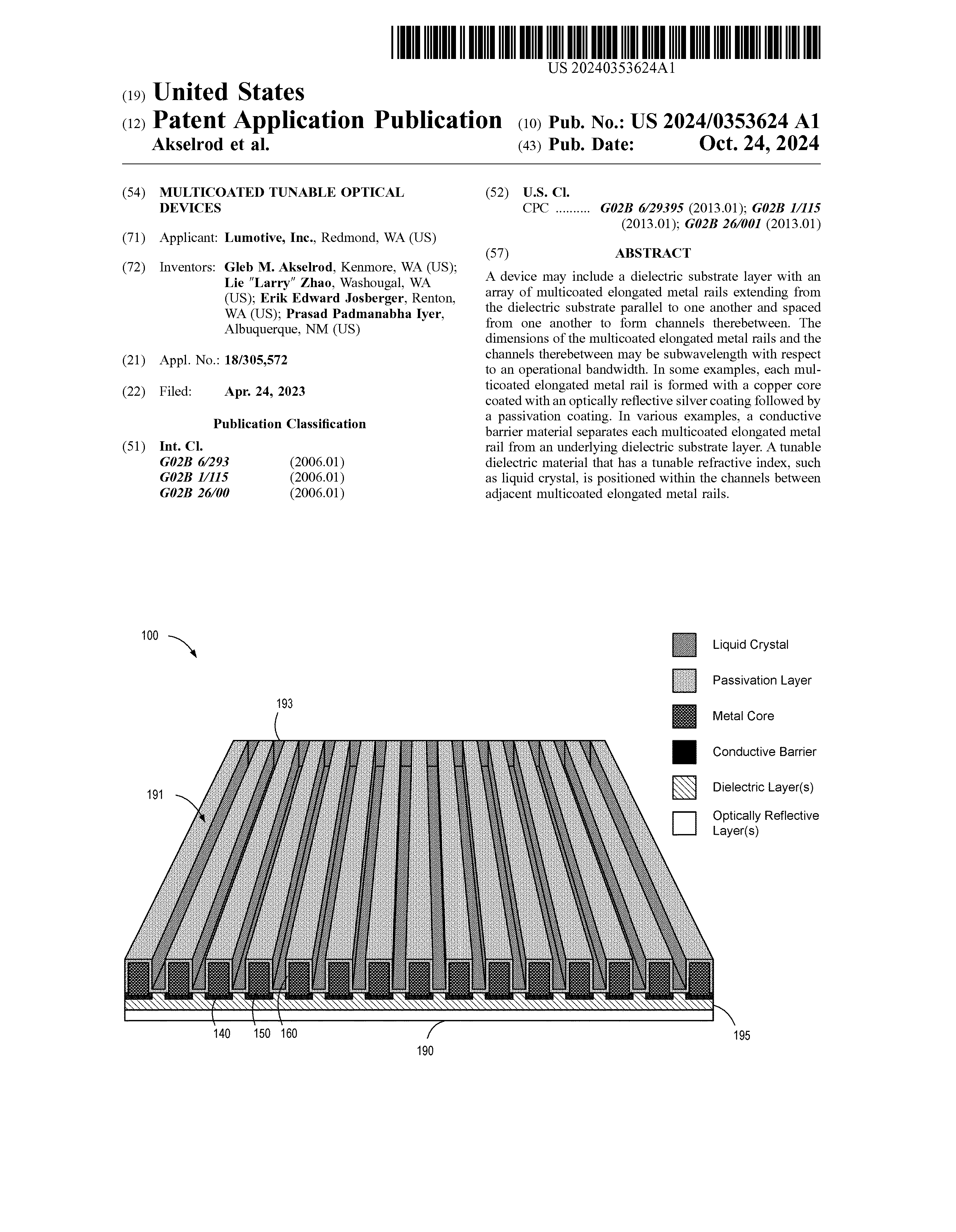
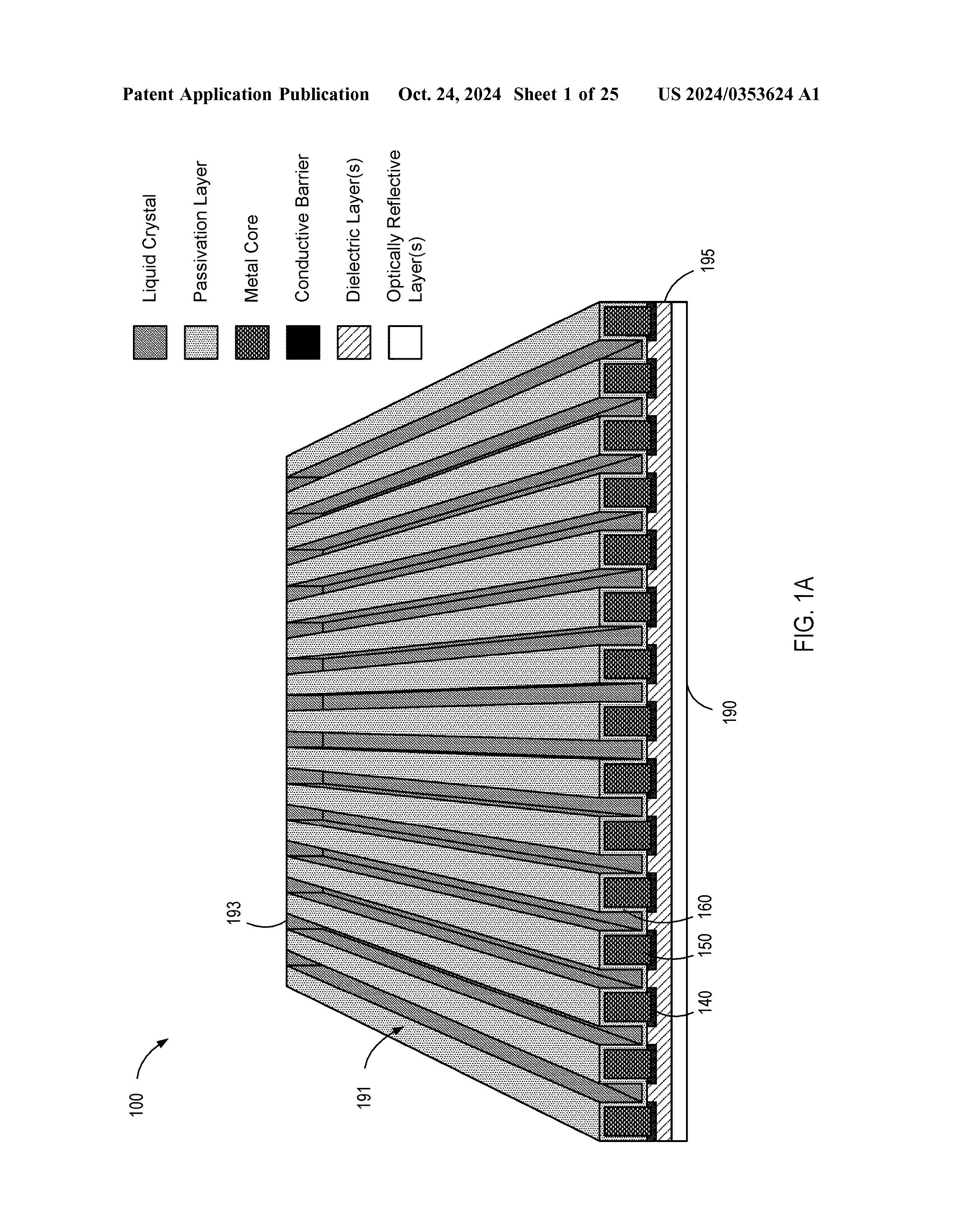
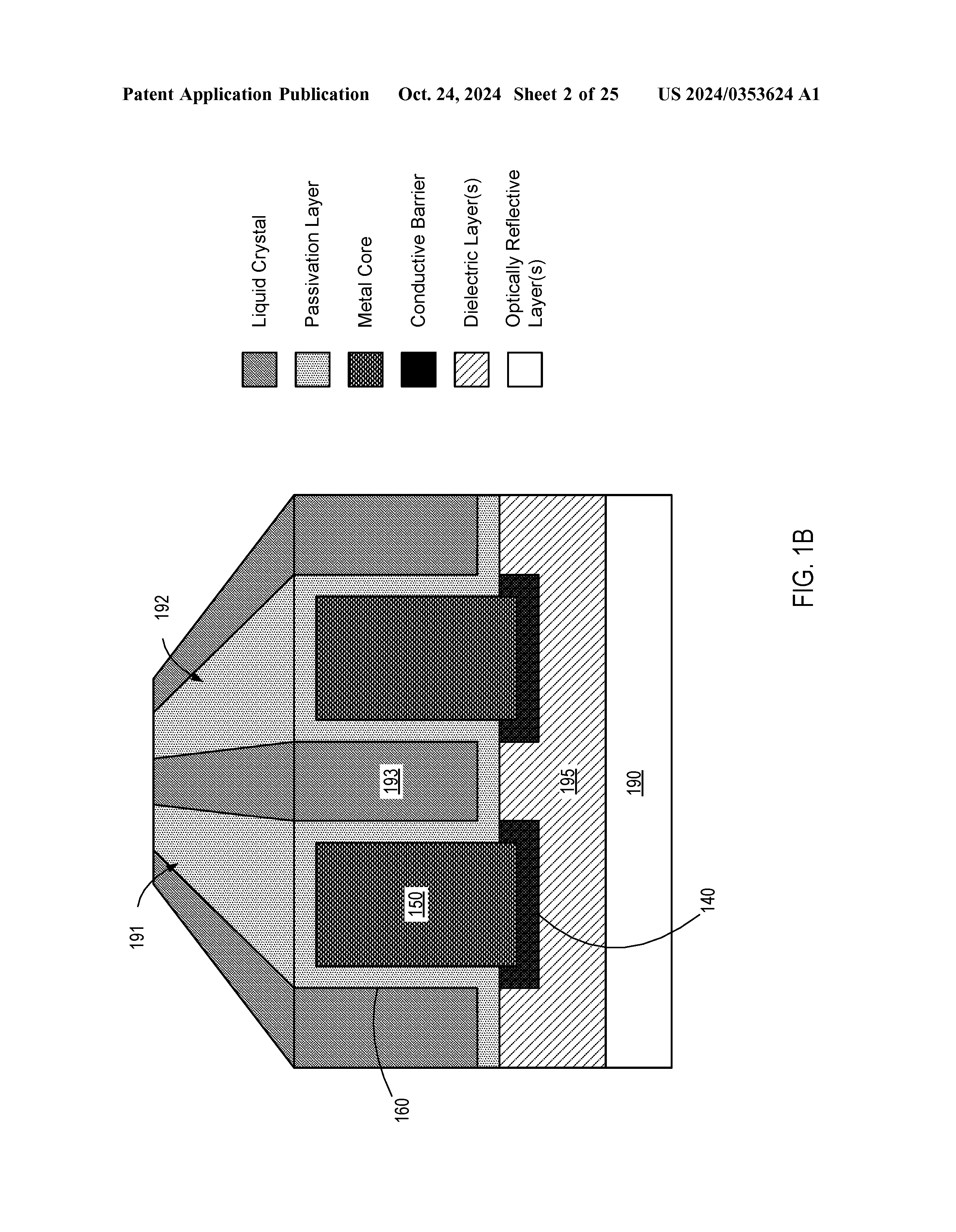
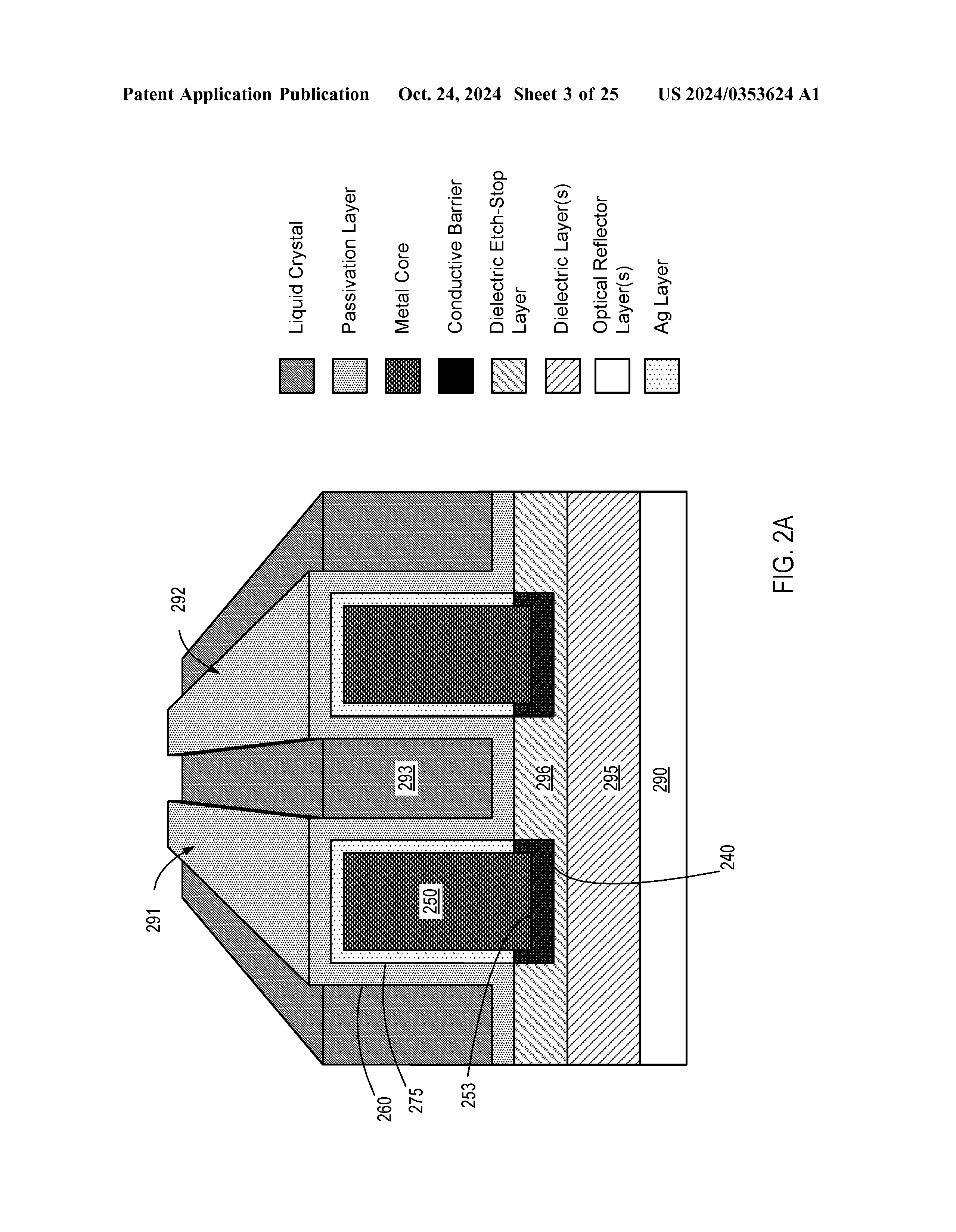
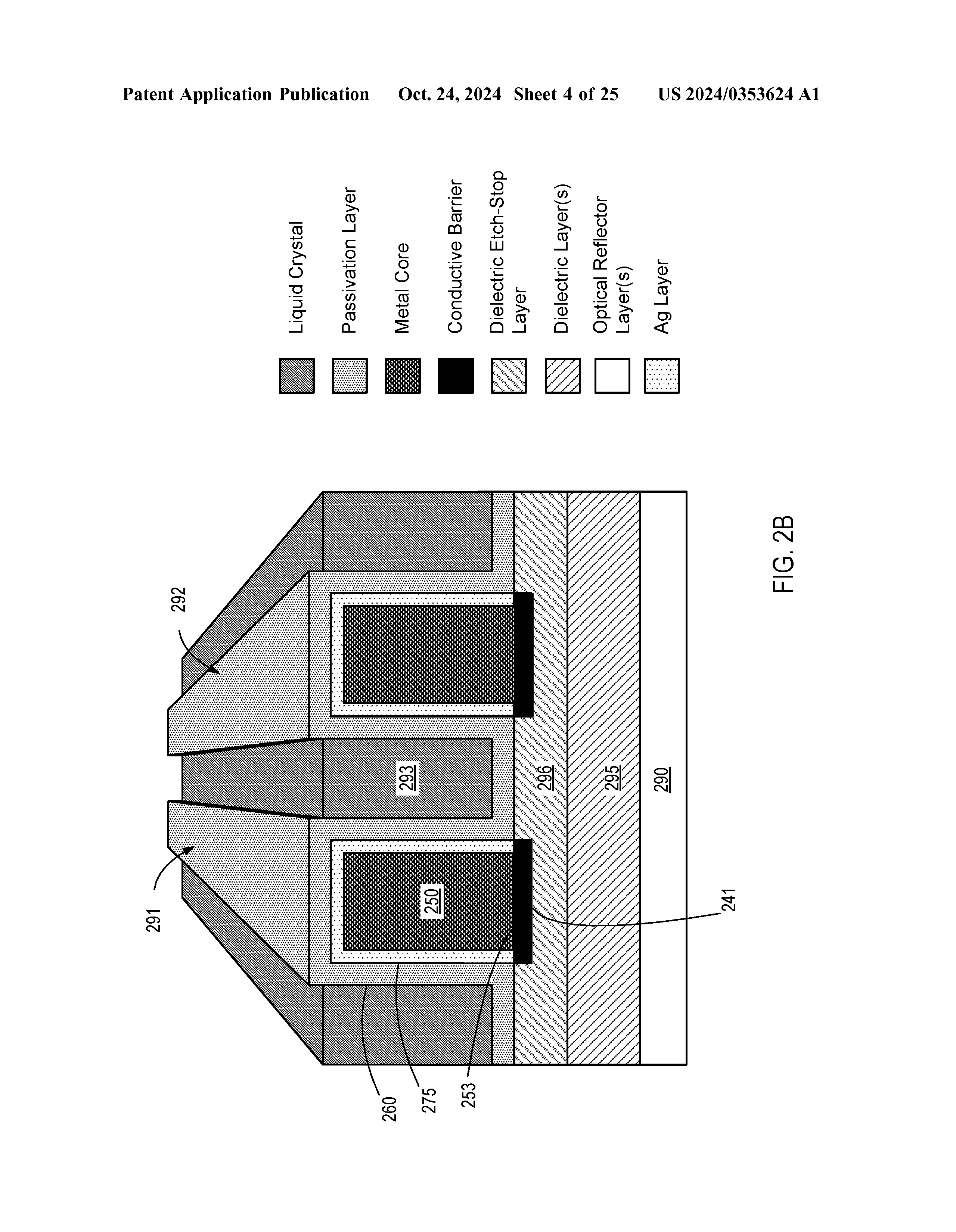
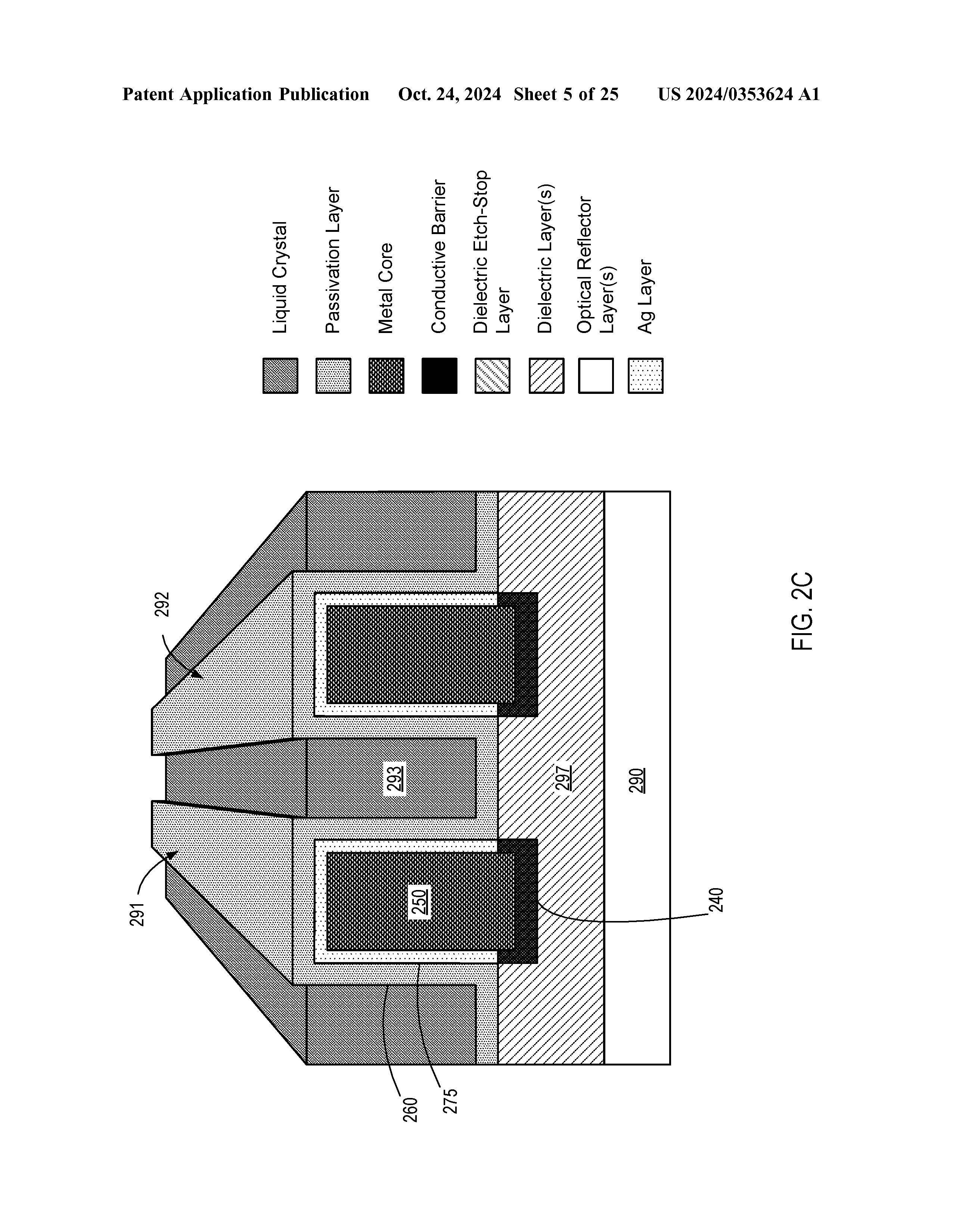
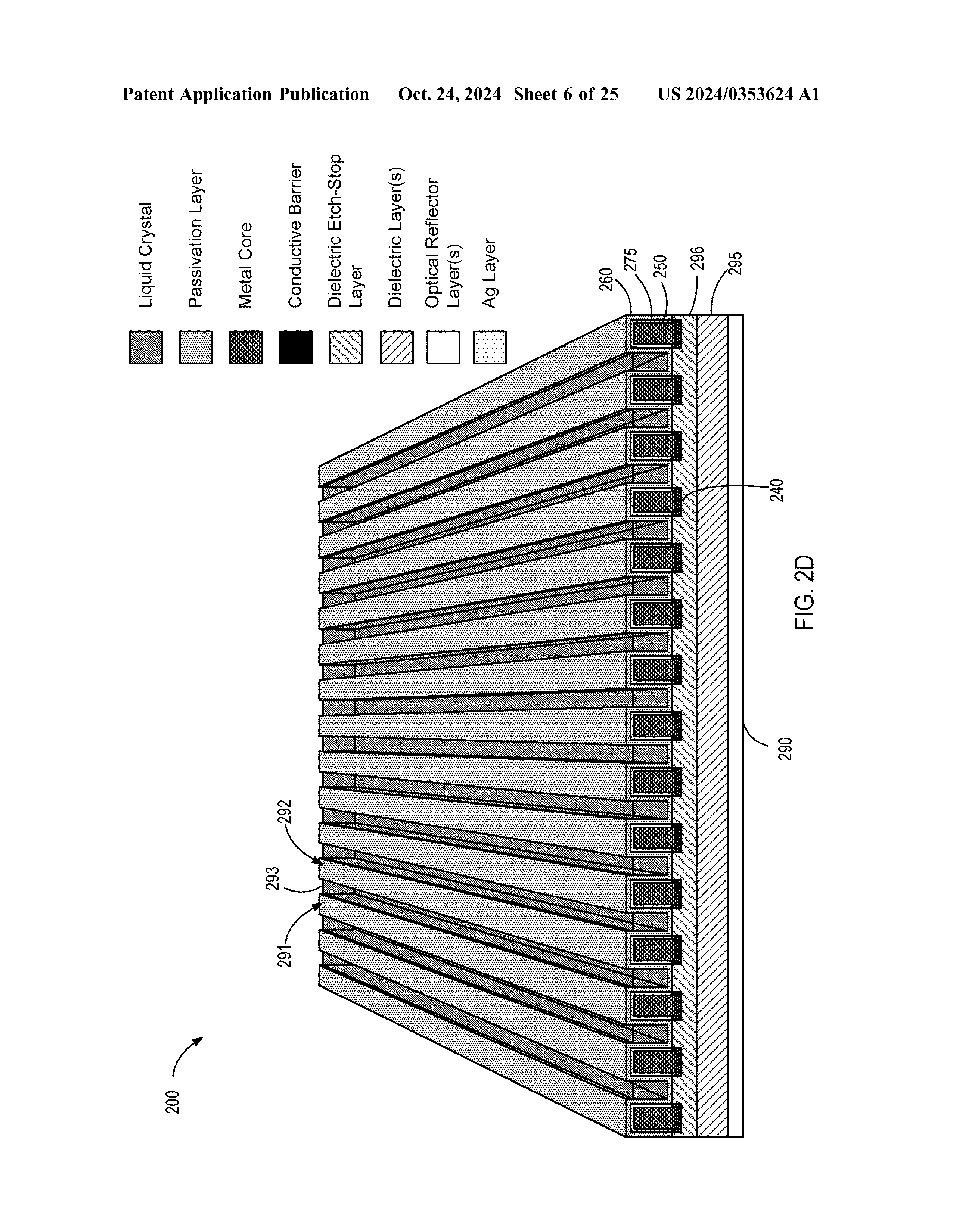
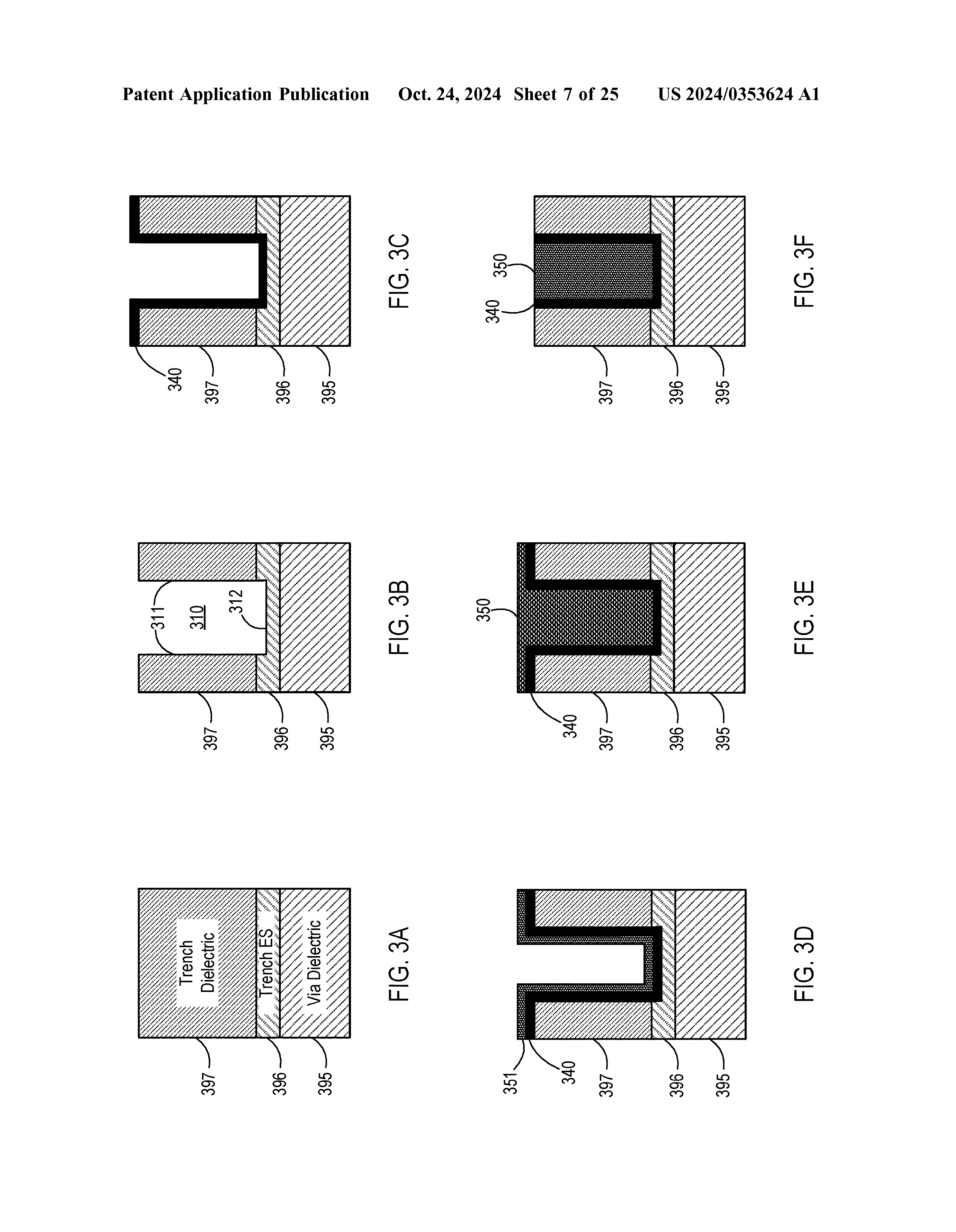
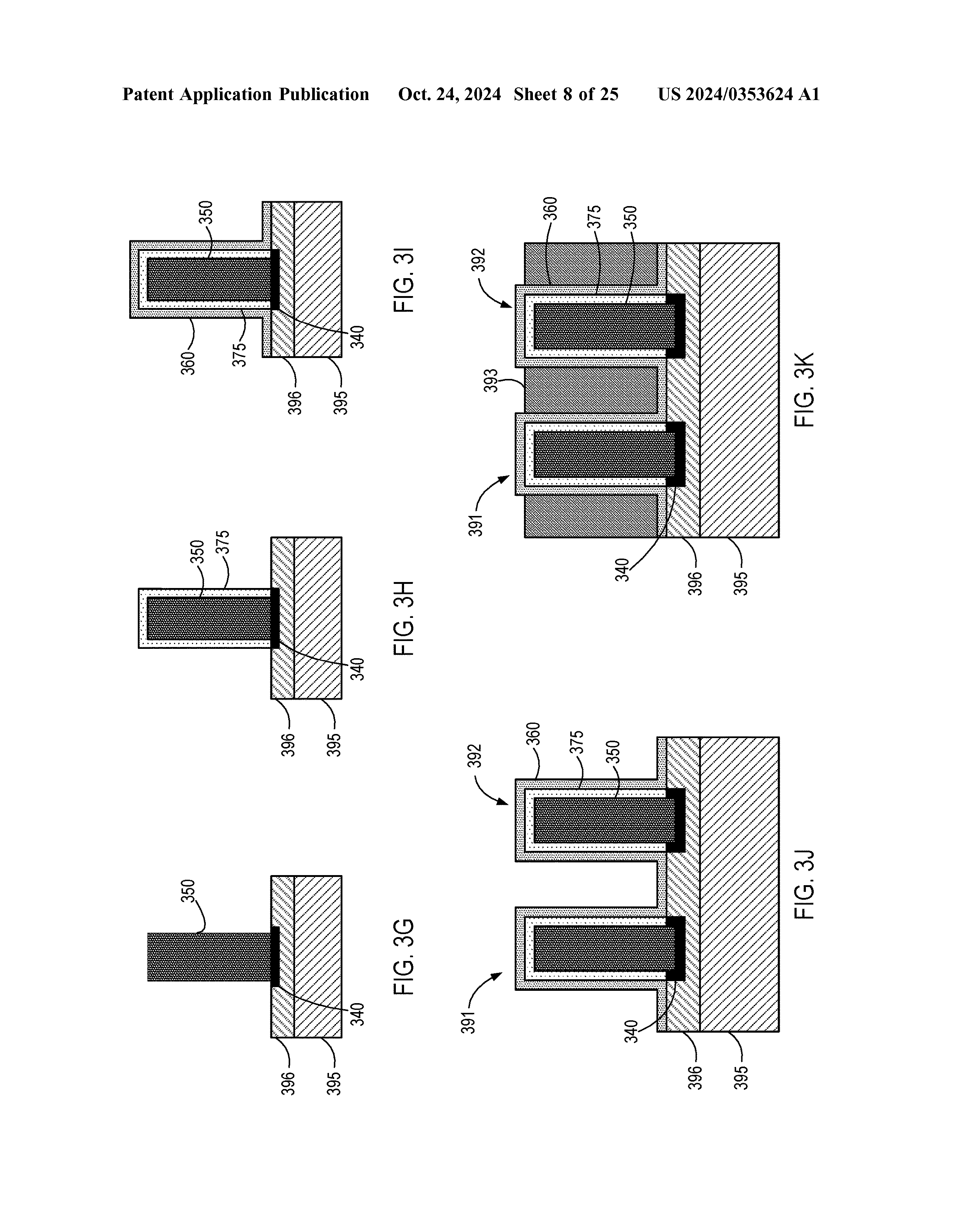
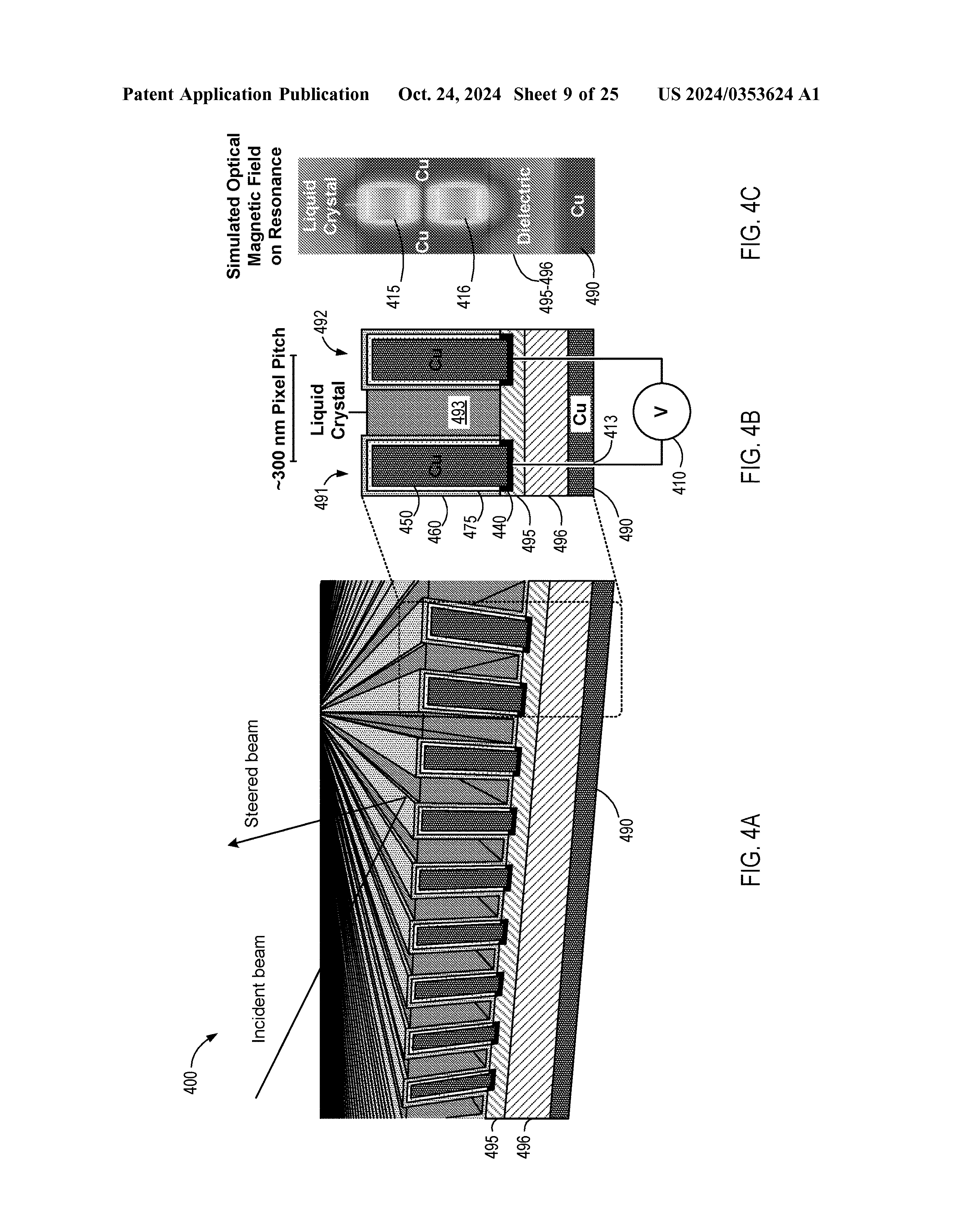
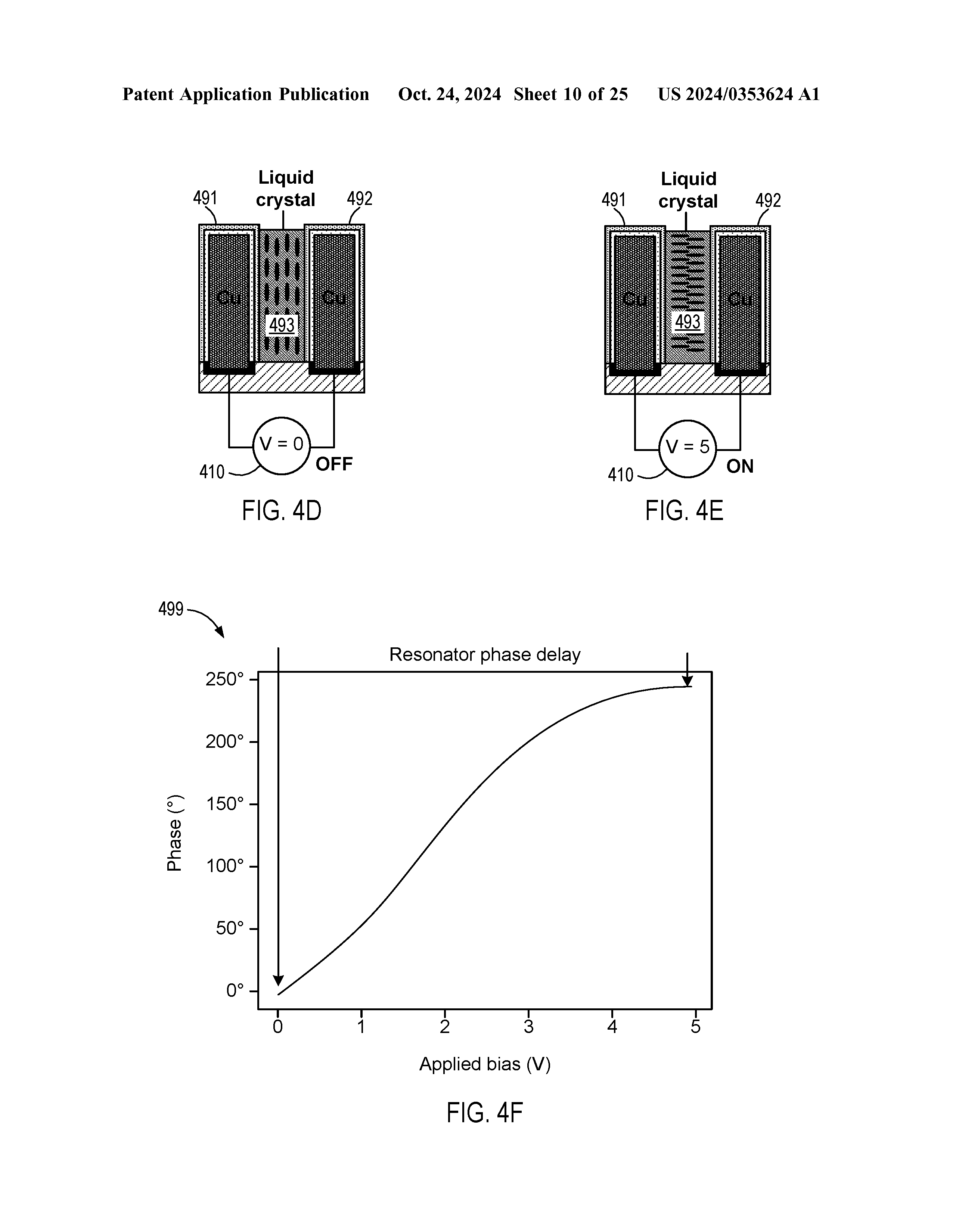
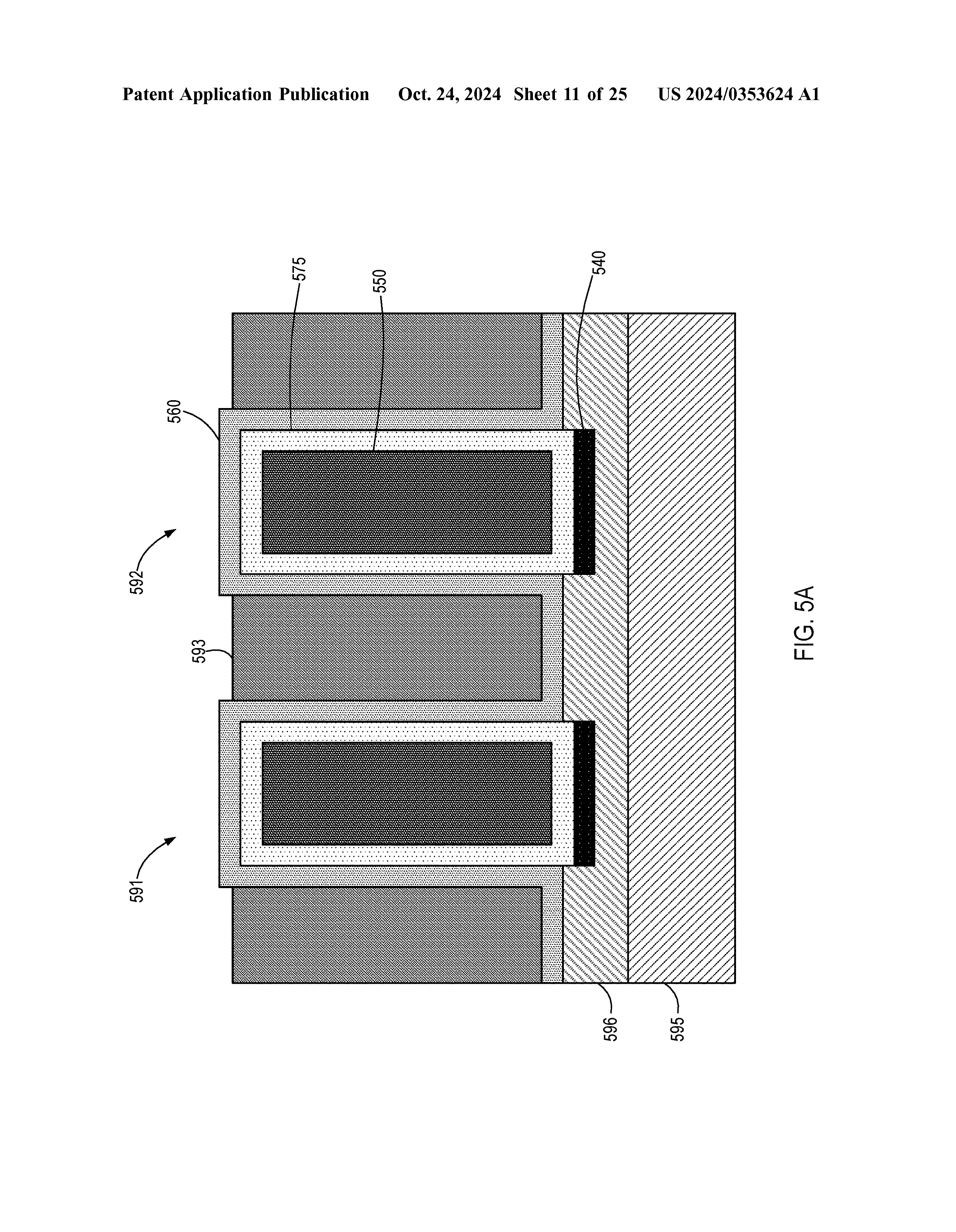
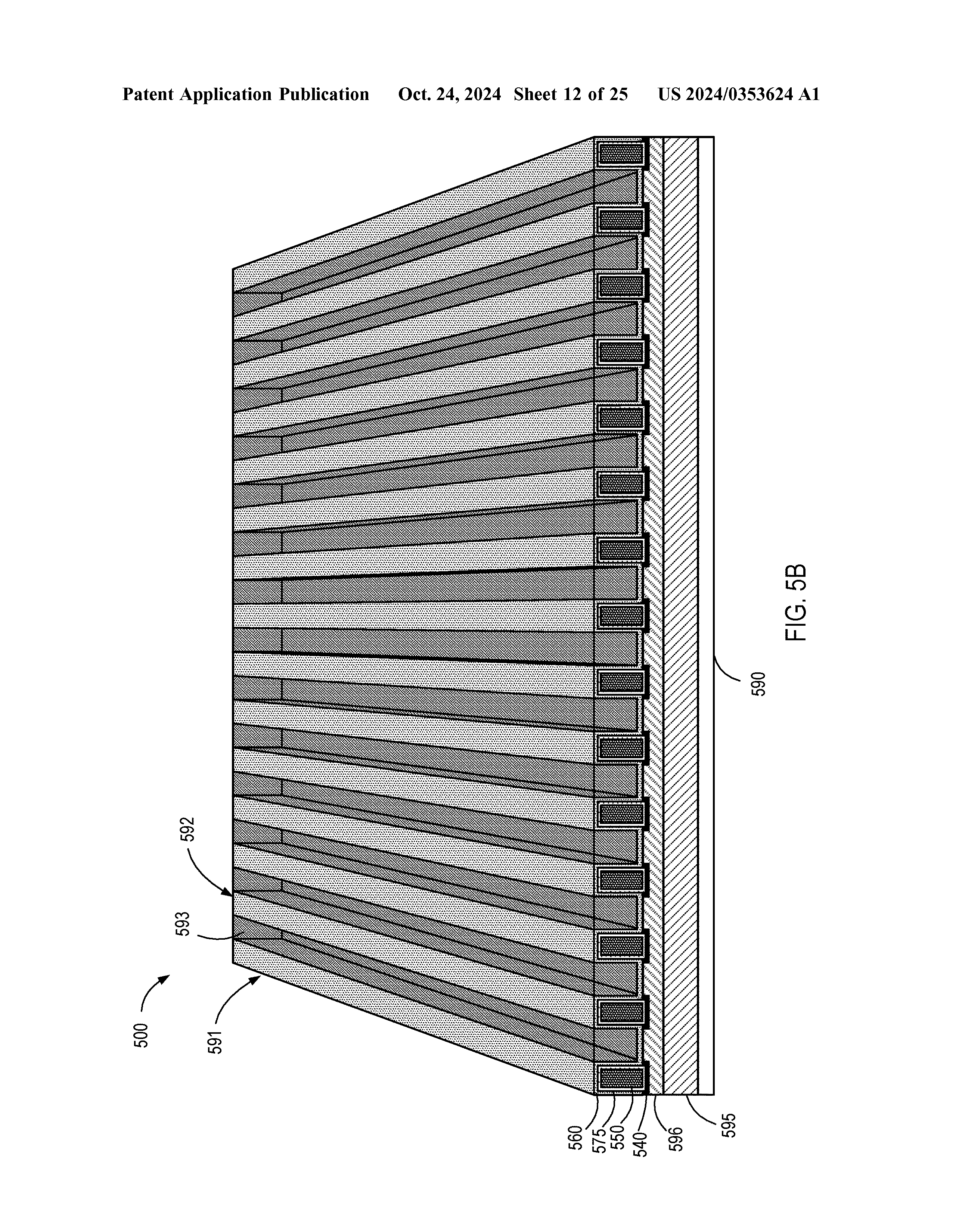
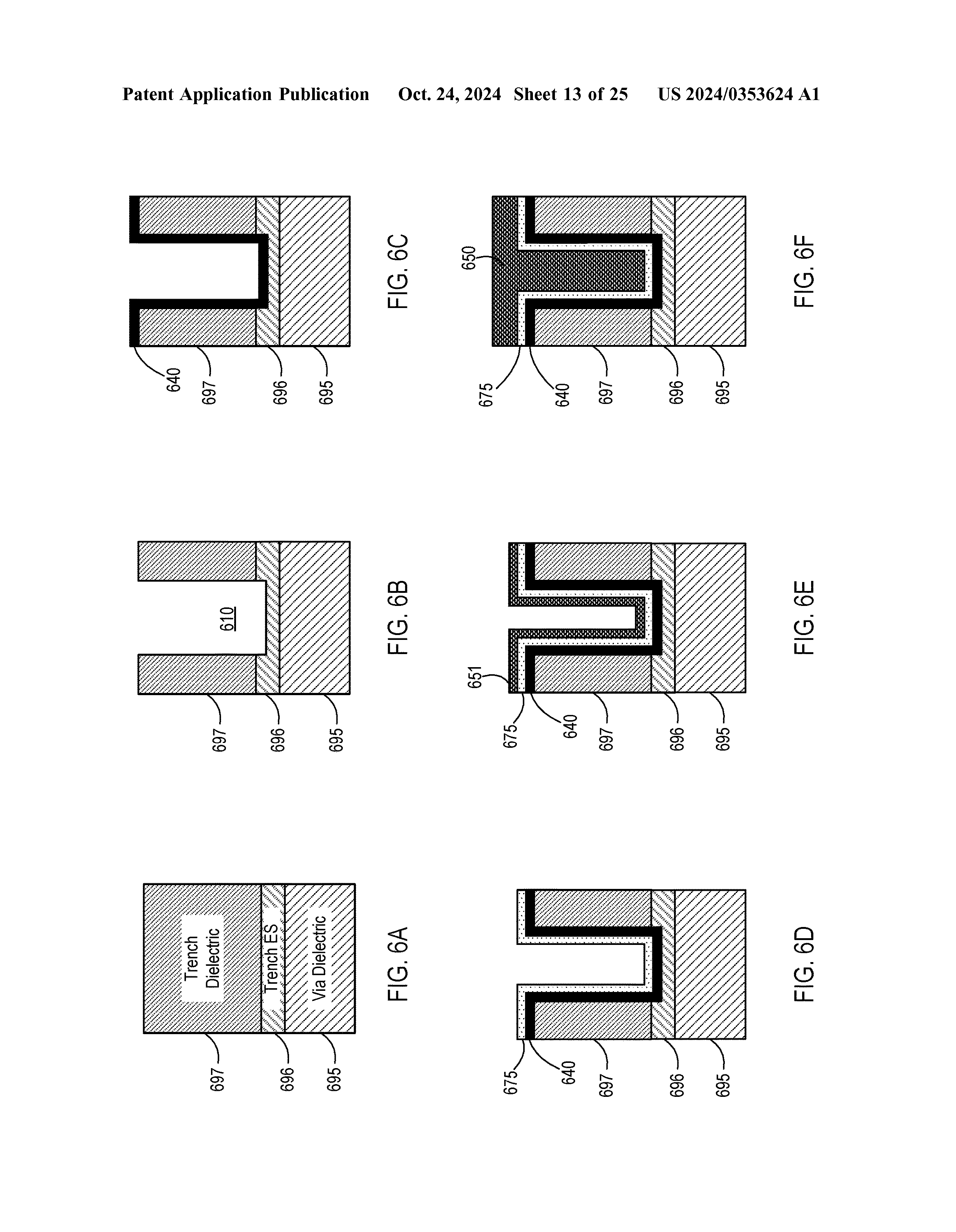
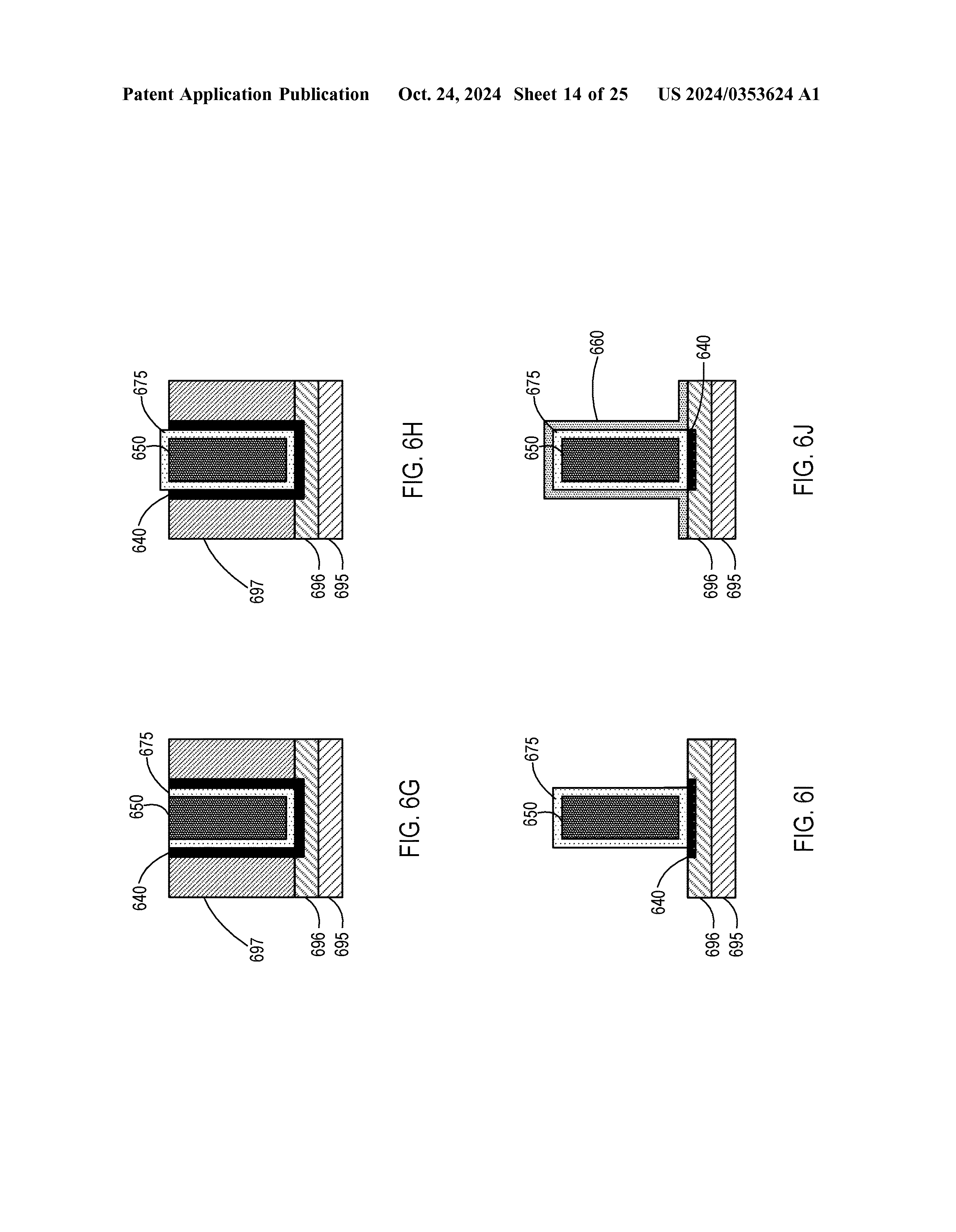
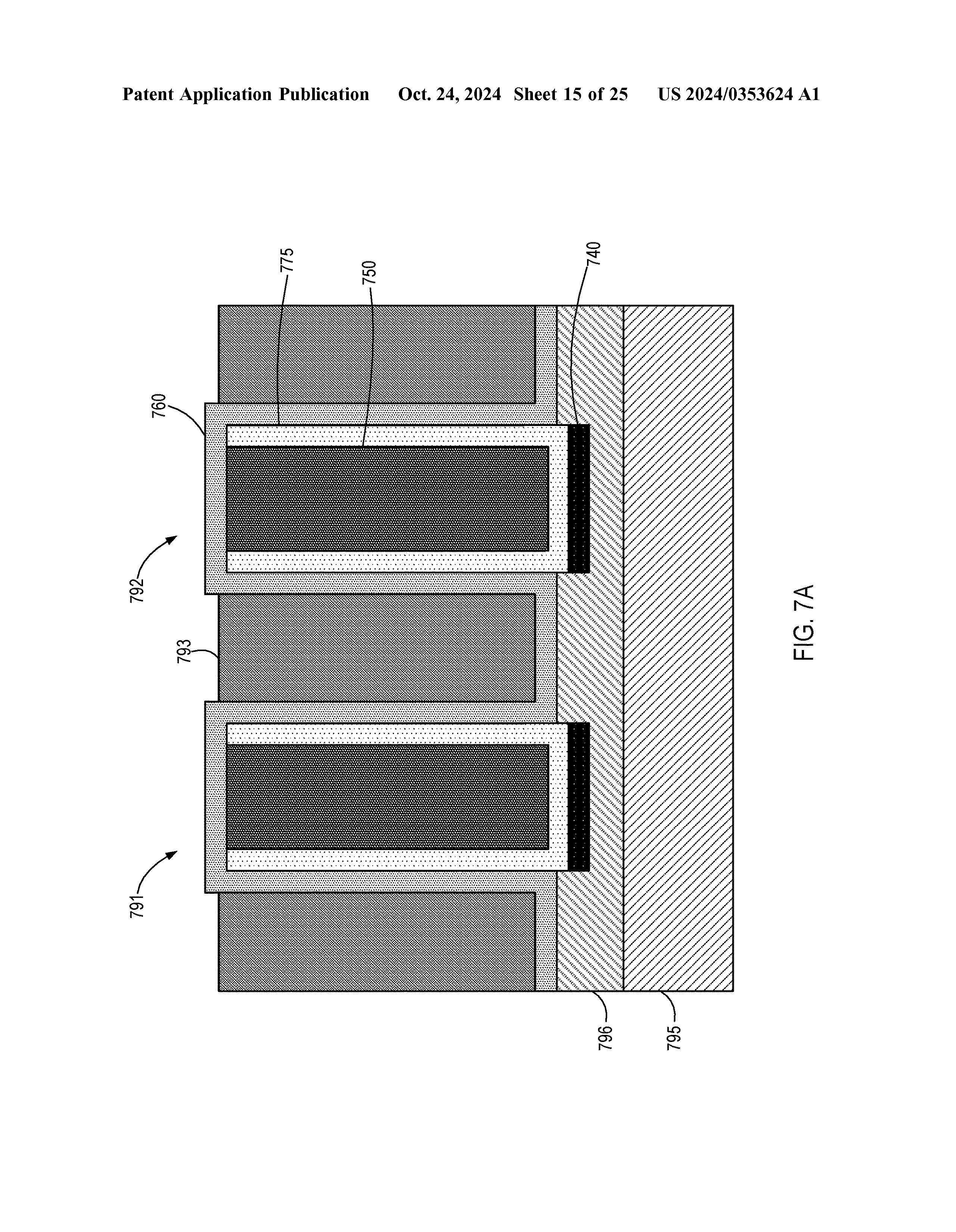
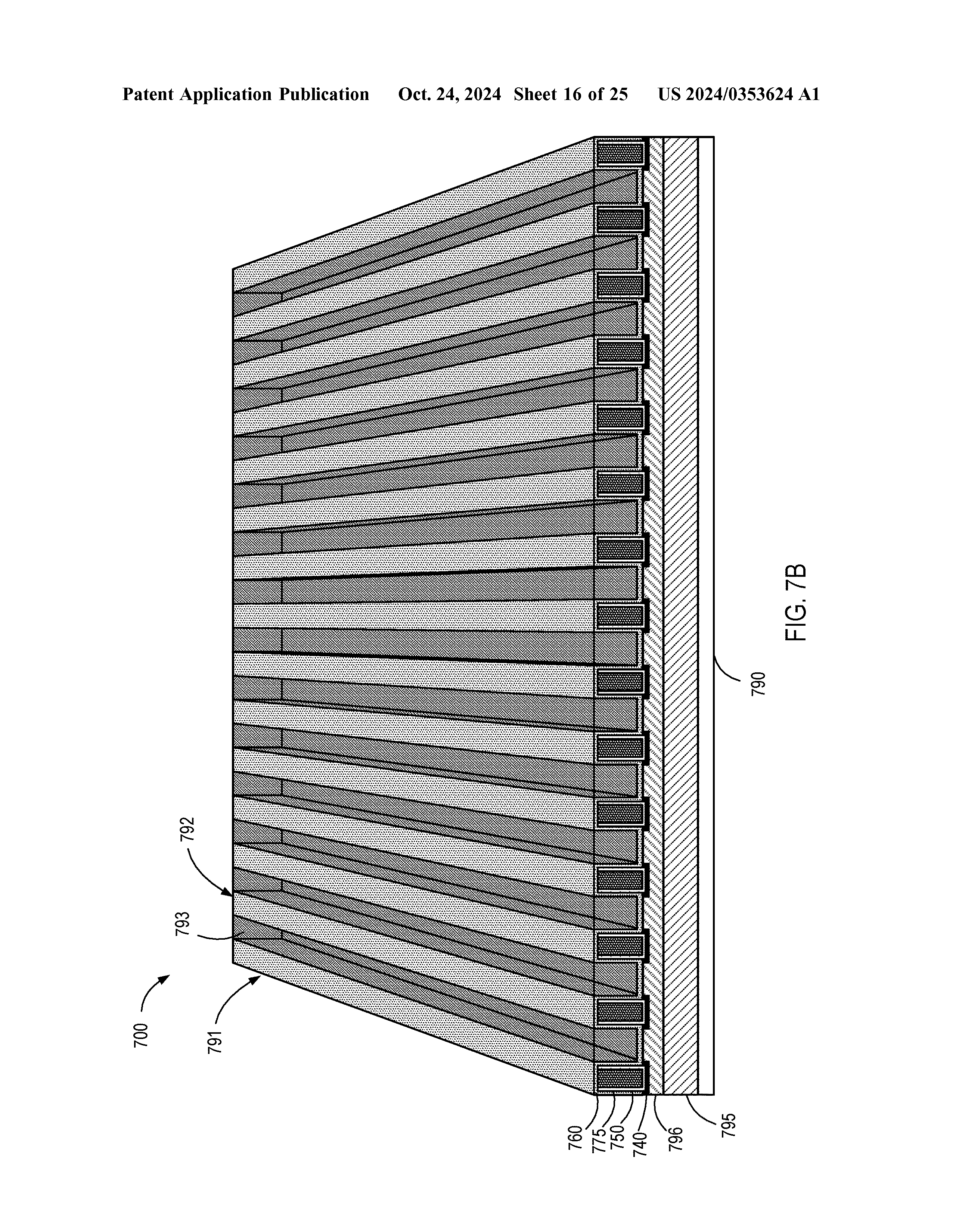
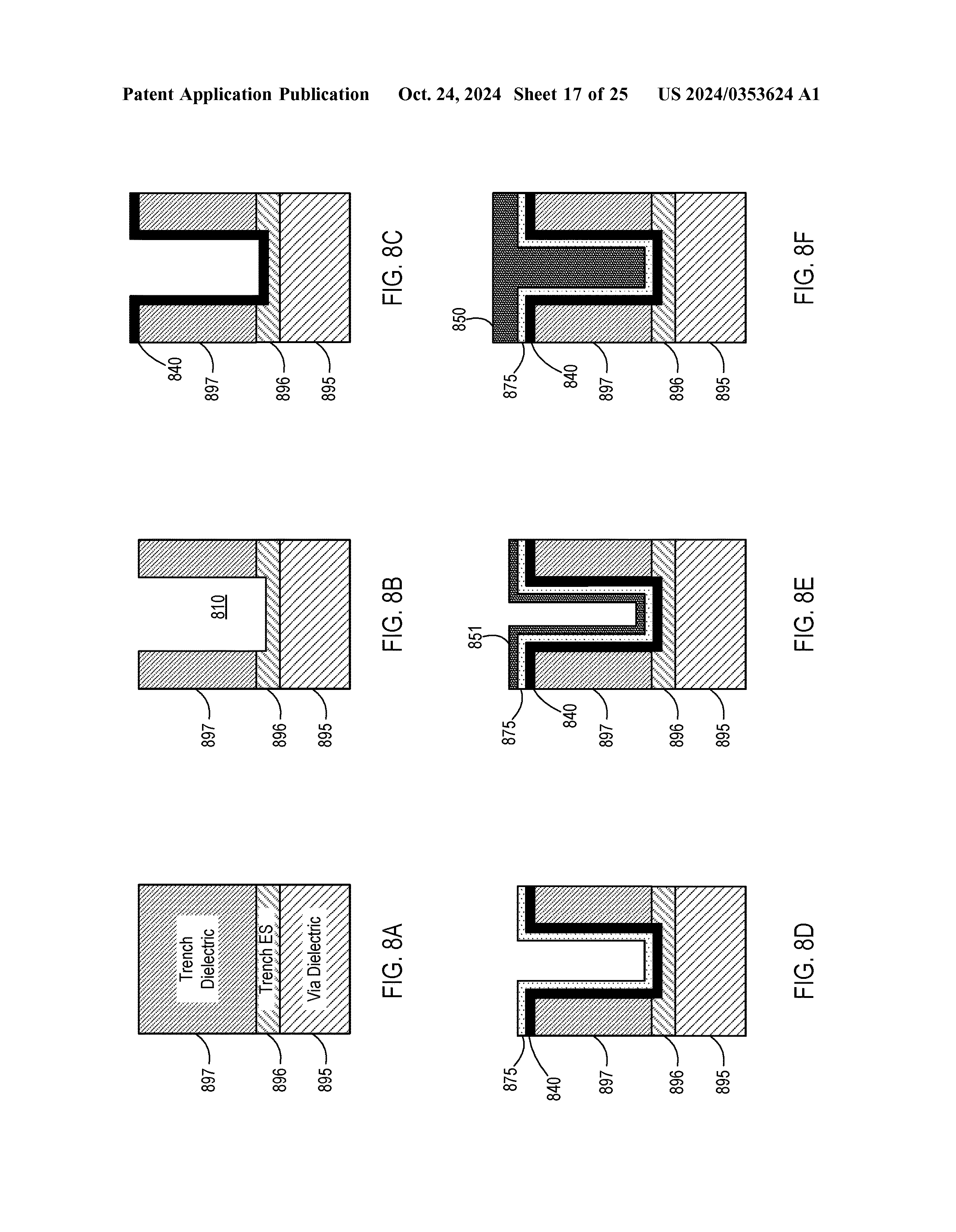
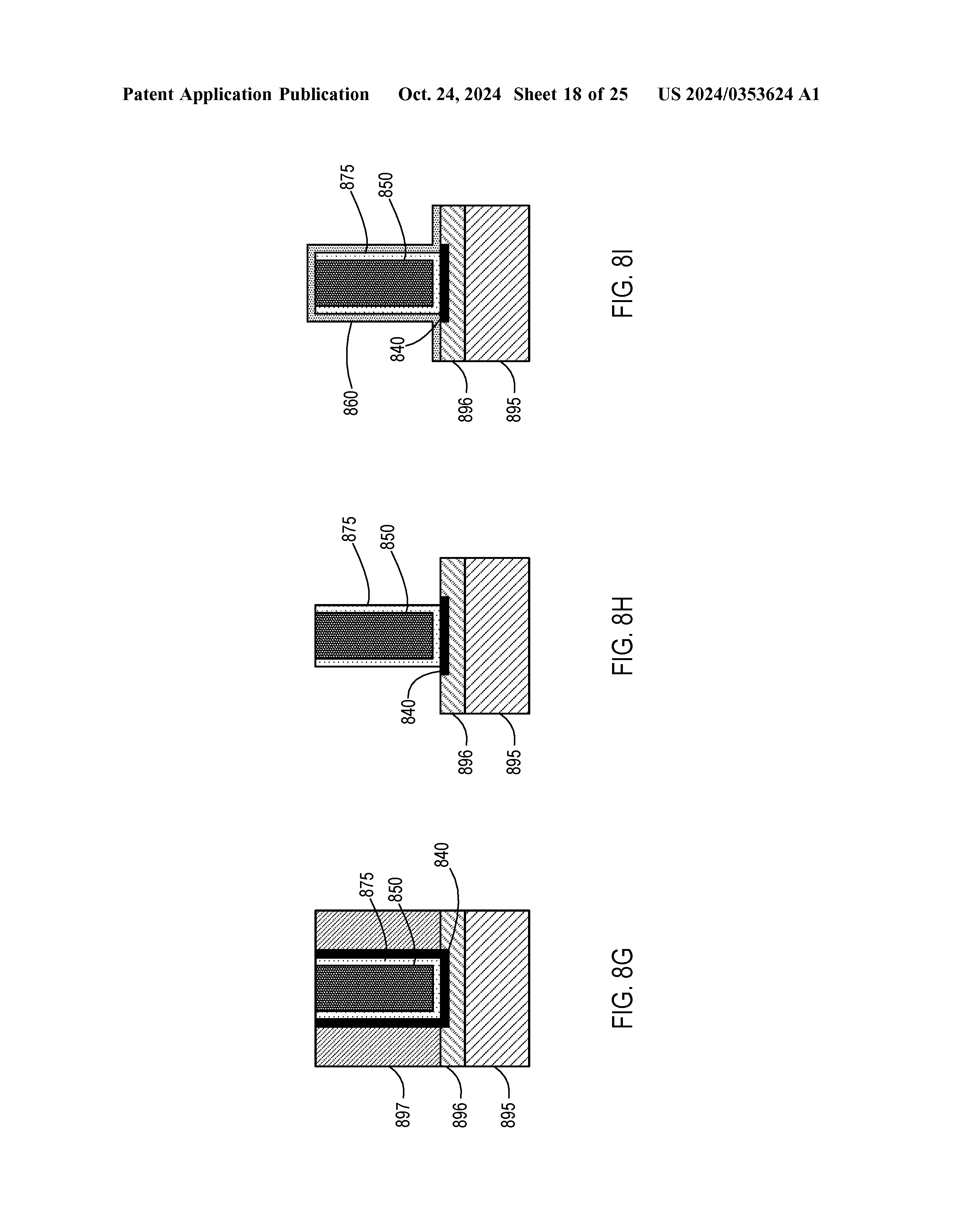
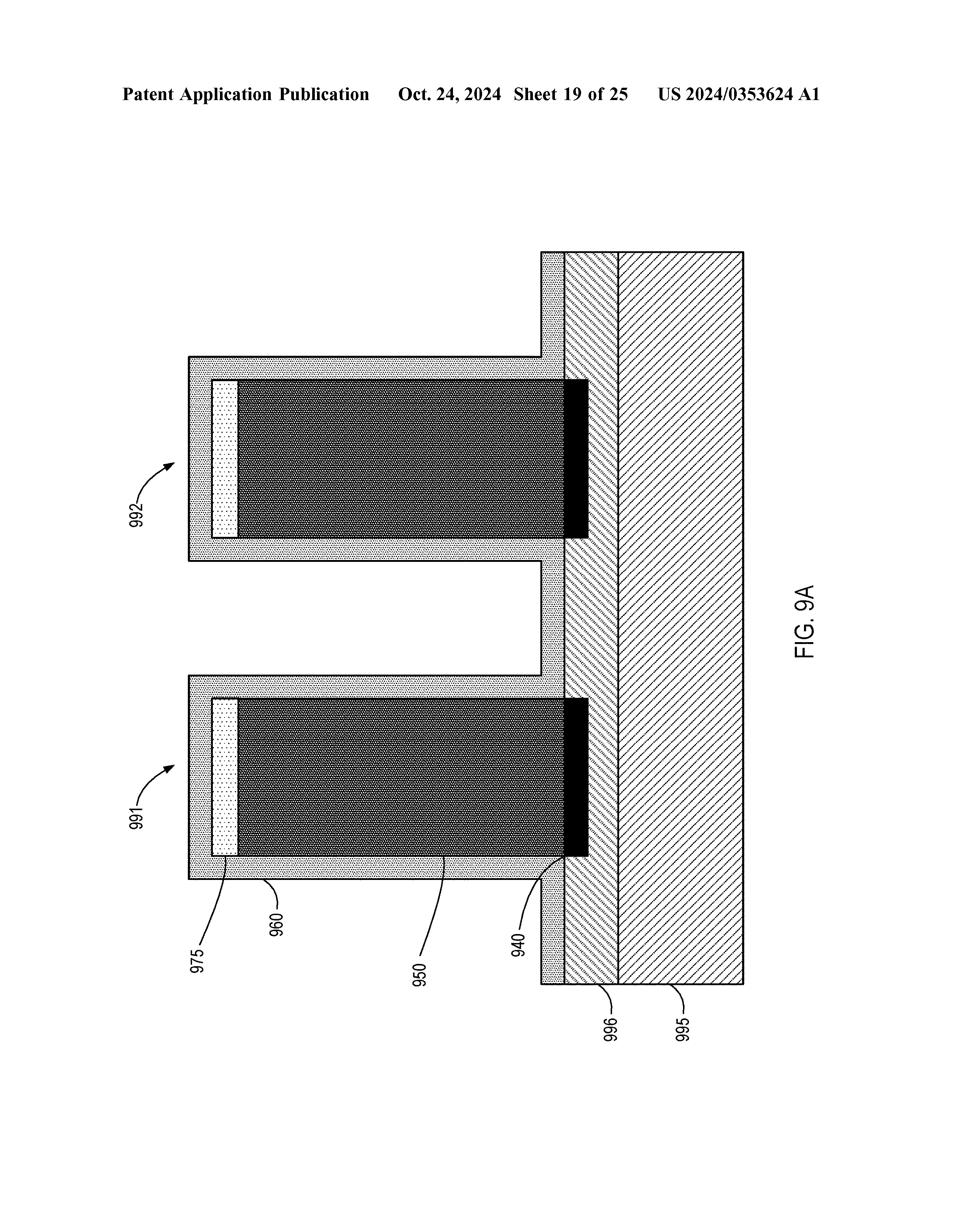
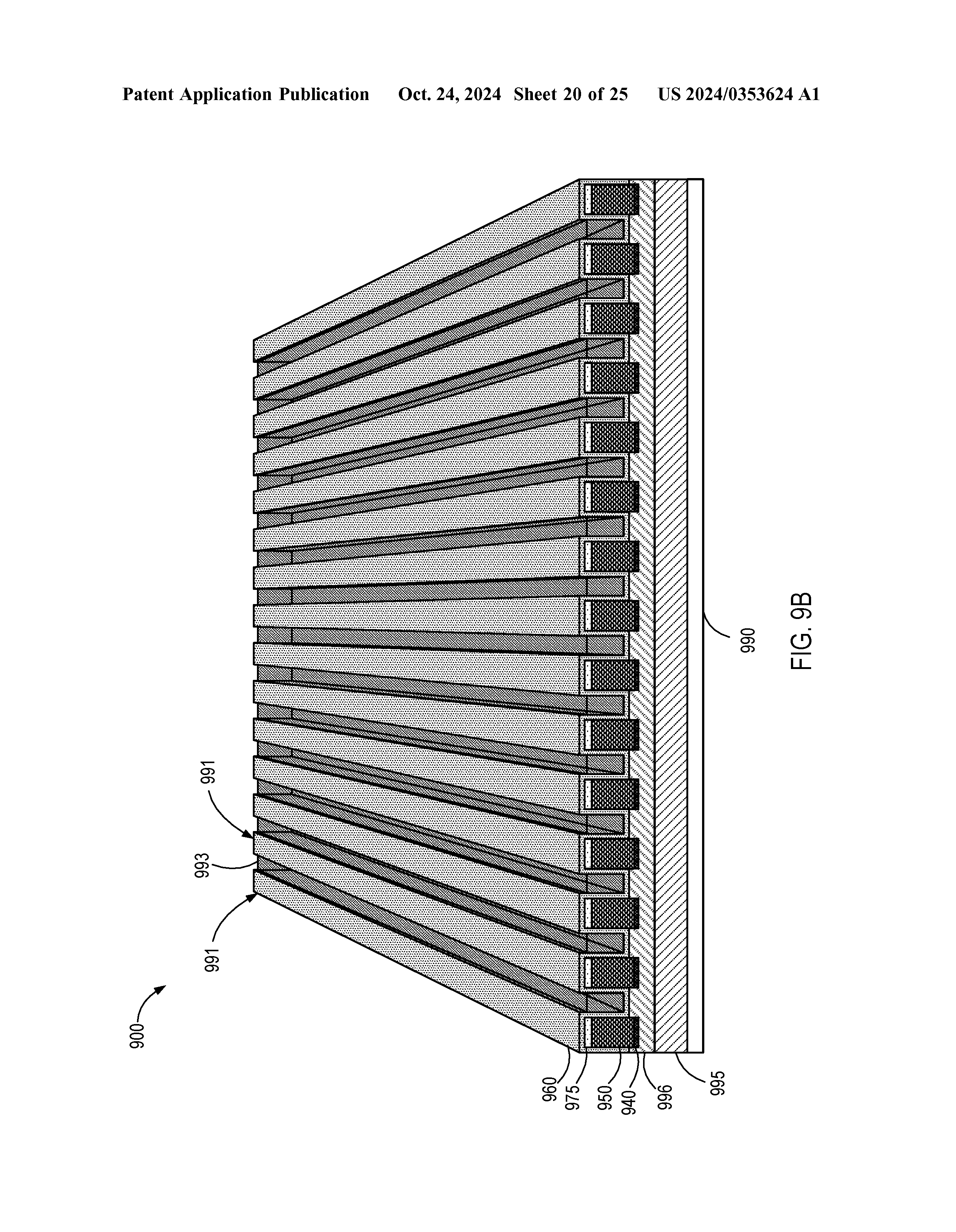
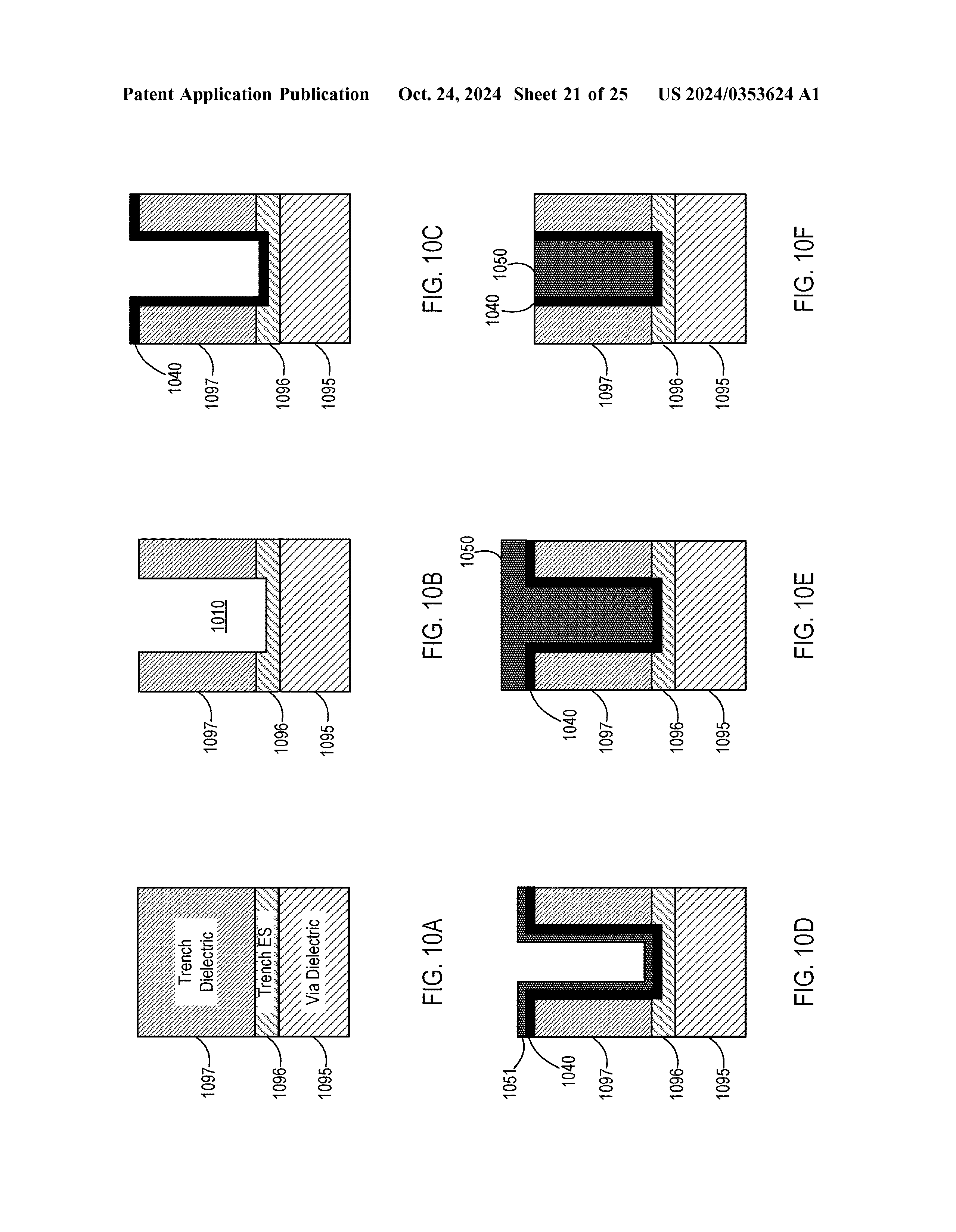
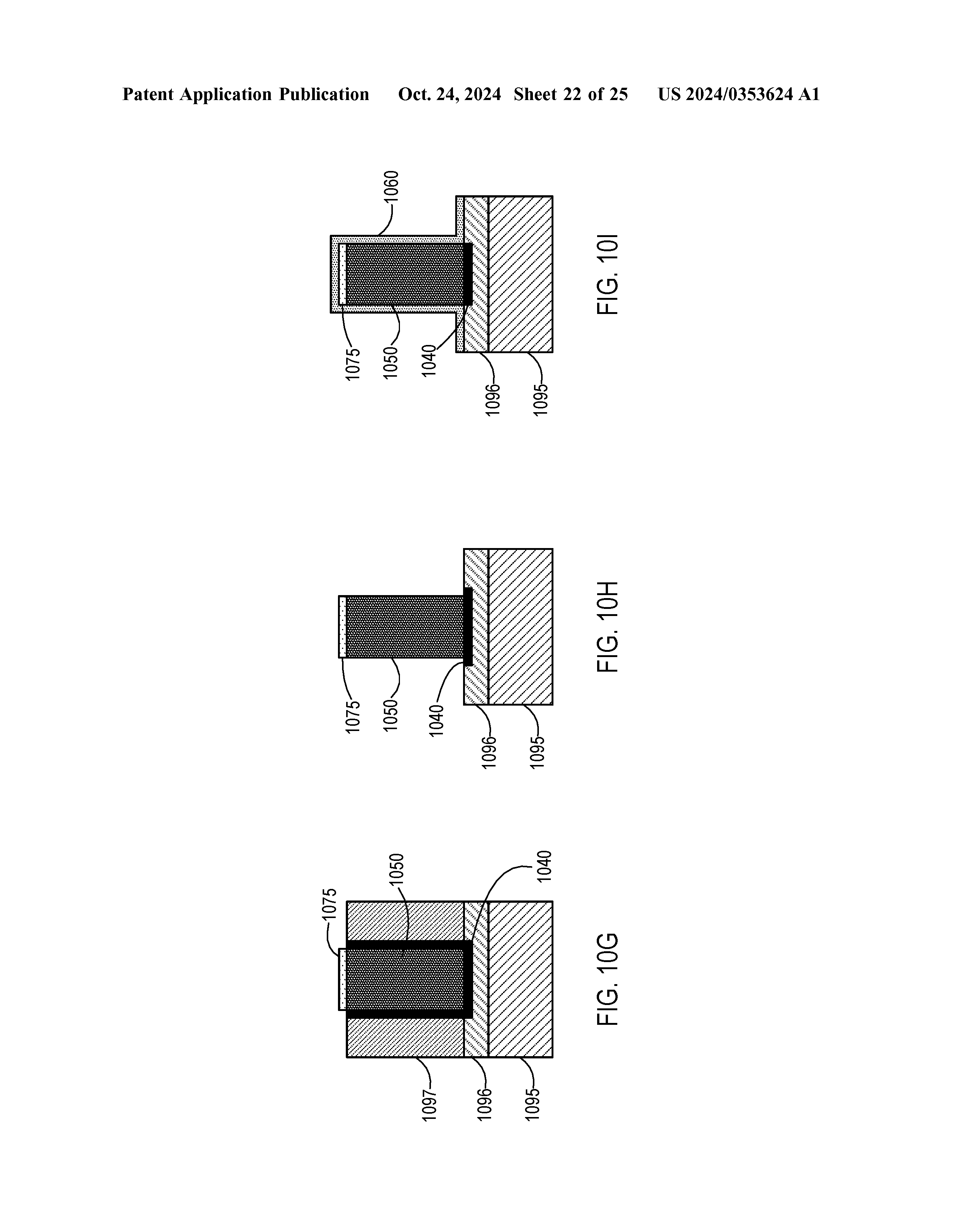
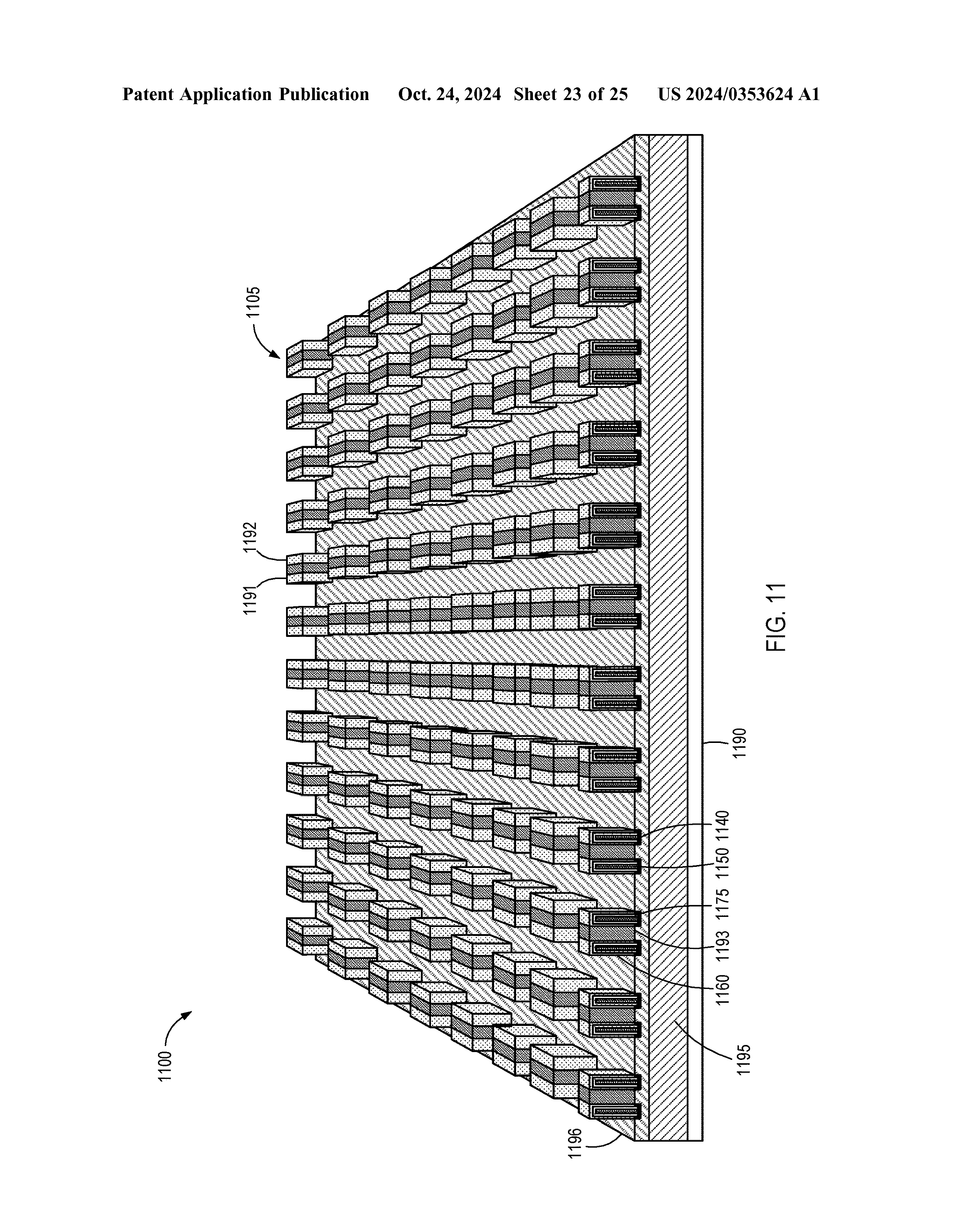
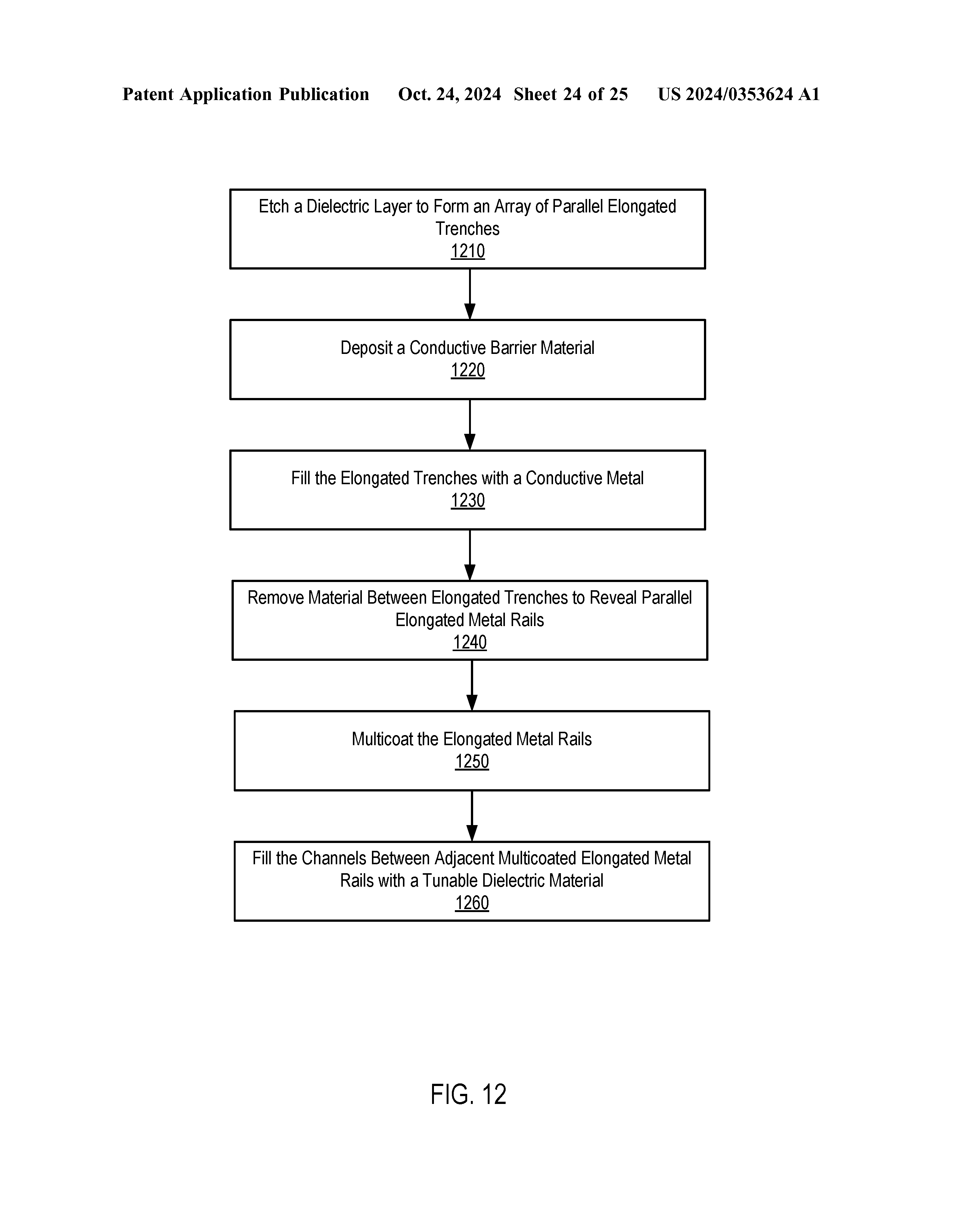
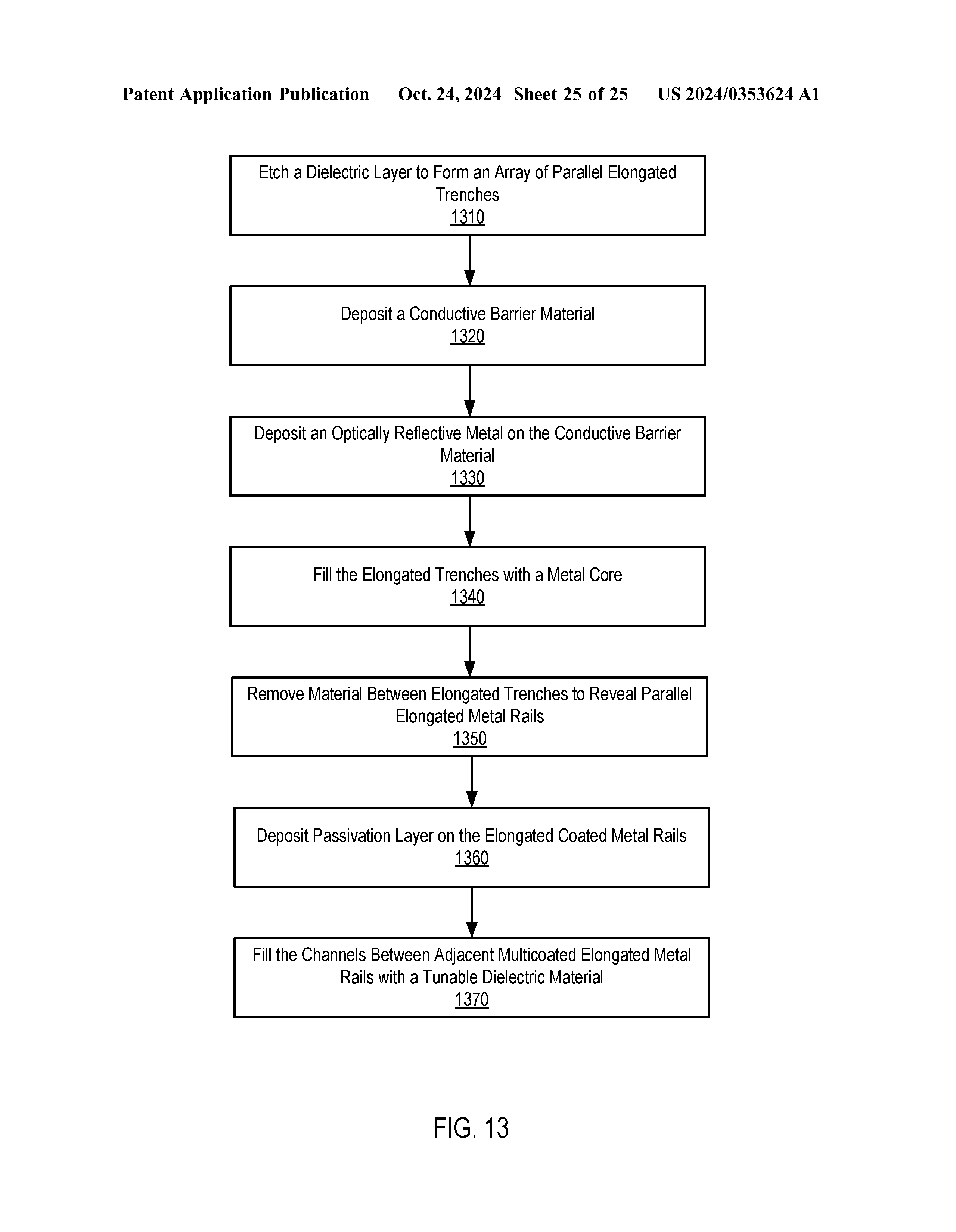
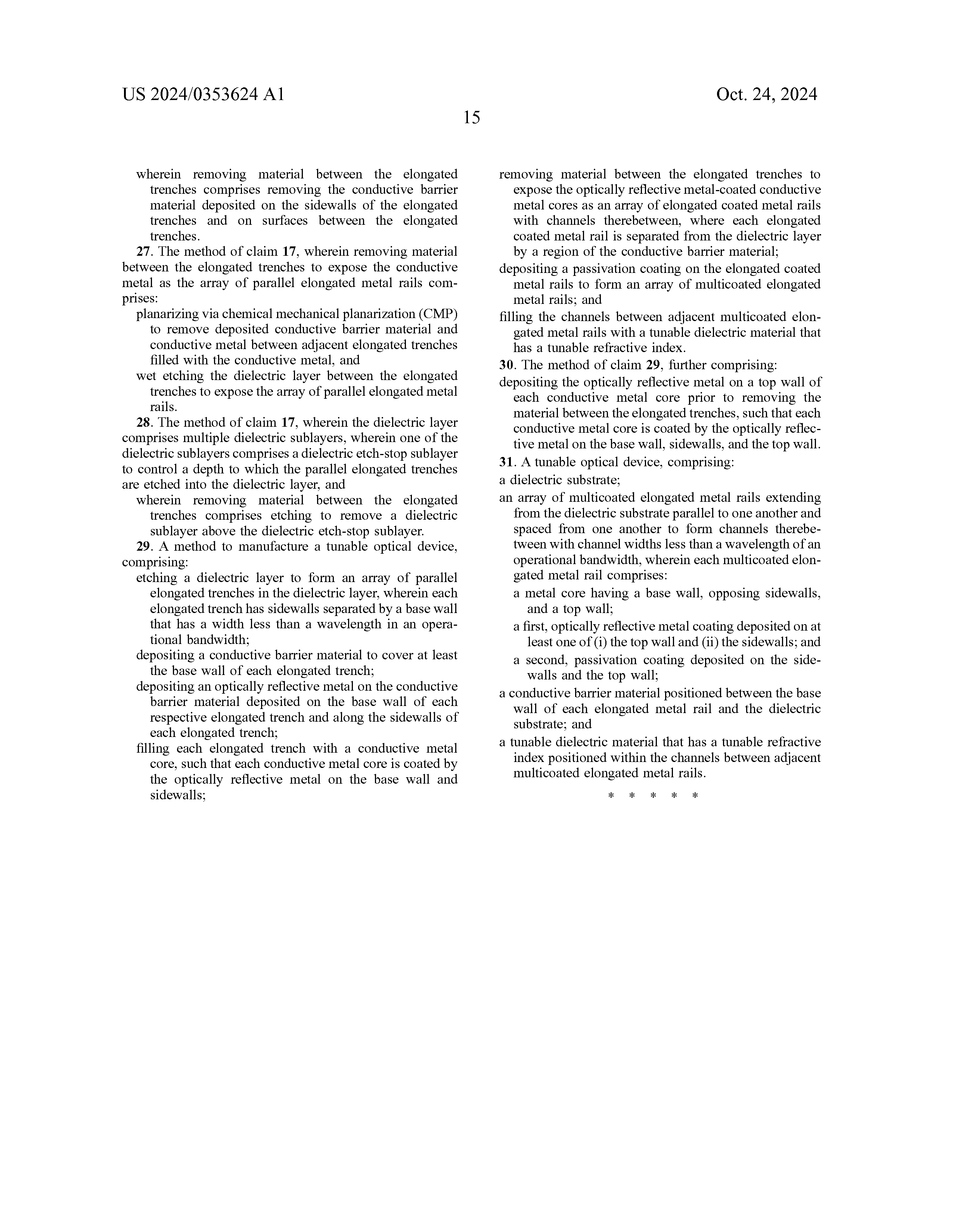
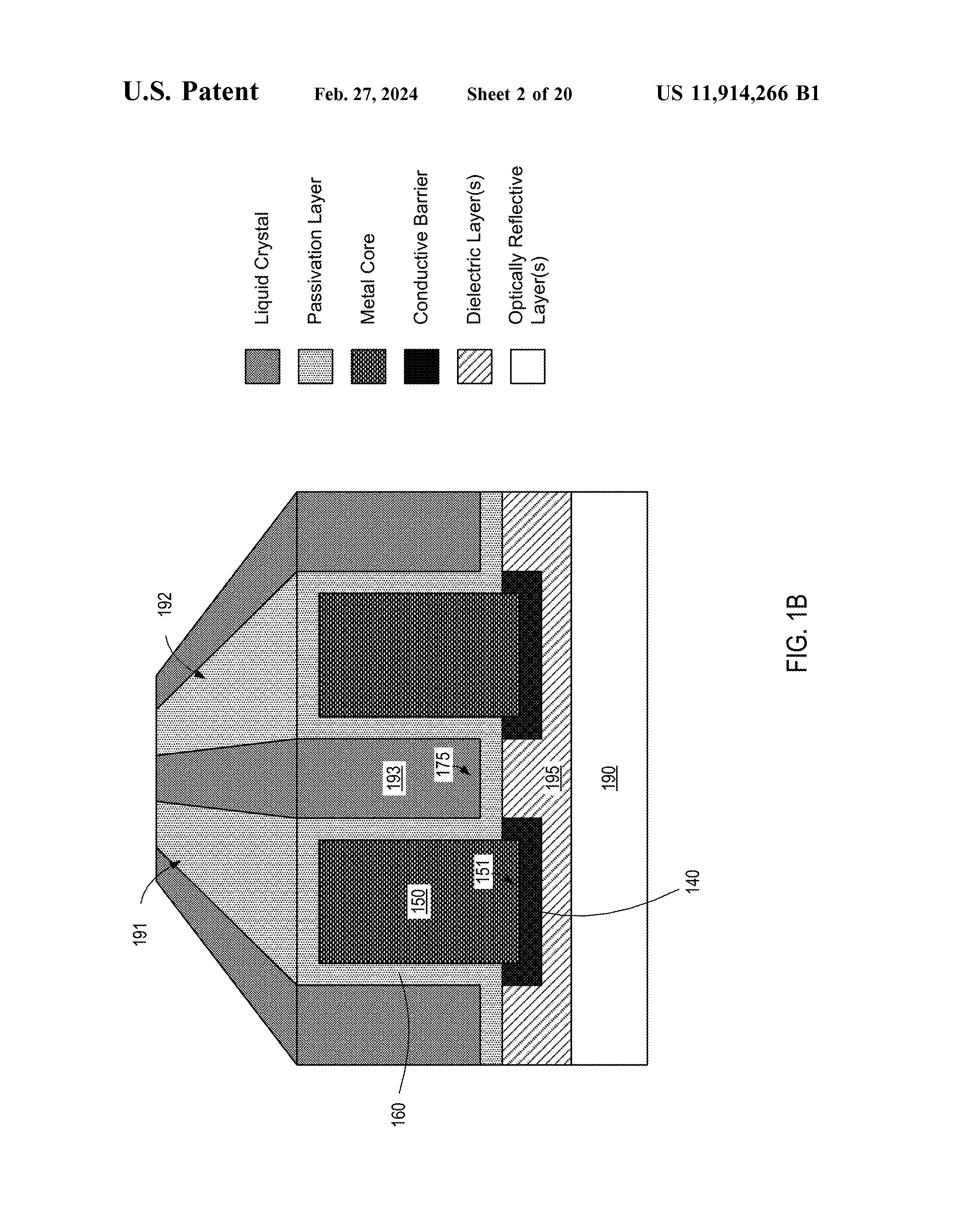
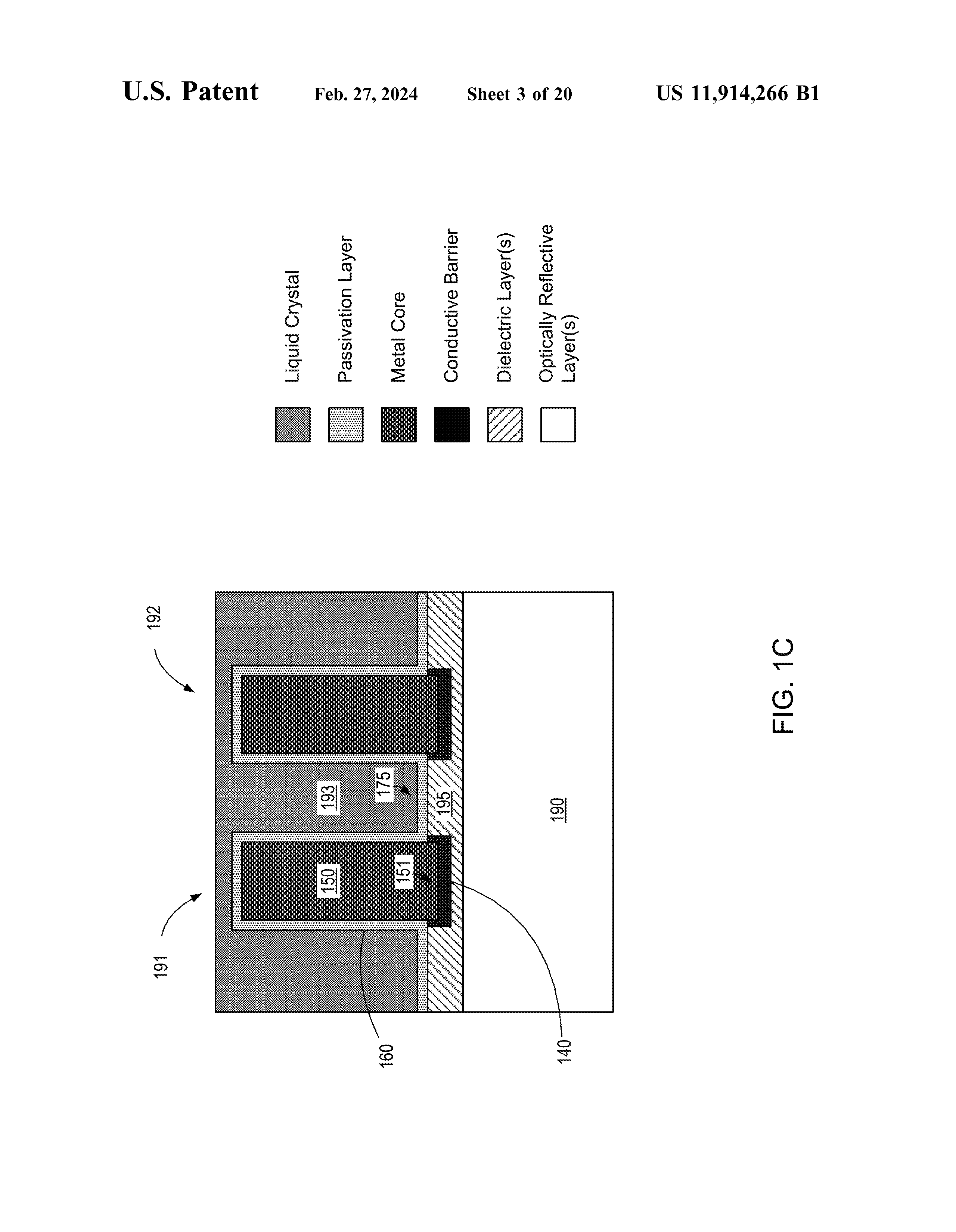
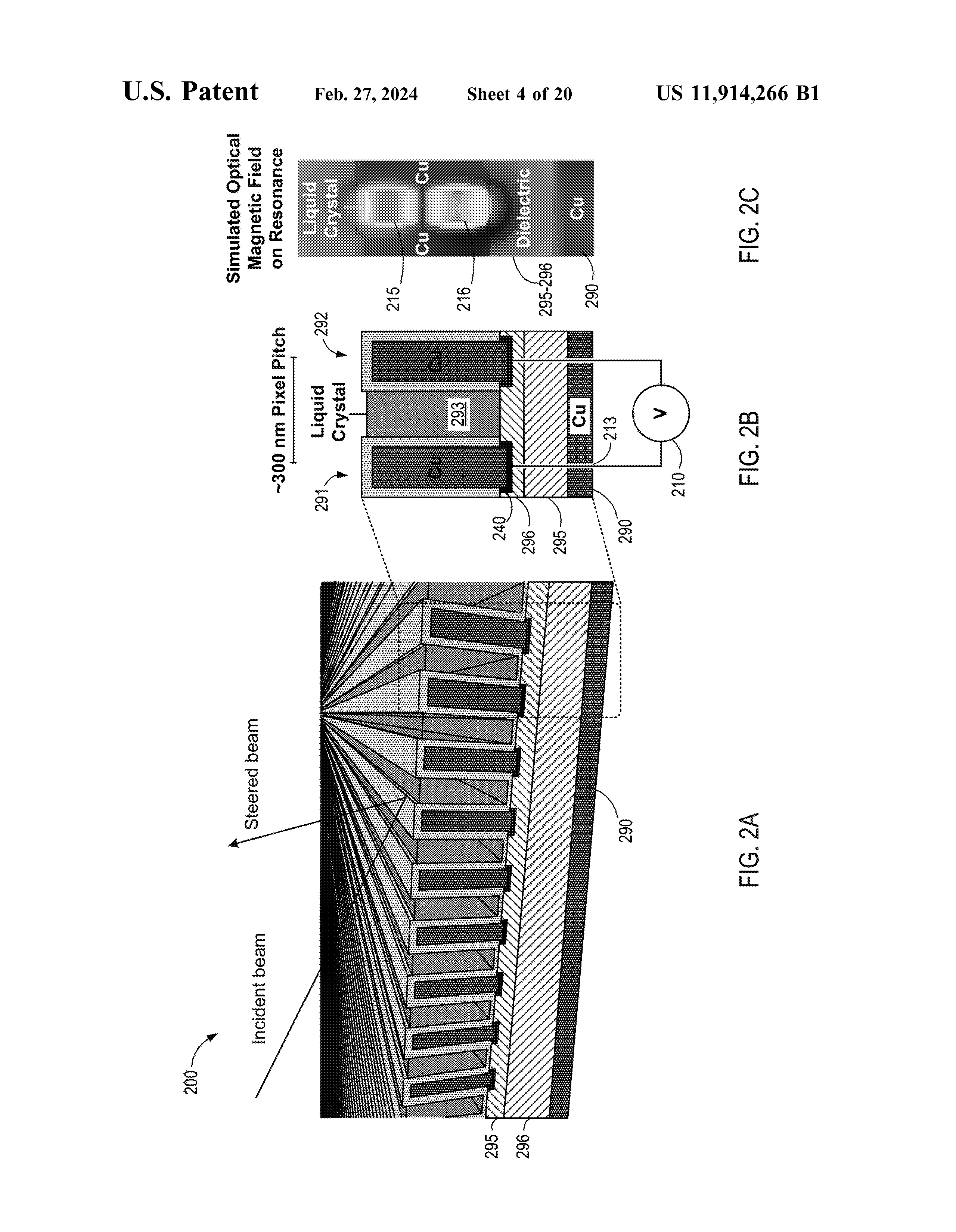
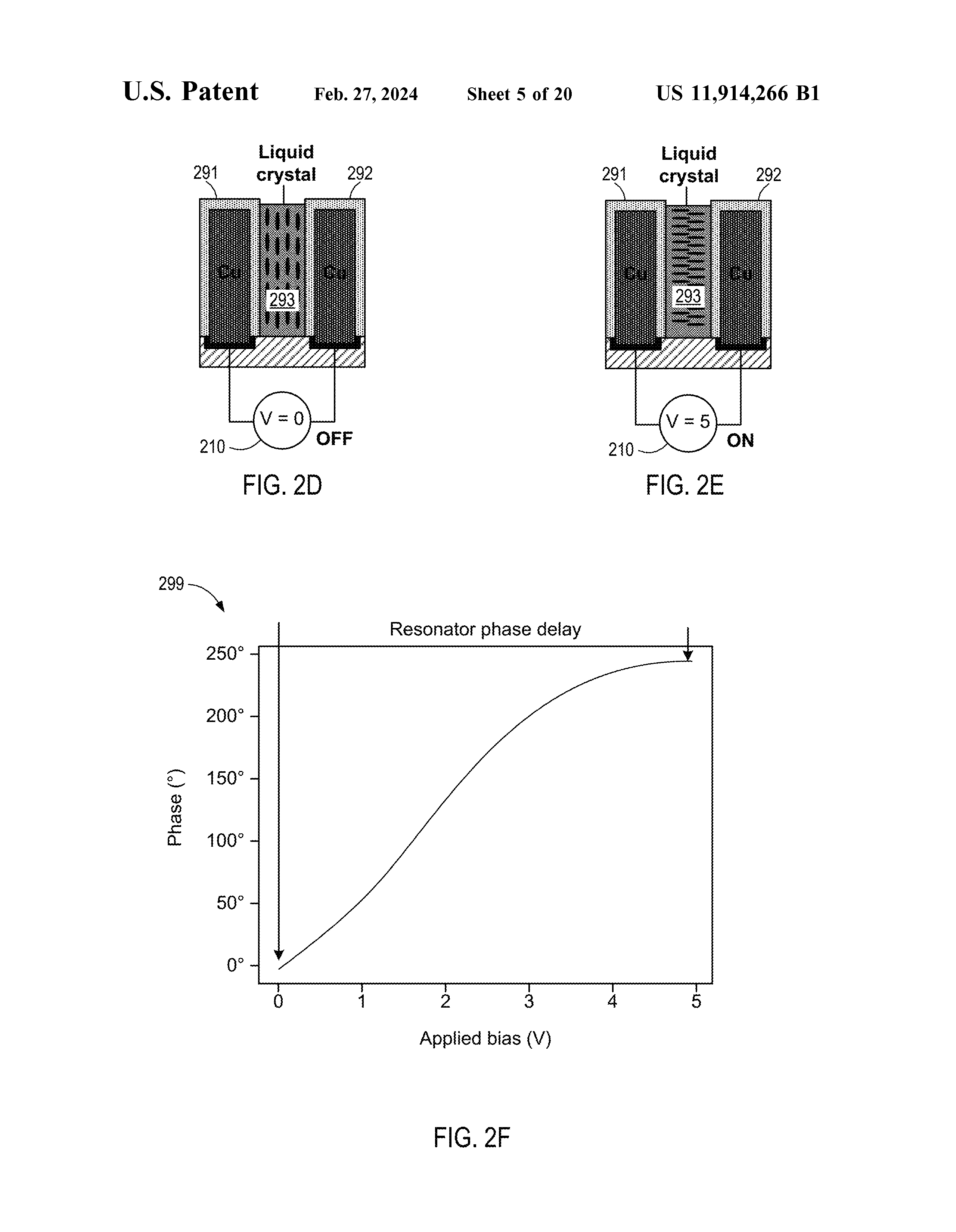
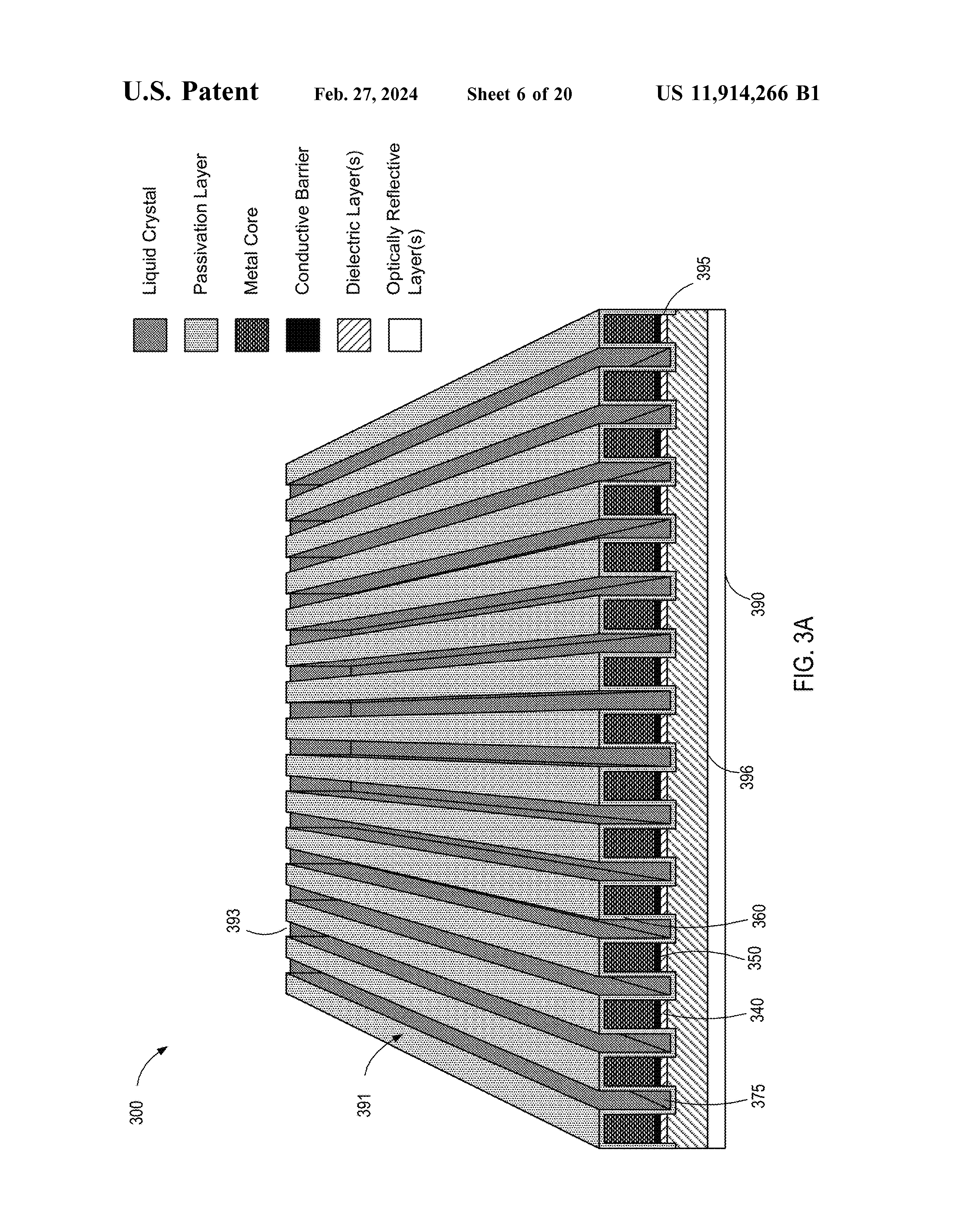
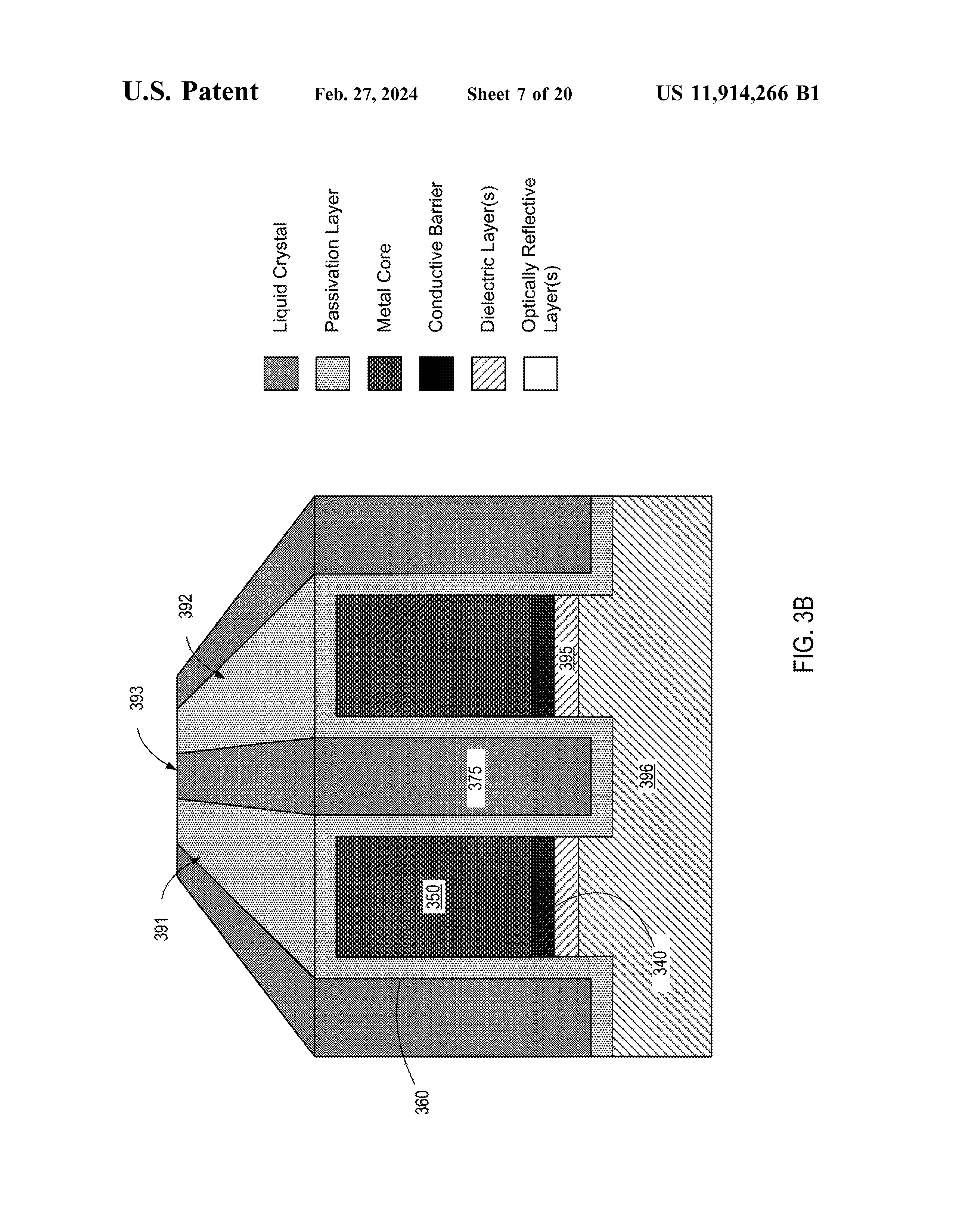
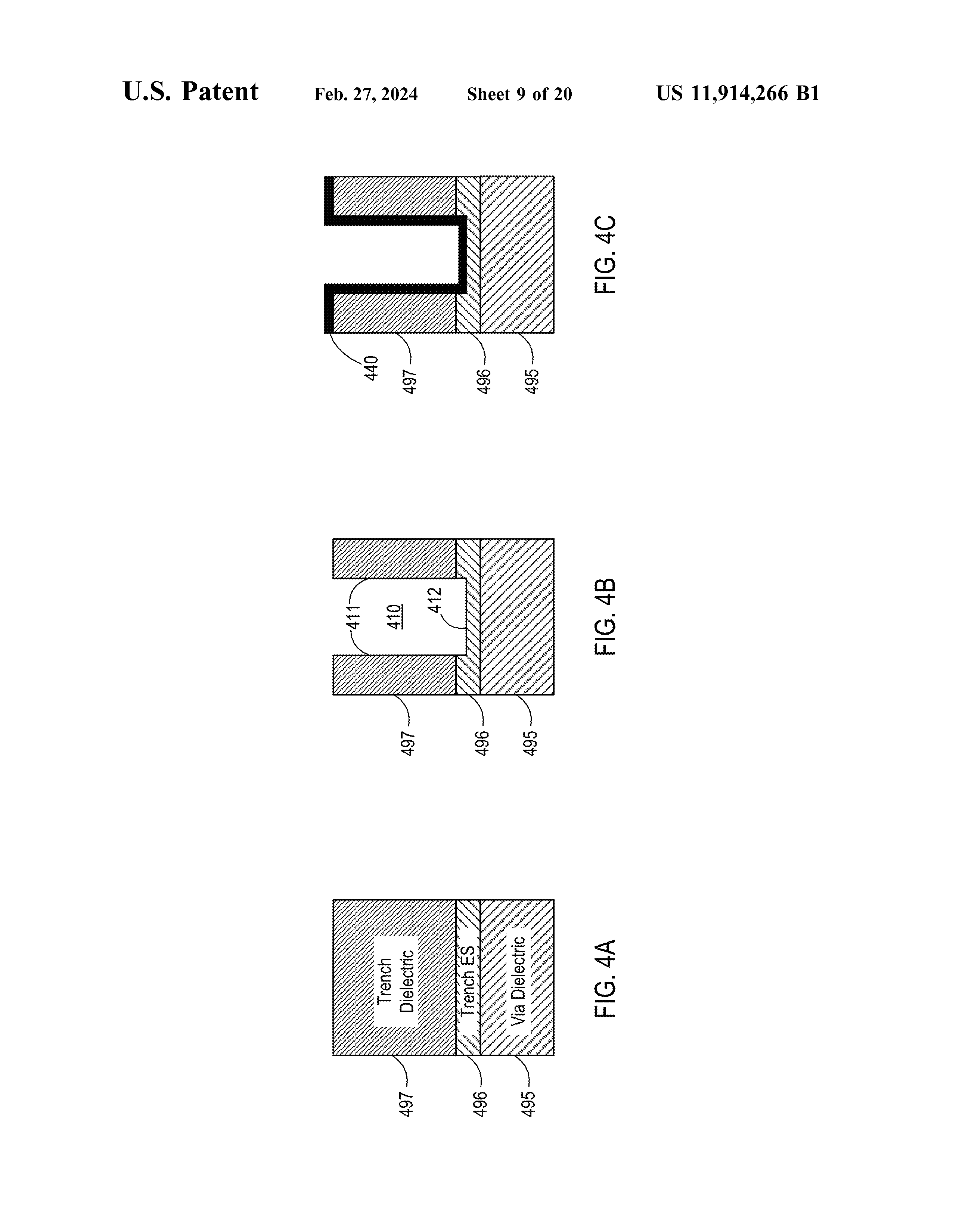
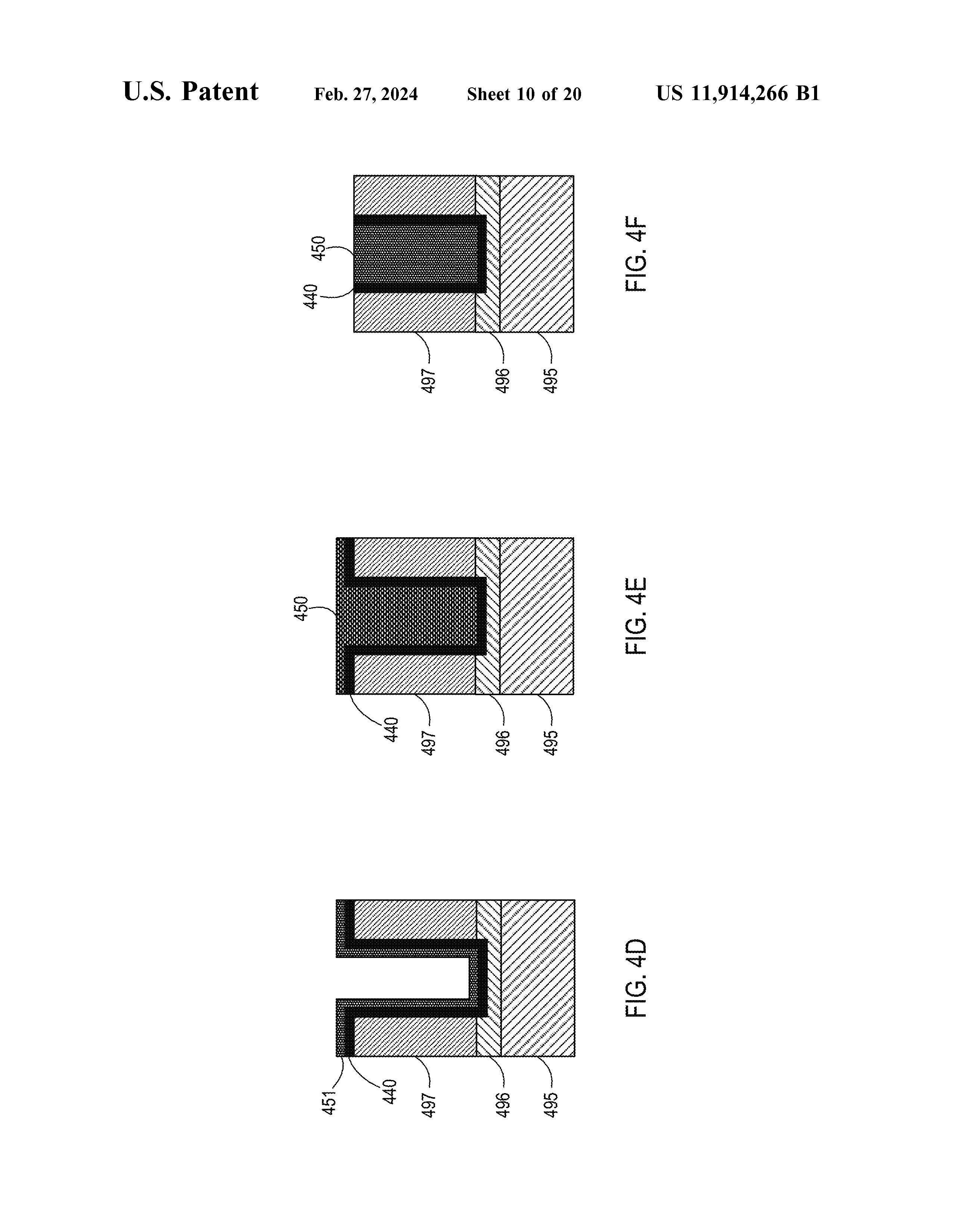
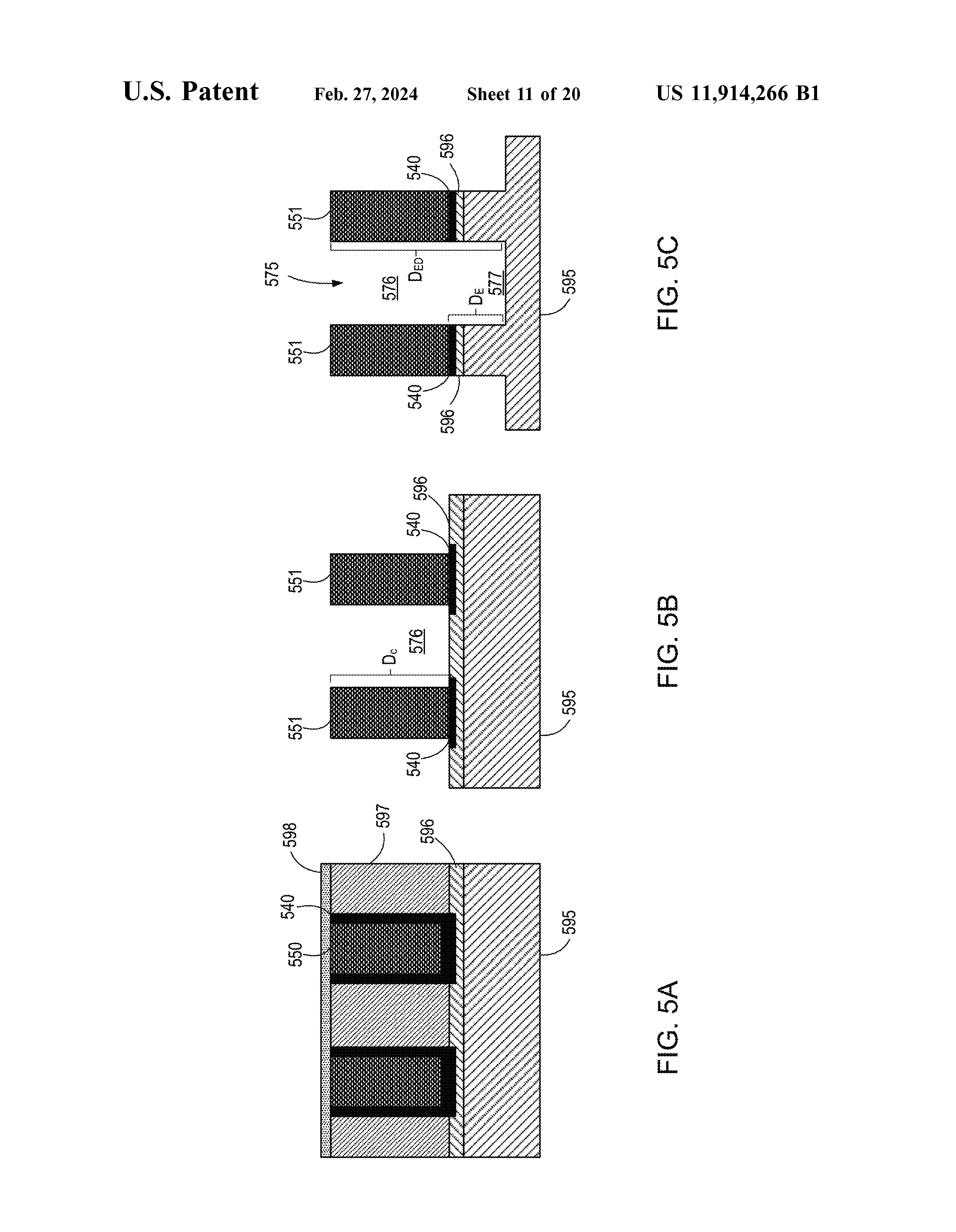
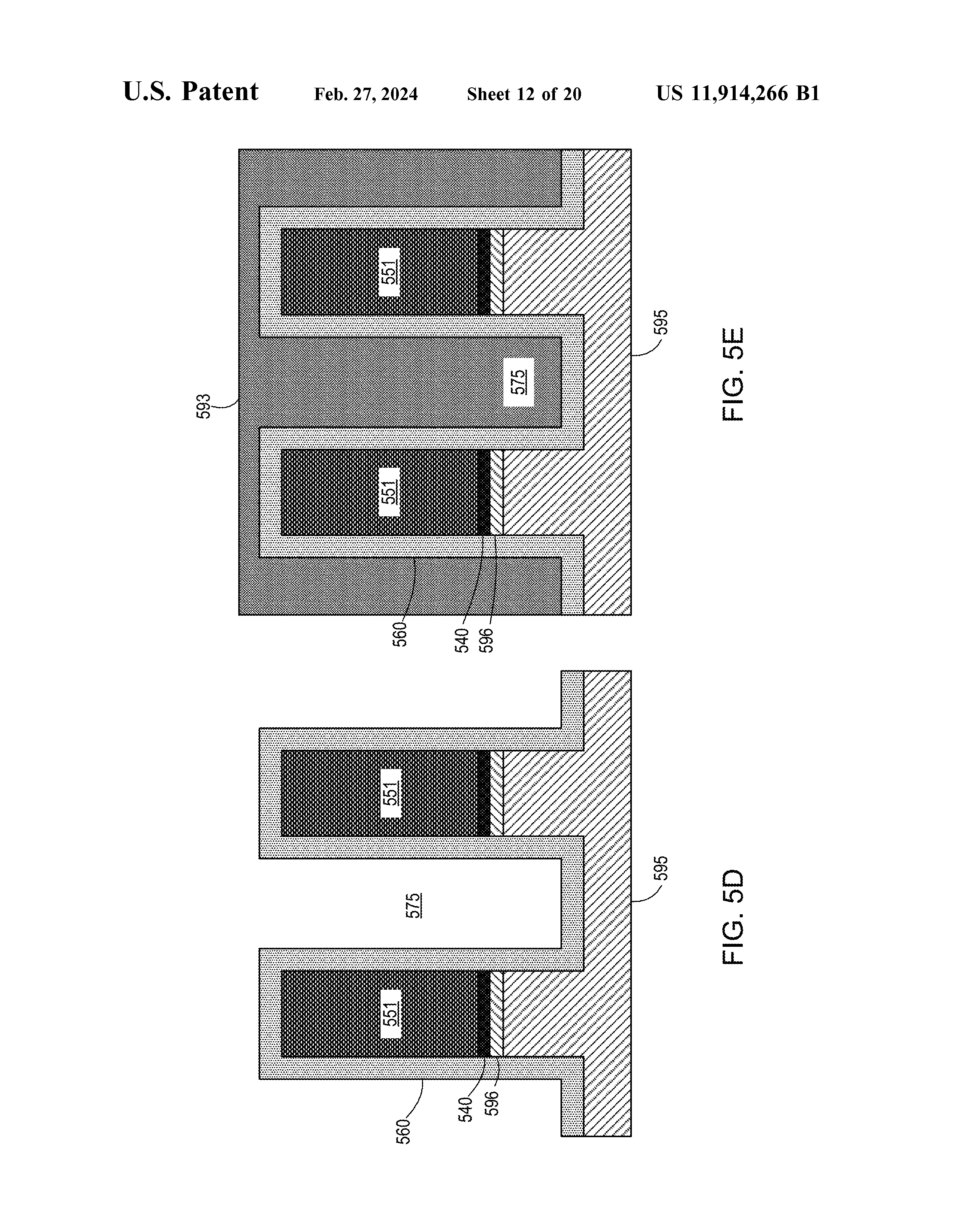
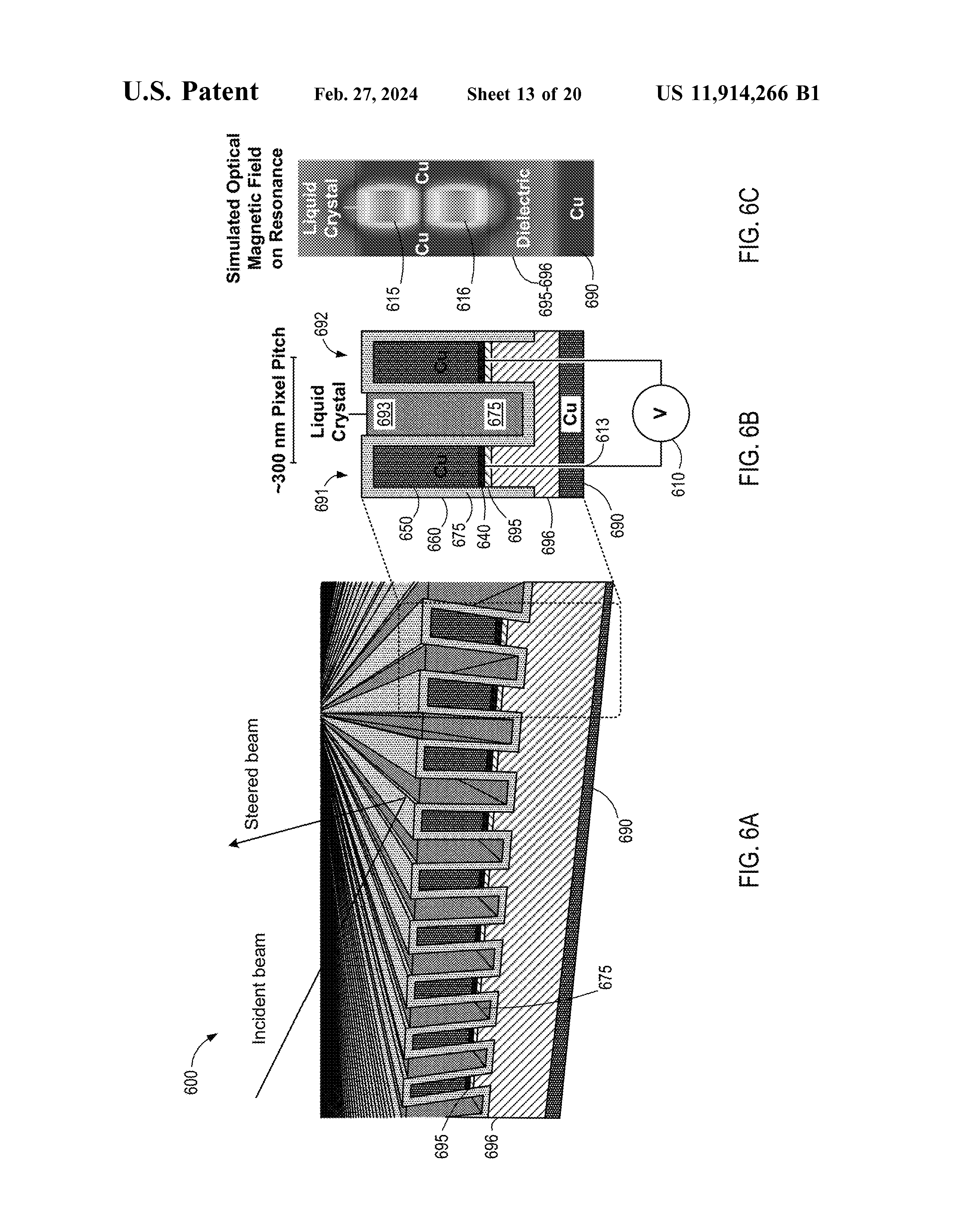
A device may include a dielectric substrate layer with an array of multicoated elongated metal rails extending from the dielectric substrate parallel to one another and spaced from one another to form channels therebetween. The dimensions of the multicoated elongated metal rails and the channels therebetween may be subwavelength with respect to an operational bandwidth. In some examples, each multicoated elongated metal rail is formed with a copper core coated with an optically reflective silver coating followed by a passivation coating. In various examples, a conductive barrier material separates each multicoated elongated metal rail from an underlying dielectric substrate layer. A tunable dielectric material that has a tunable refractive index, such as liquid crystal, is positioned within the channels between adjacent multicoated elongated metal rails.
5. Tunable optical devices with extended-depth tunable dielectric cavities
Published:
Abstract:
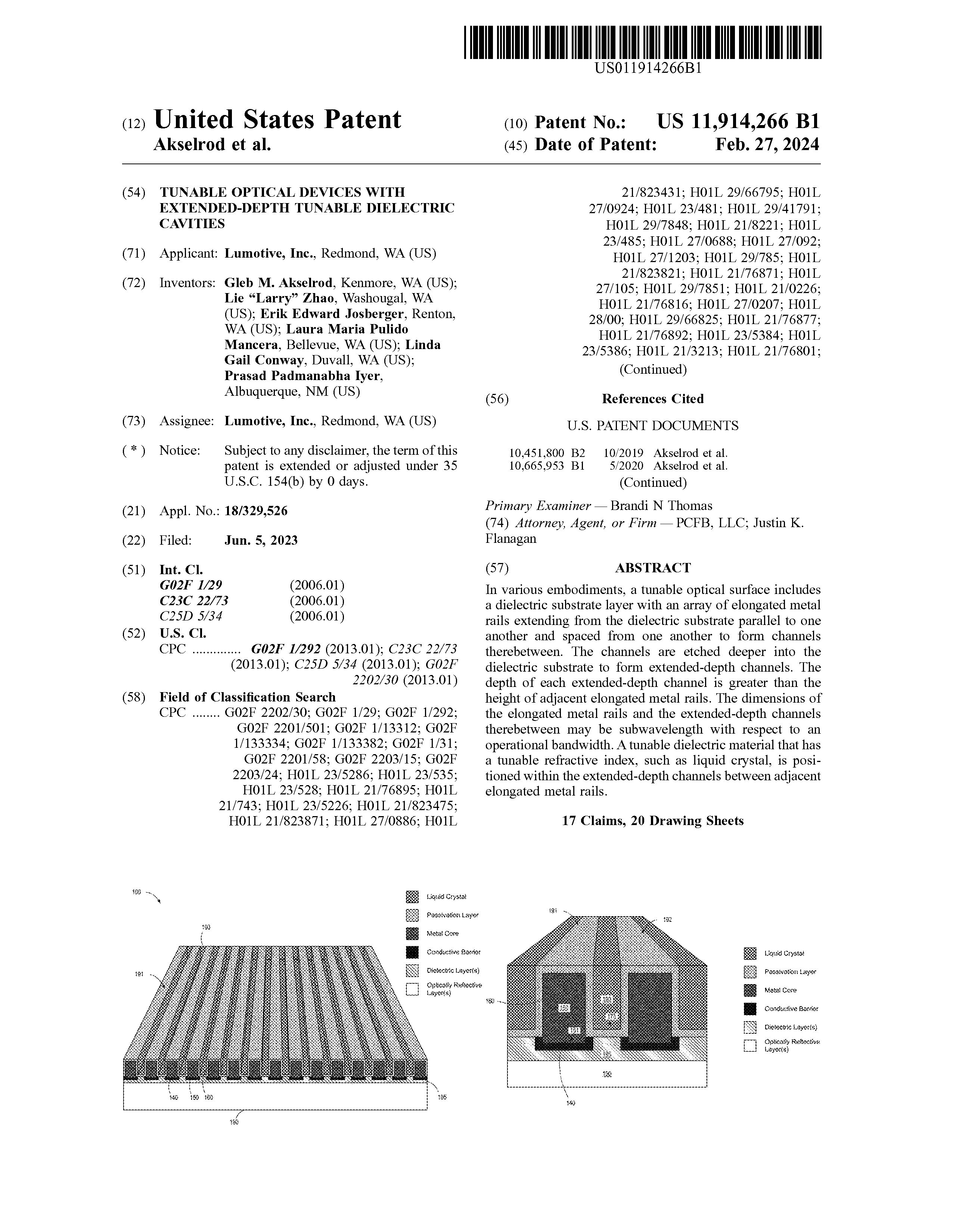
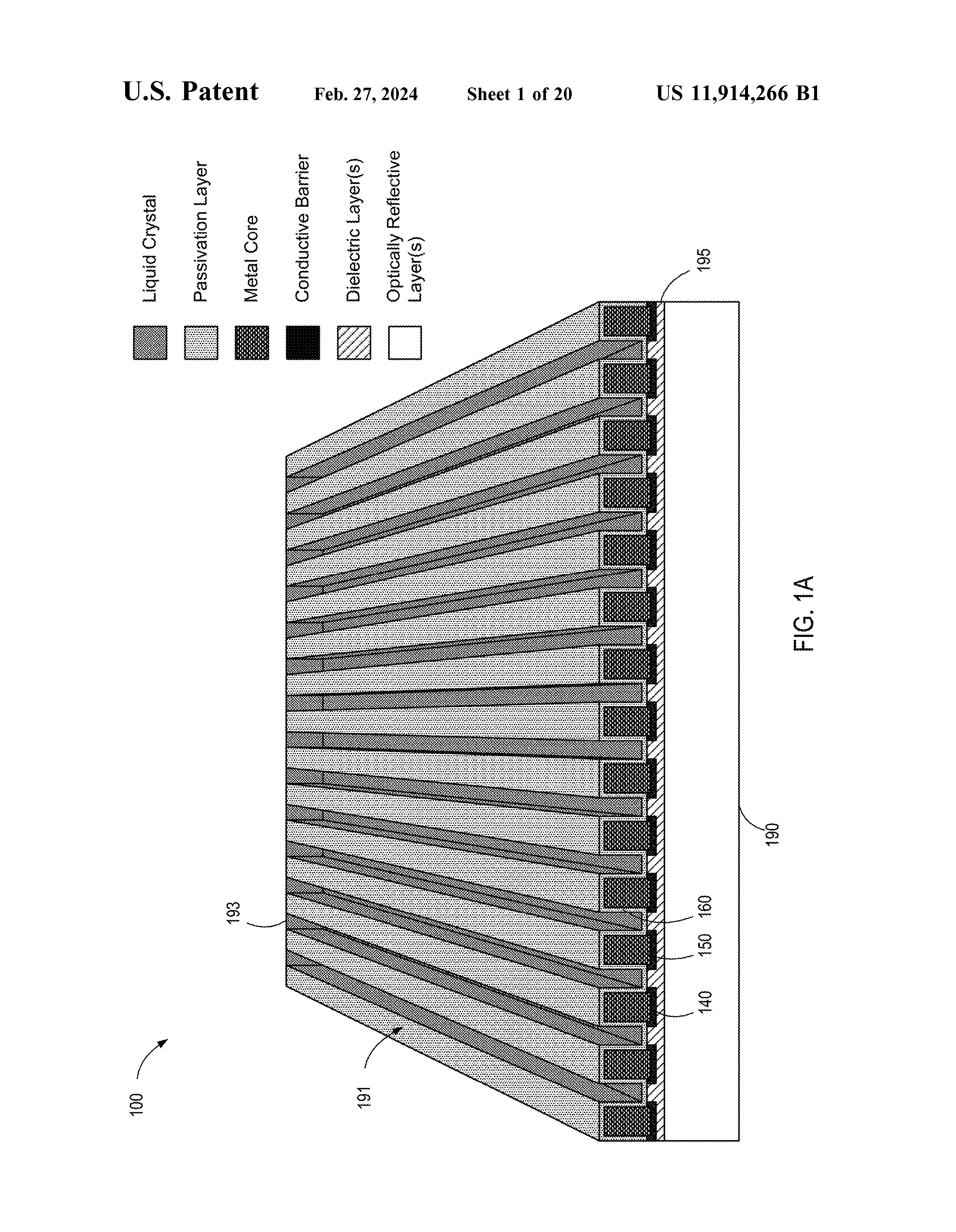
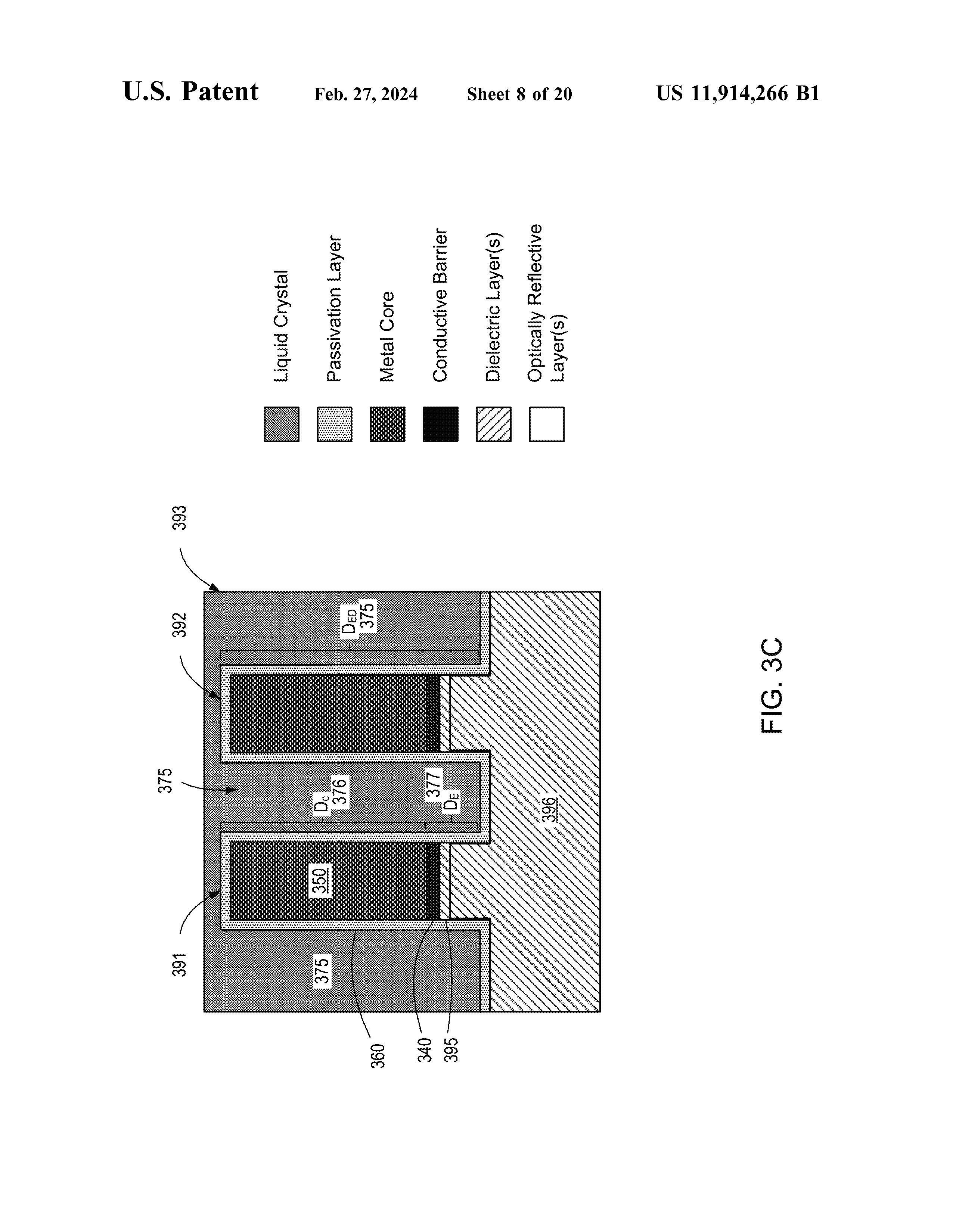
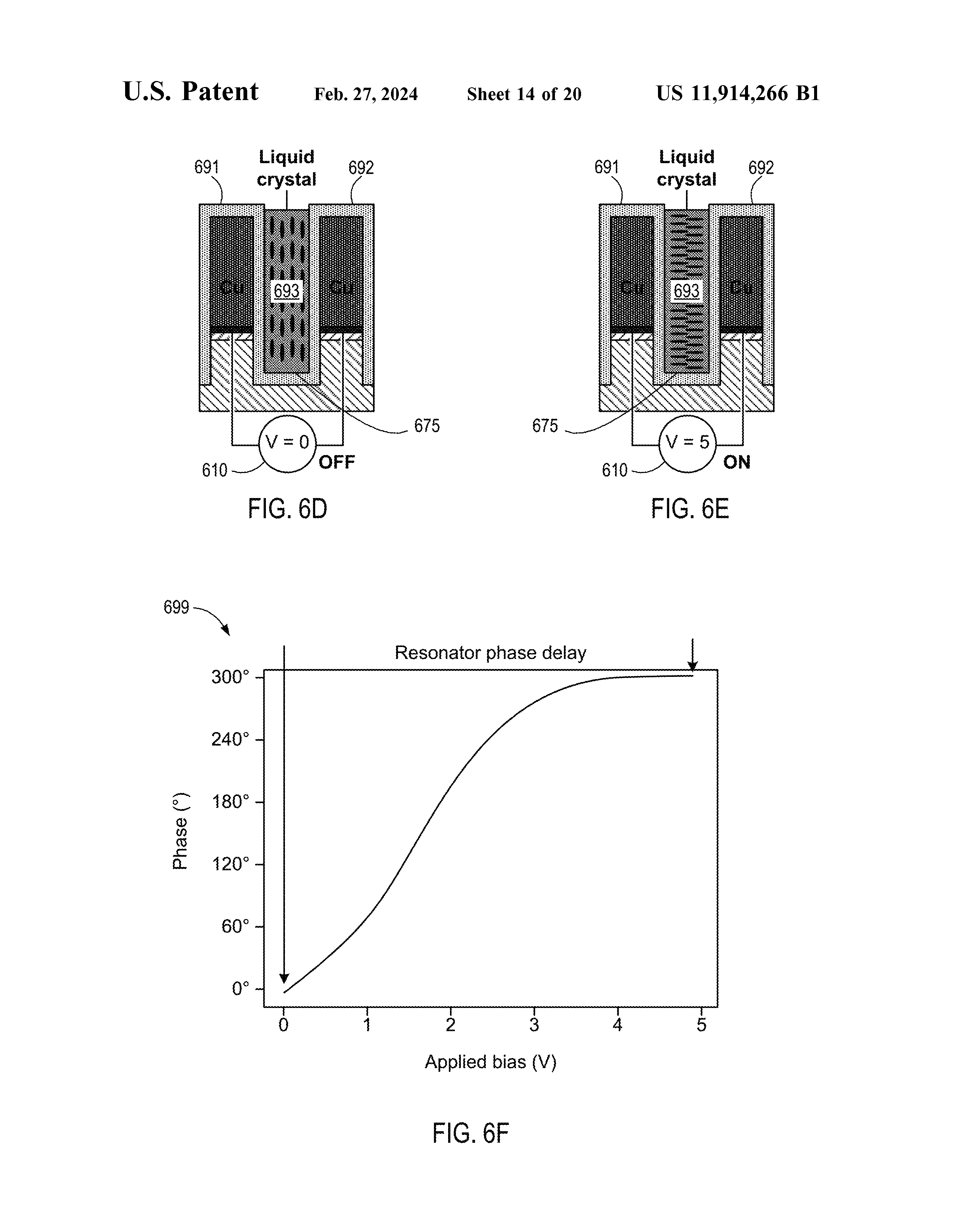
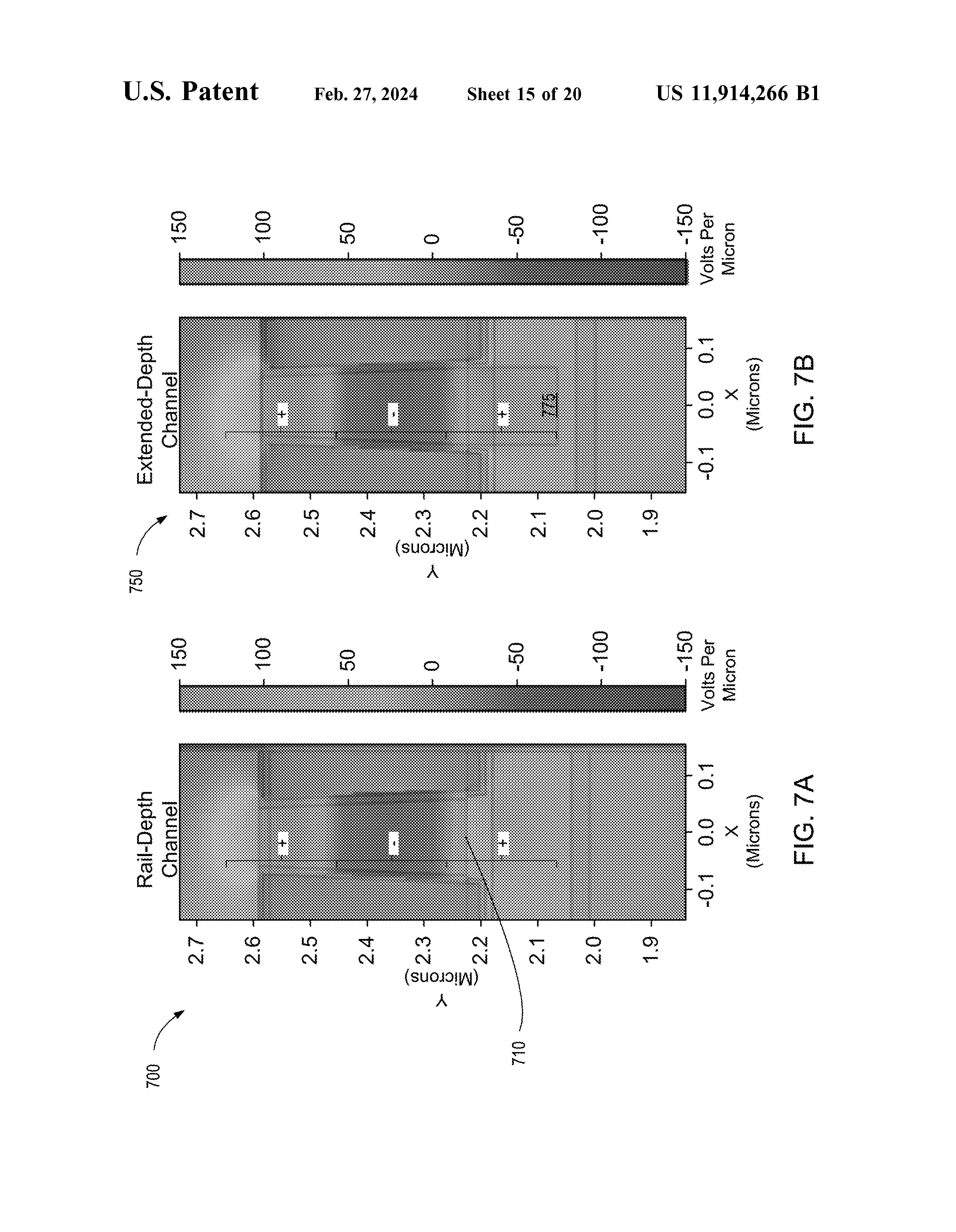
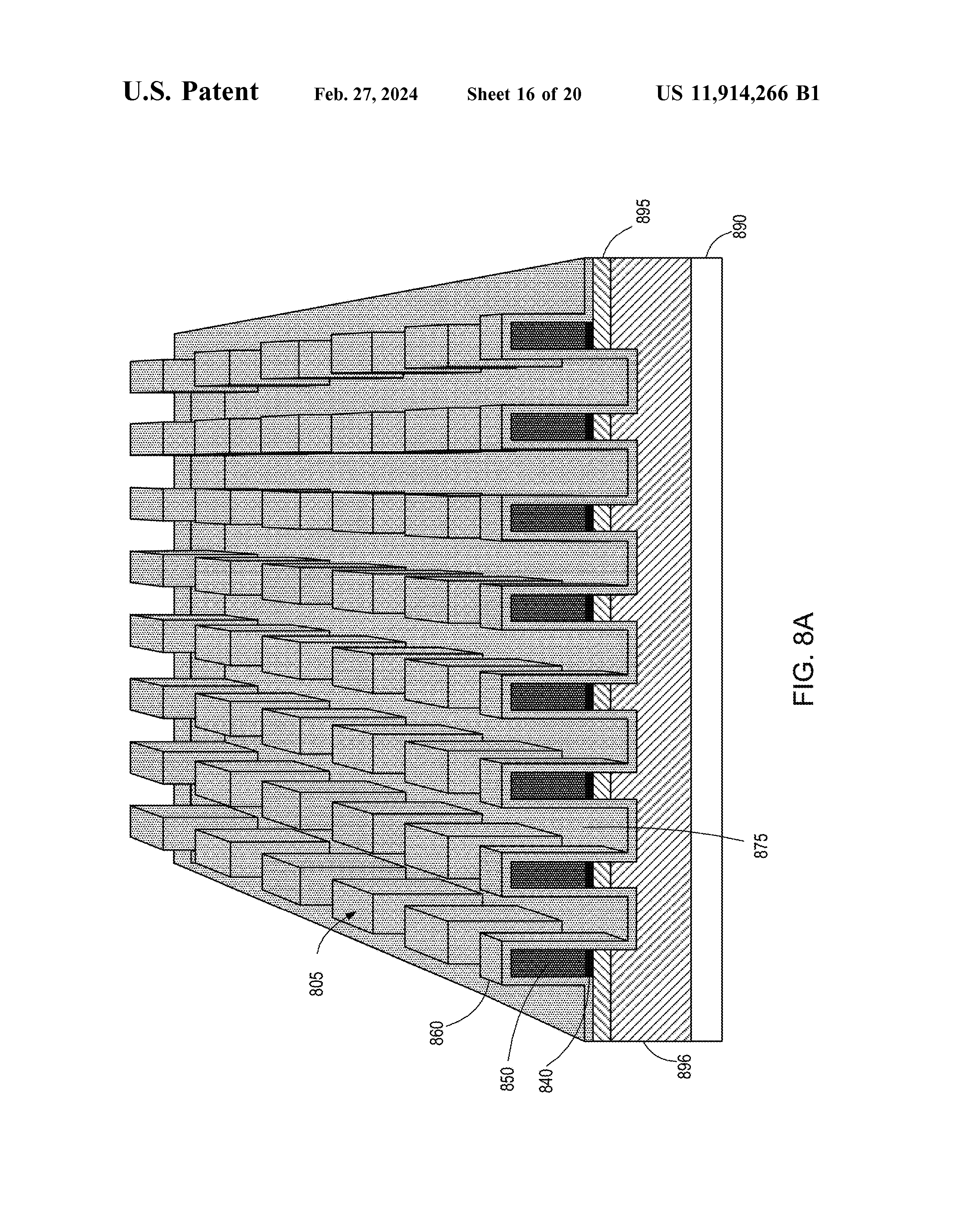
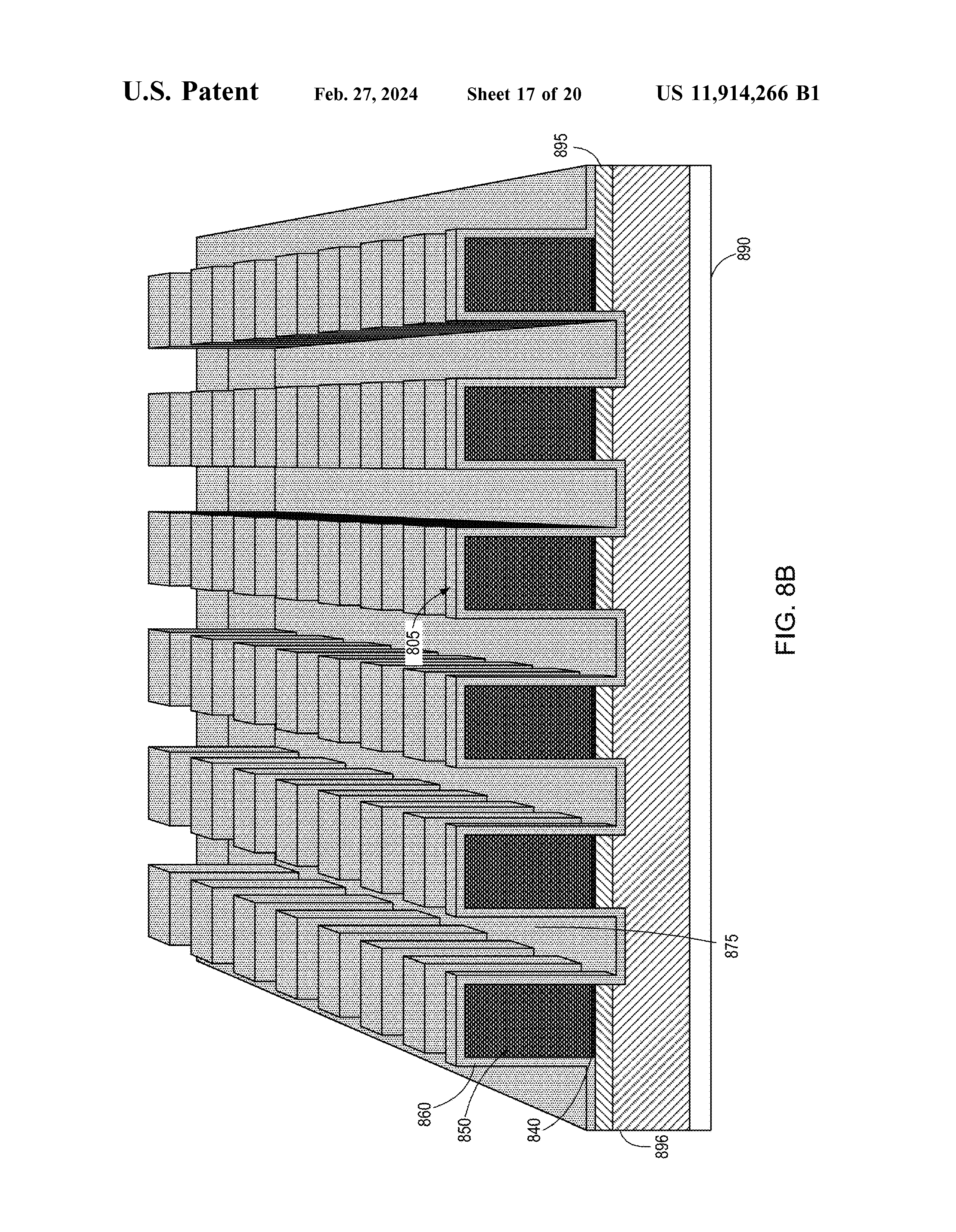
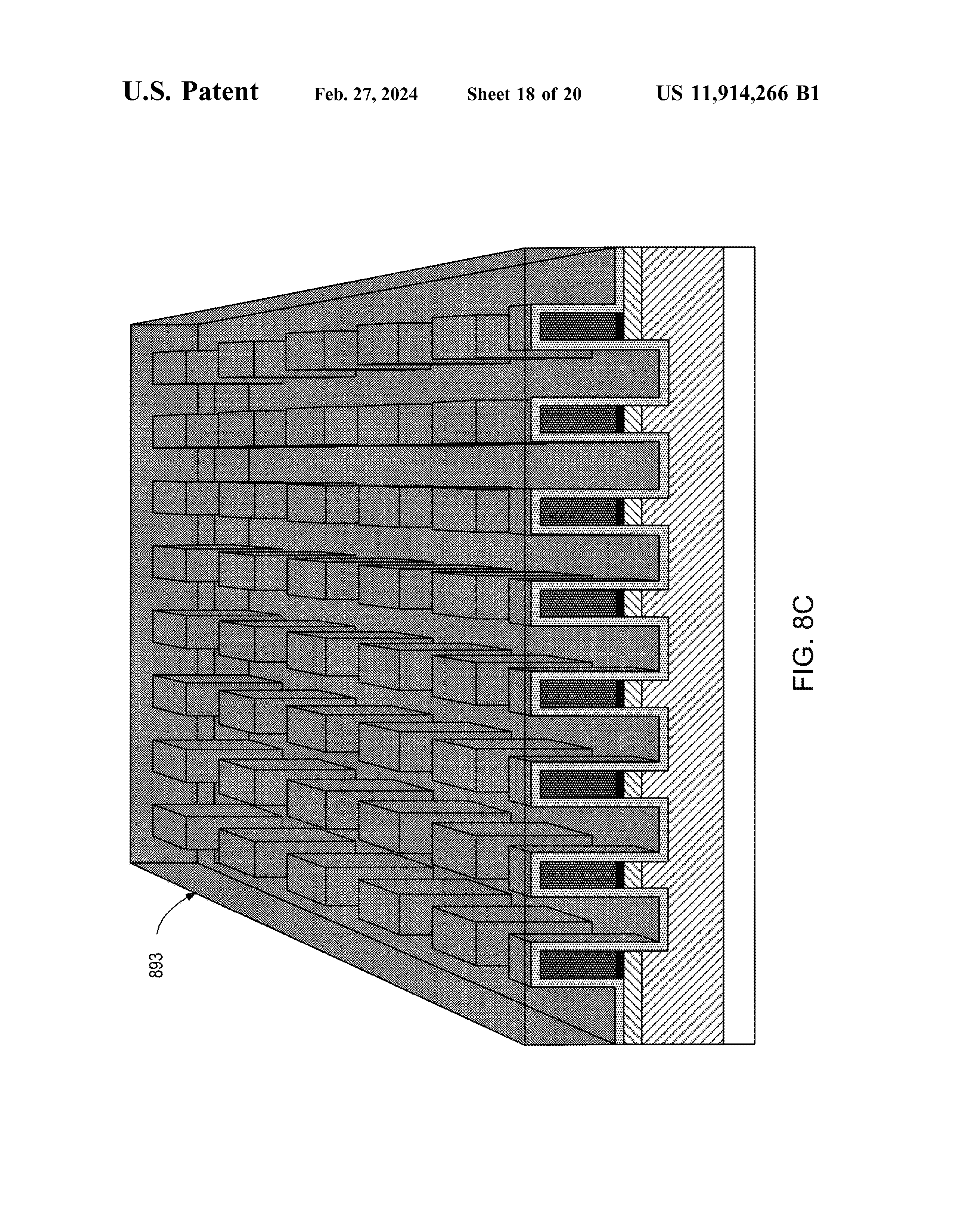
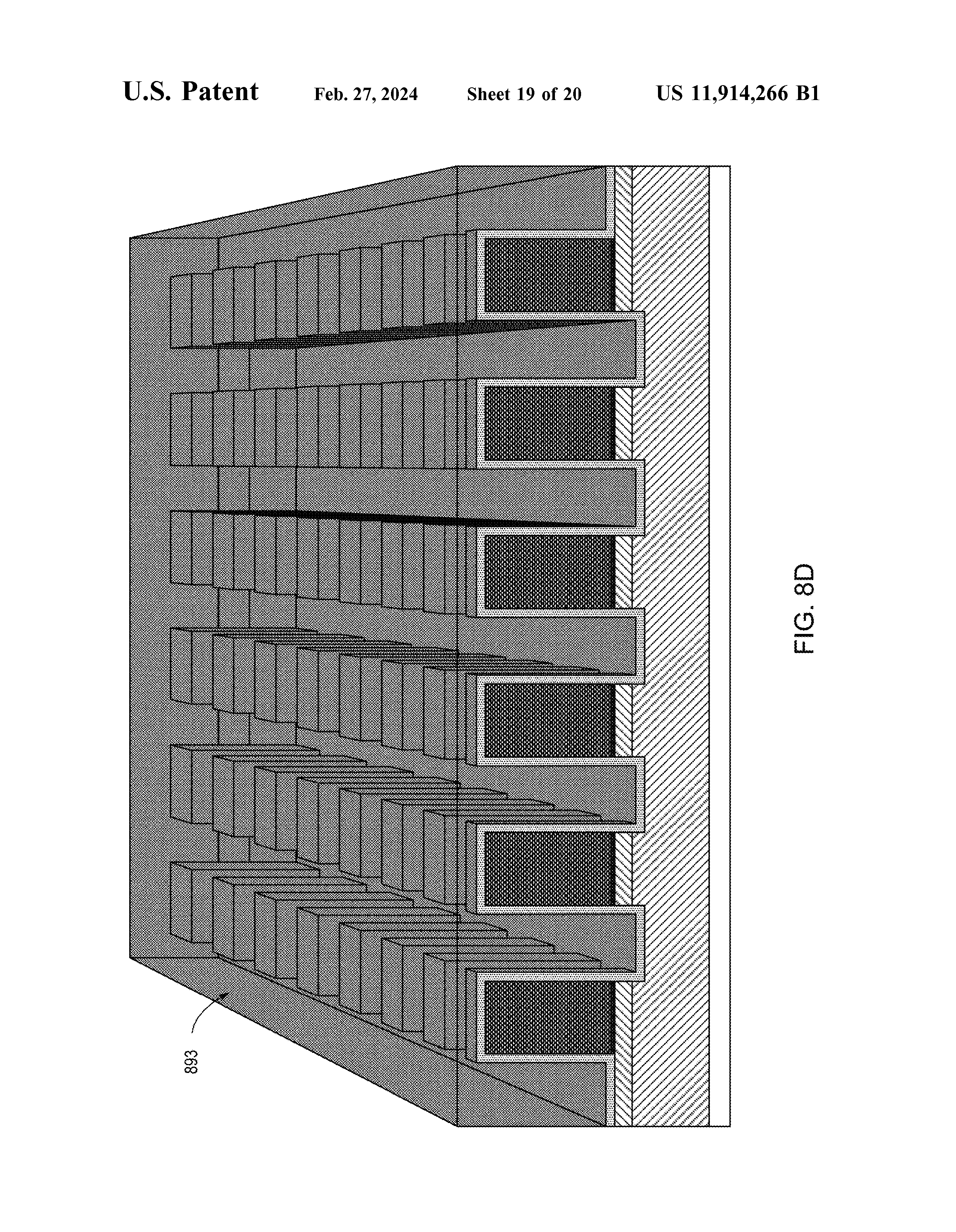
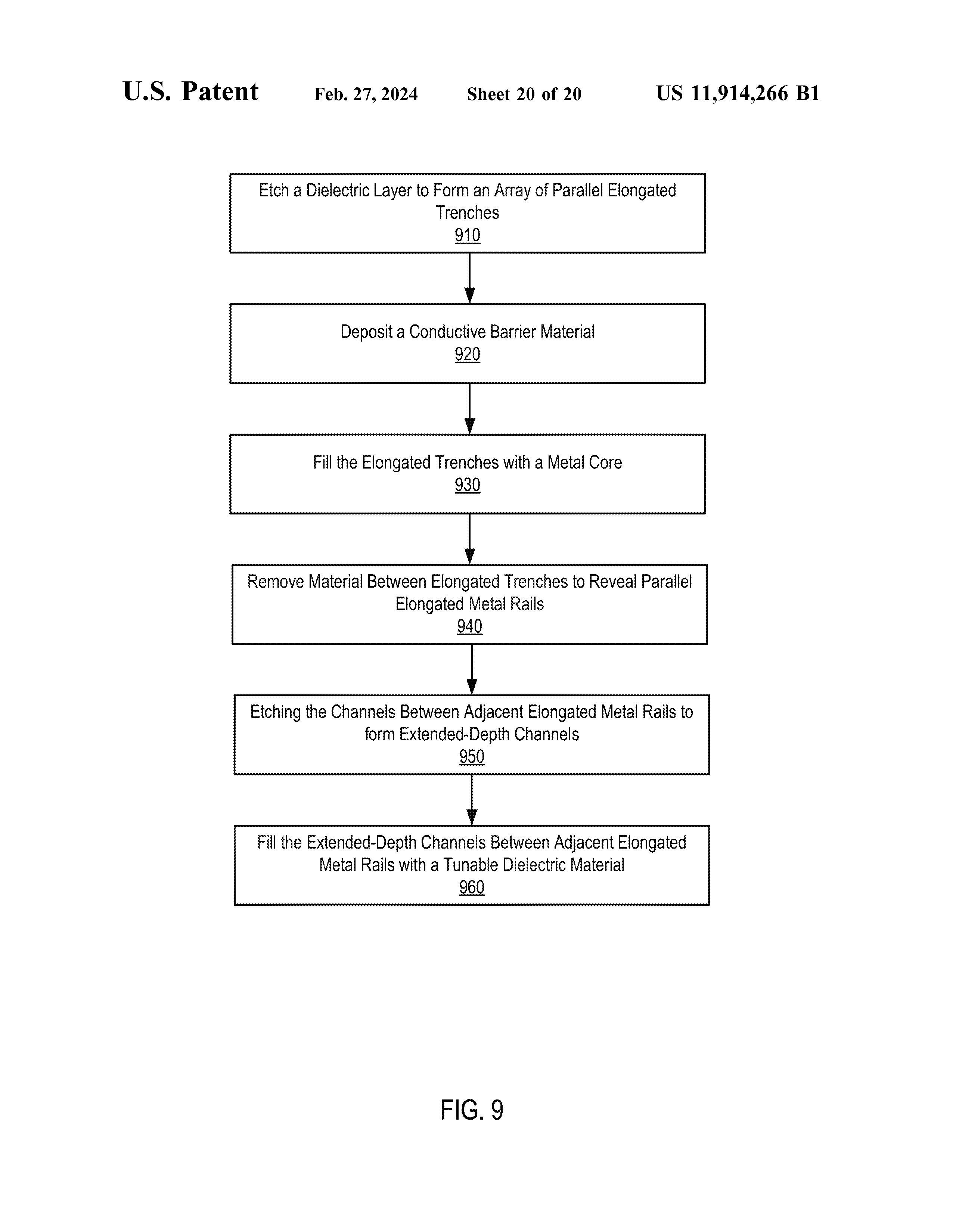
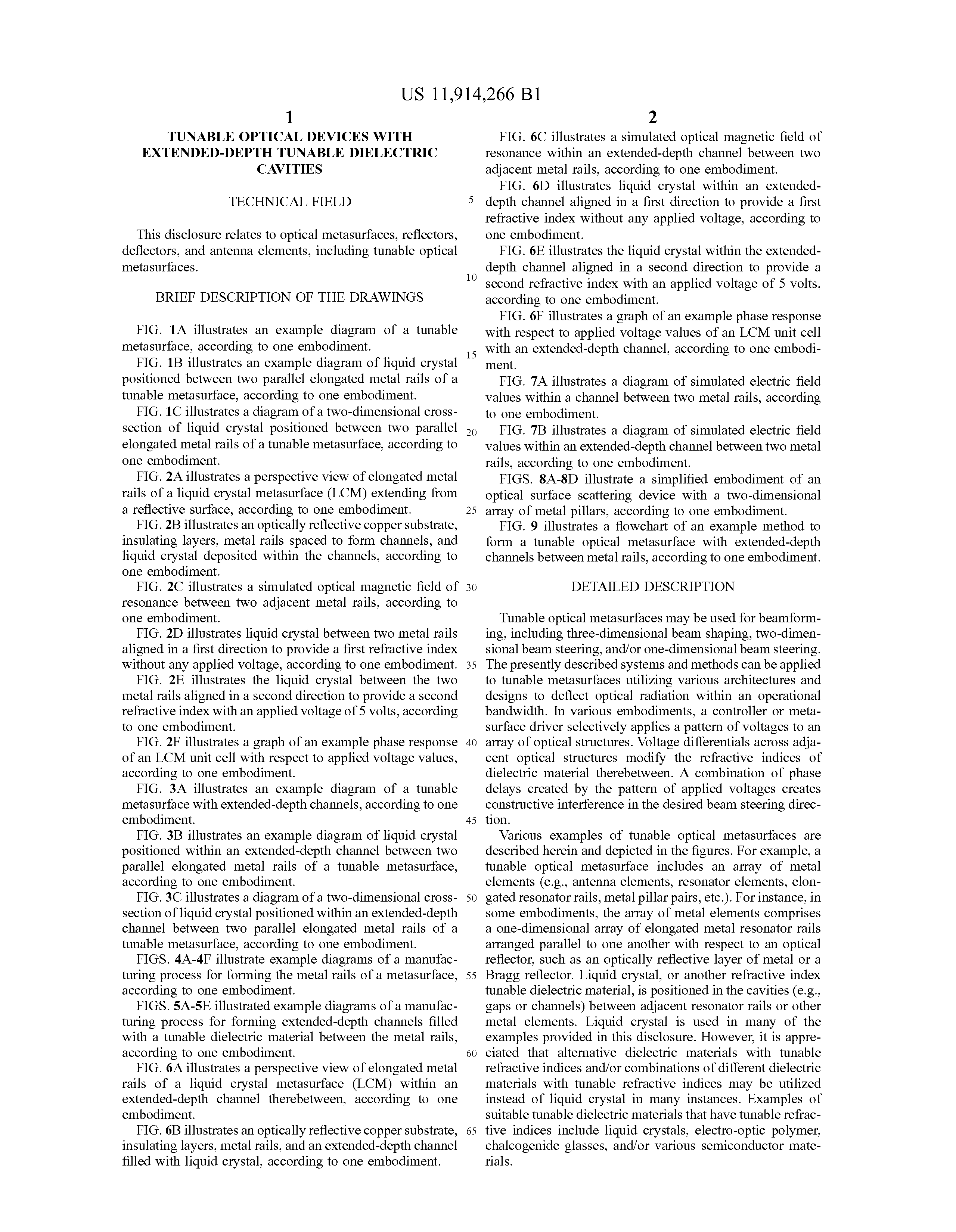
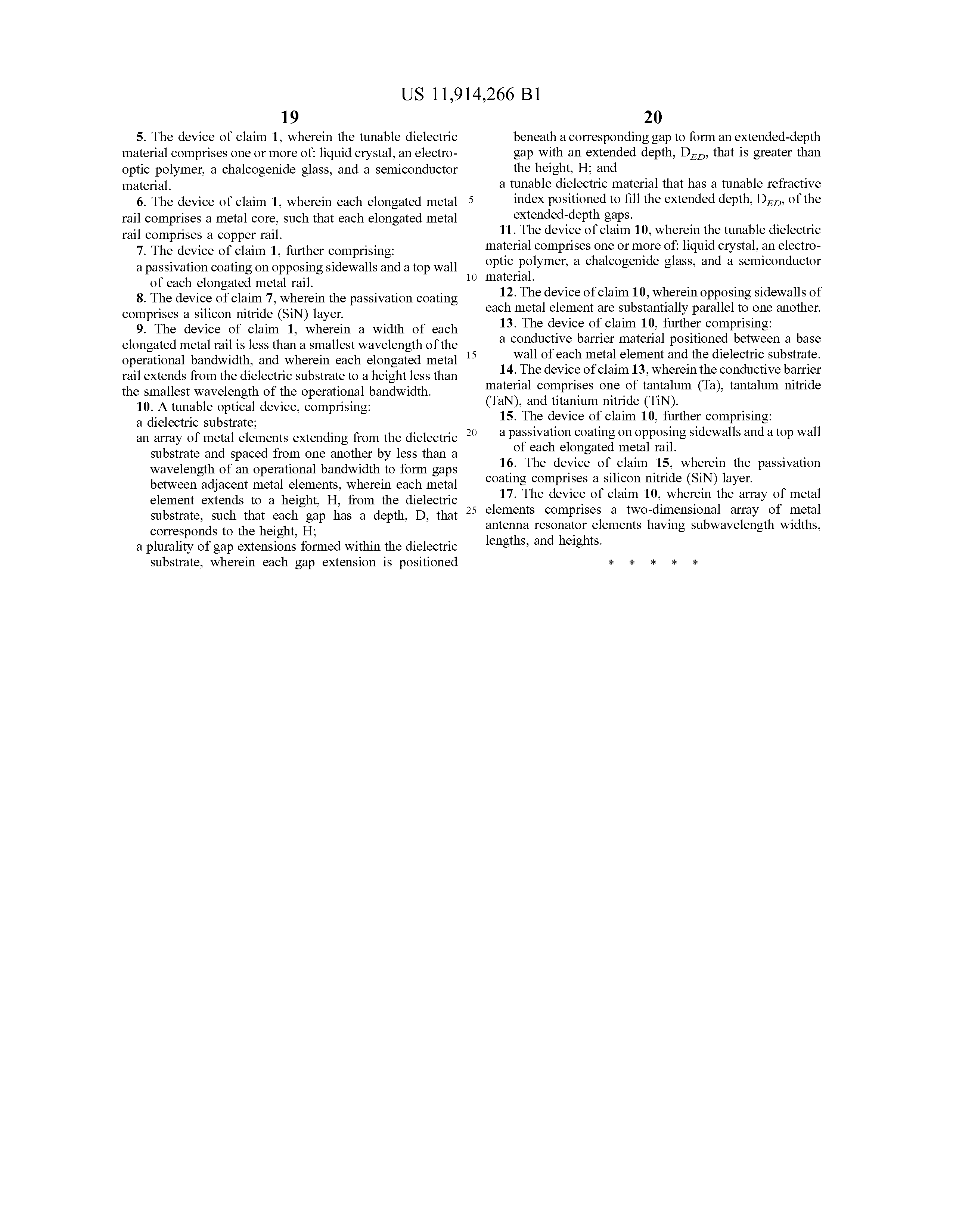
In various embodiments, a tunable optical surface includes a dielectric substrate layer with an array of elongated metal rails extending from the dielectric substrate parallel to one another and spaced from one another to form channels therebetween. The channels are etched deeper into the dielectric substrate to form extended-depth channels. The depth of each extended-depth channel is greater than the height of adjacent elongated metal rails. The dimensions of the elongated metal rails and the extended-depth channels therebetween may be subwavelength with respect to an operational bandwidth. A tunable dielectric material that has a tunable refractive index, such as liquid crystal, is positioned within the extended-depth channels between adjacent elongated metal rails.
4. Lidar systems based on tunable optical metasurfaces
Published:
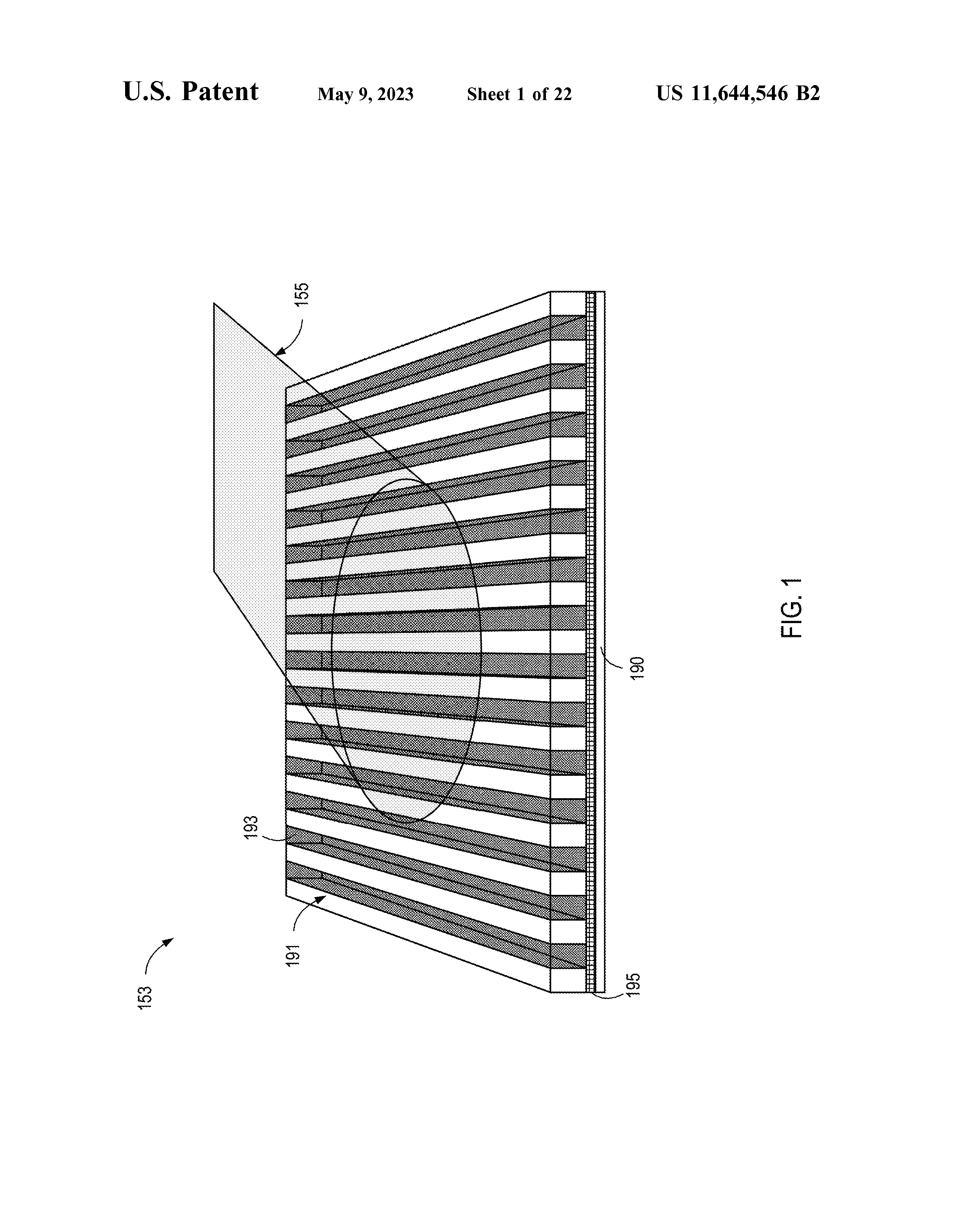
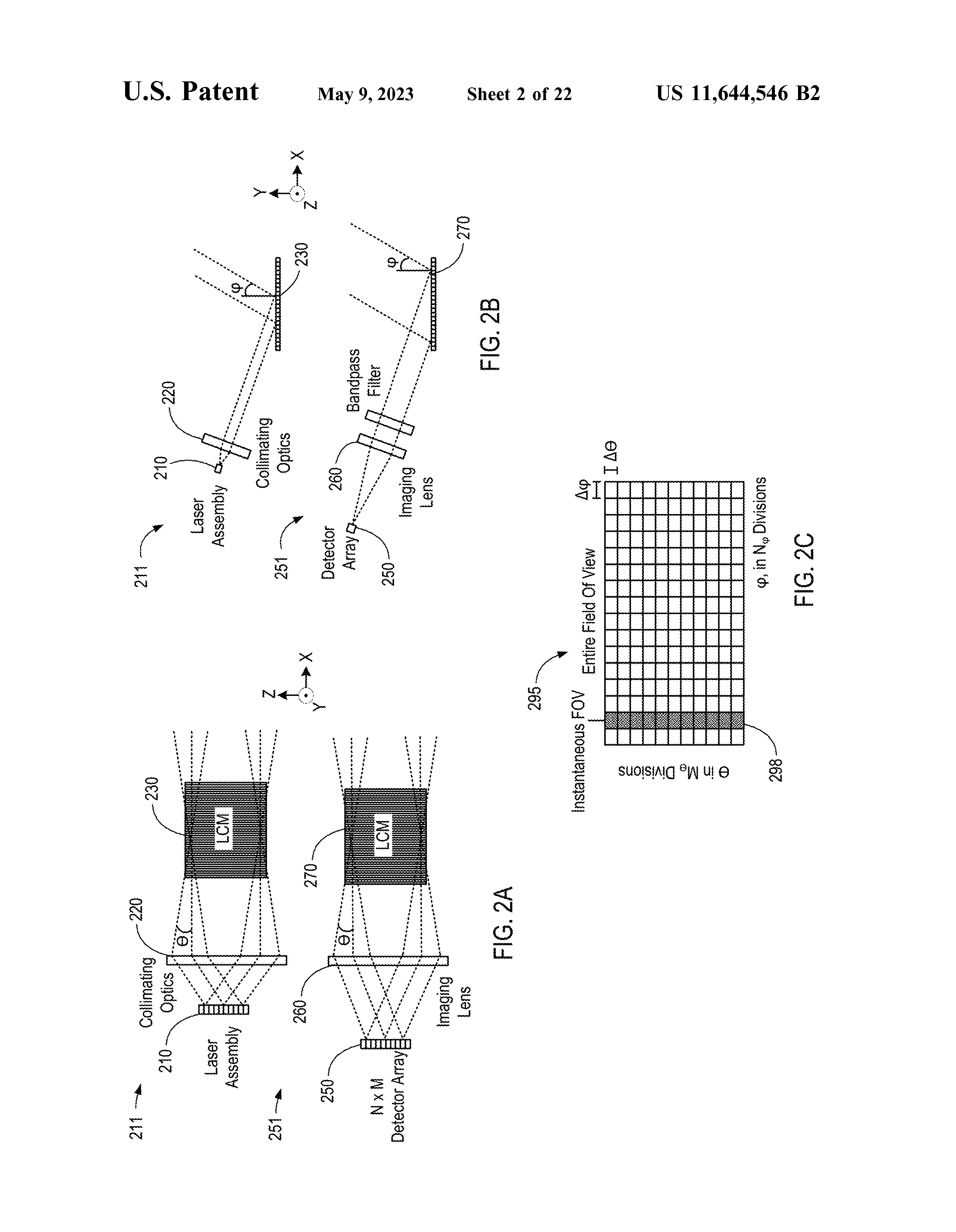
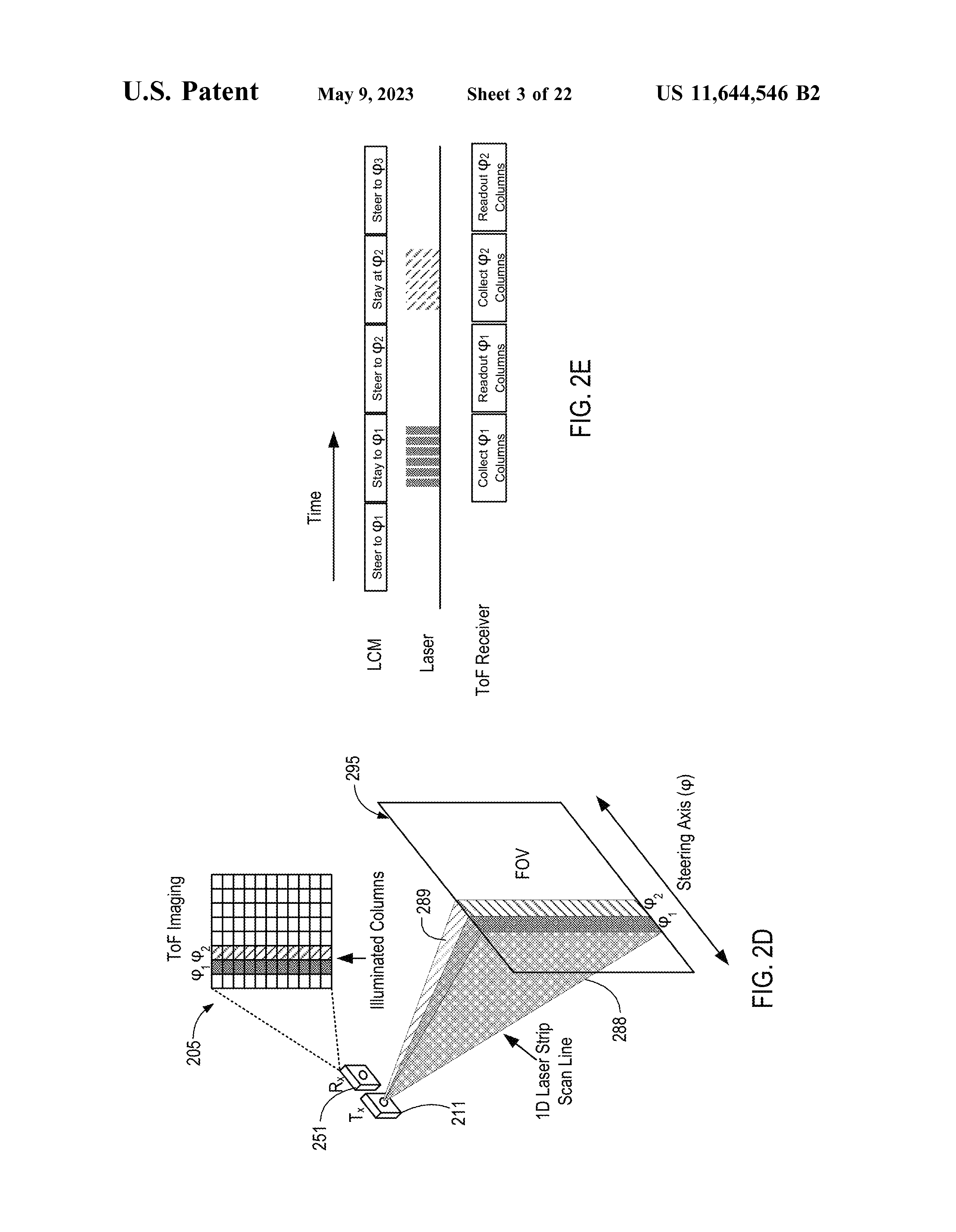
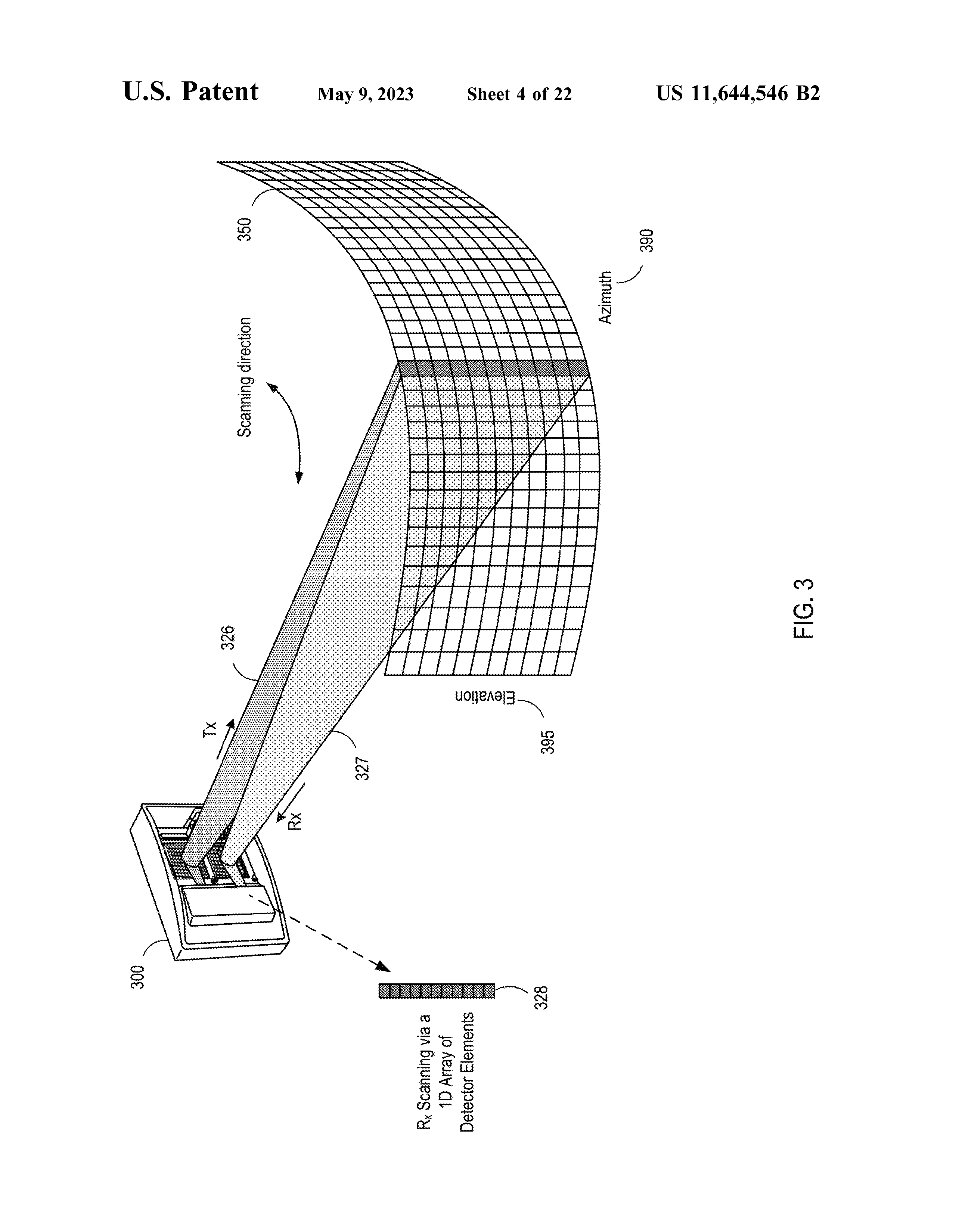
Abstract:
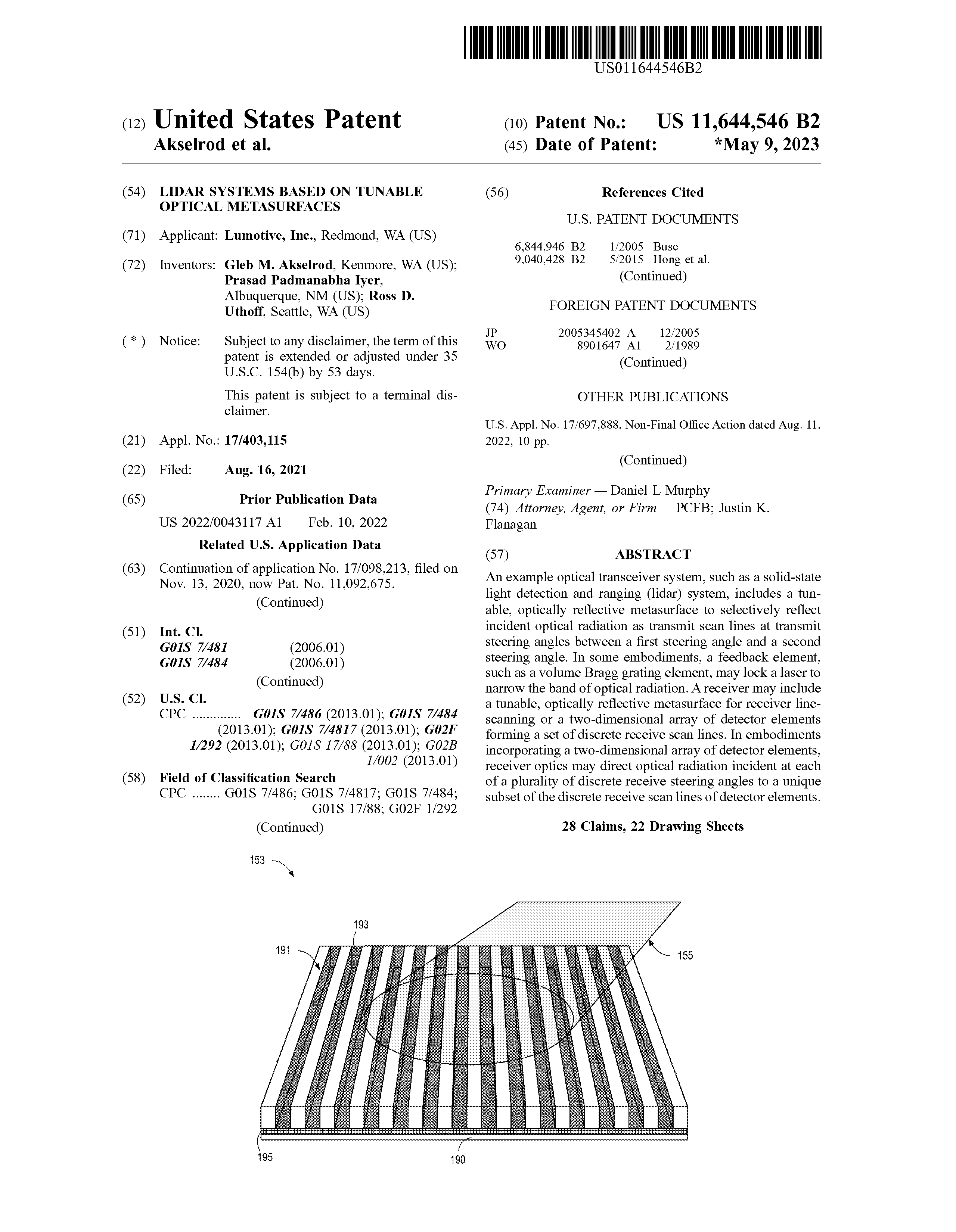
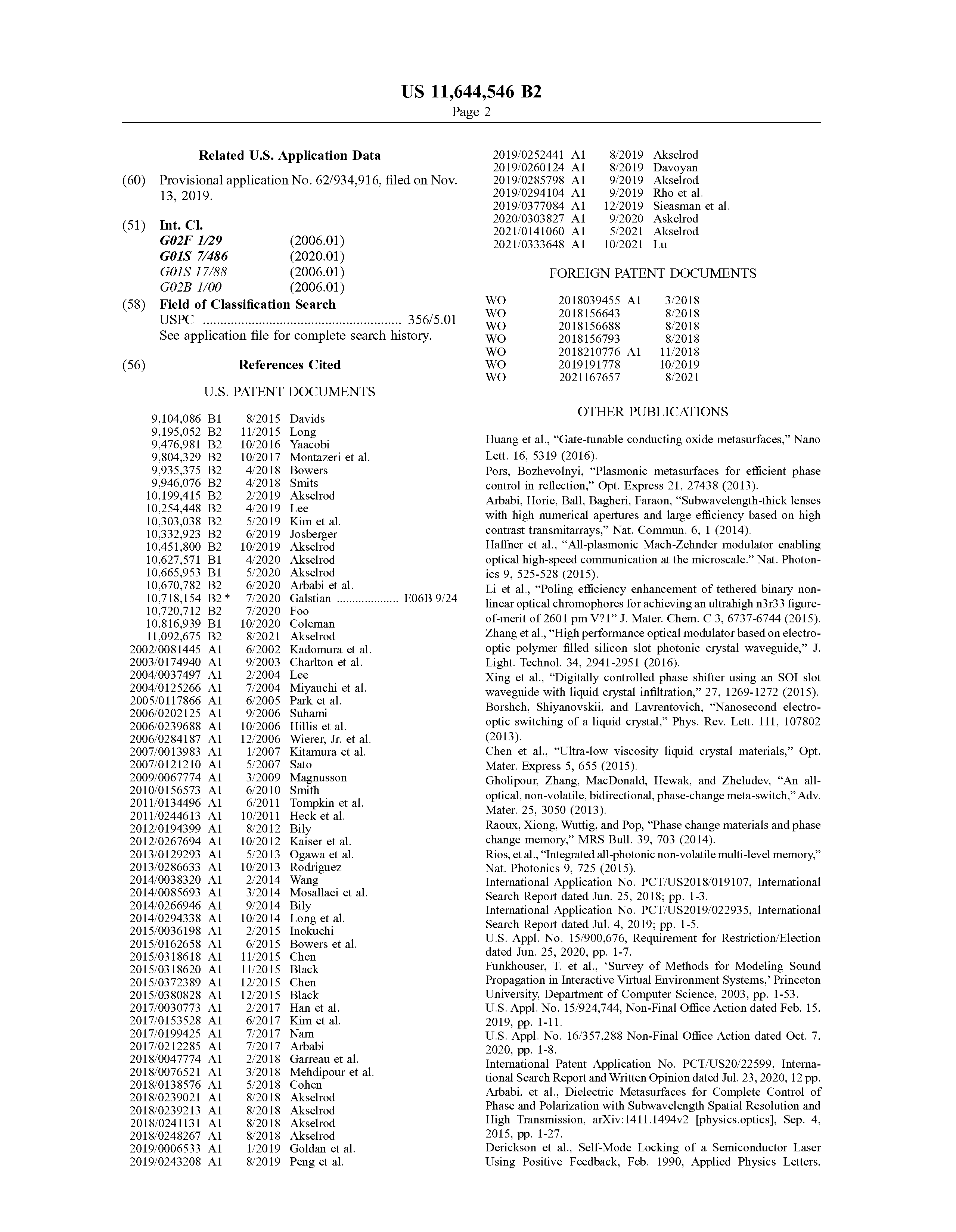
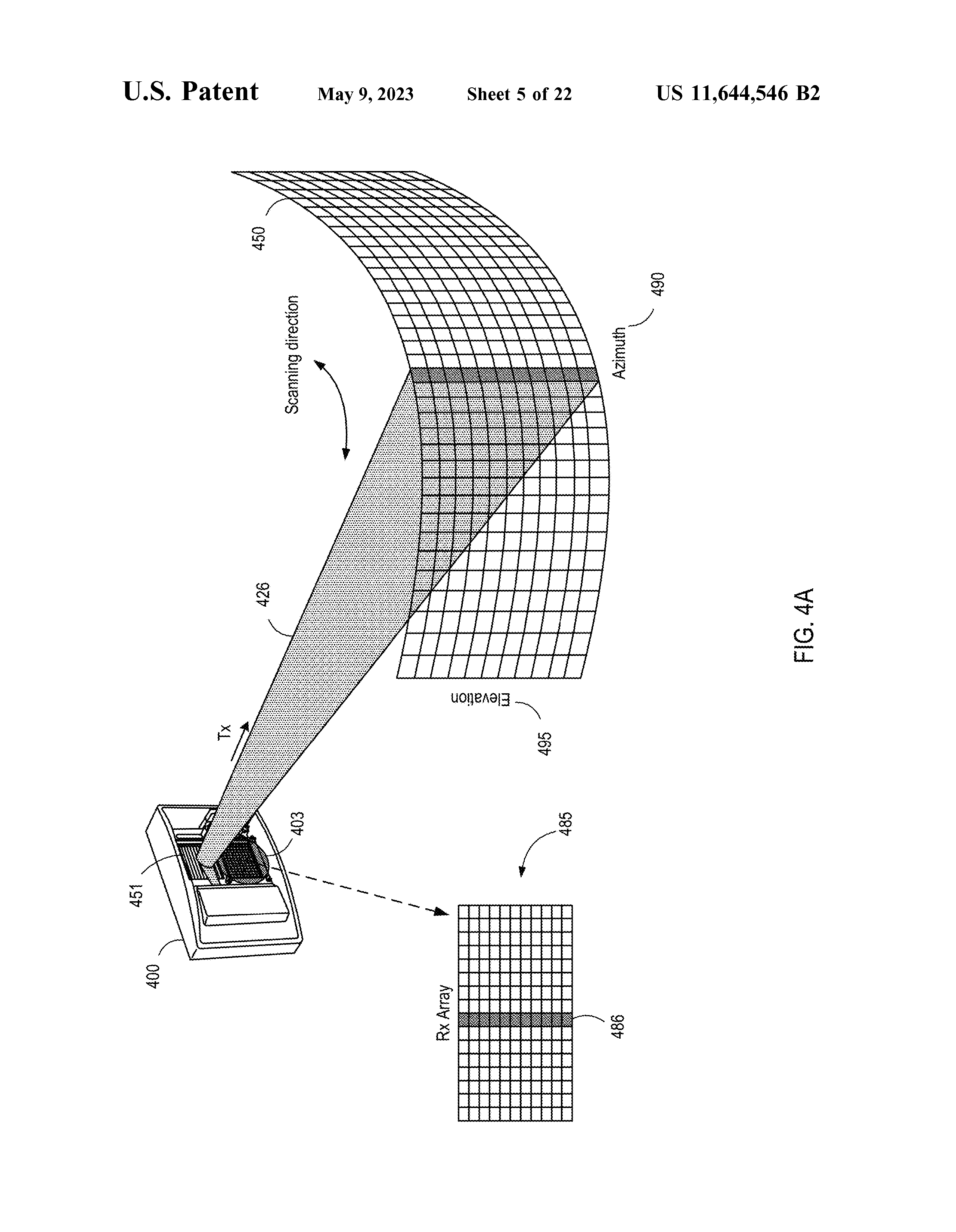
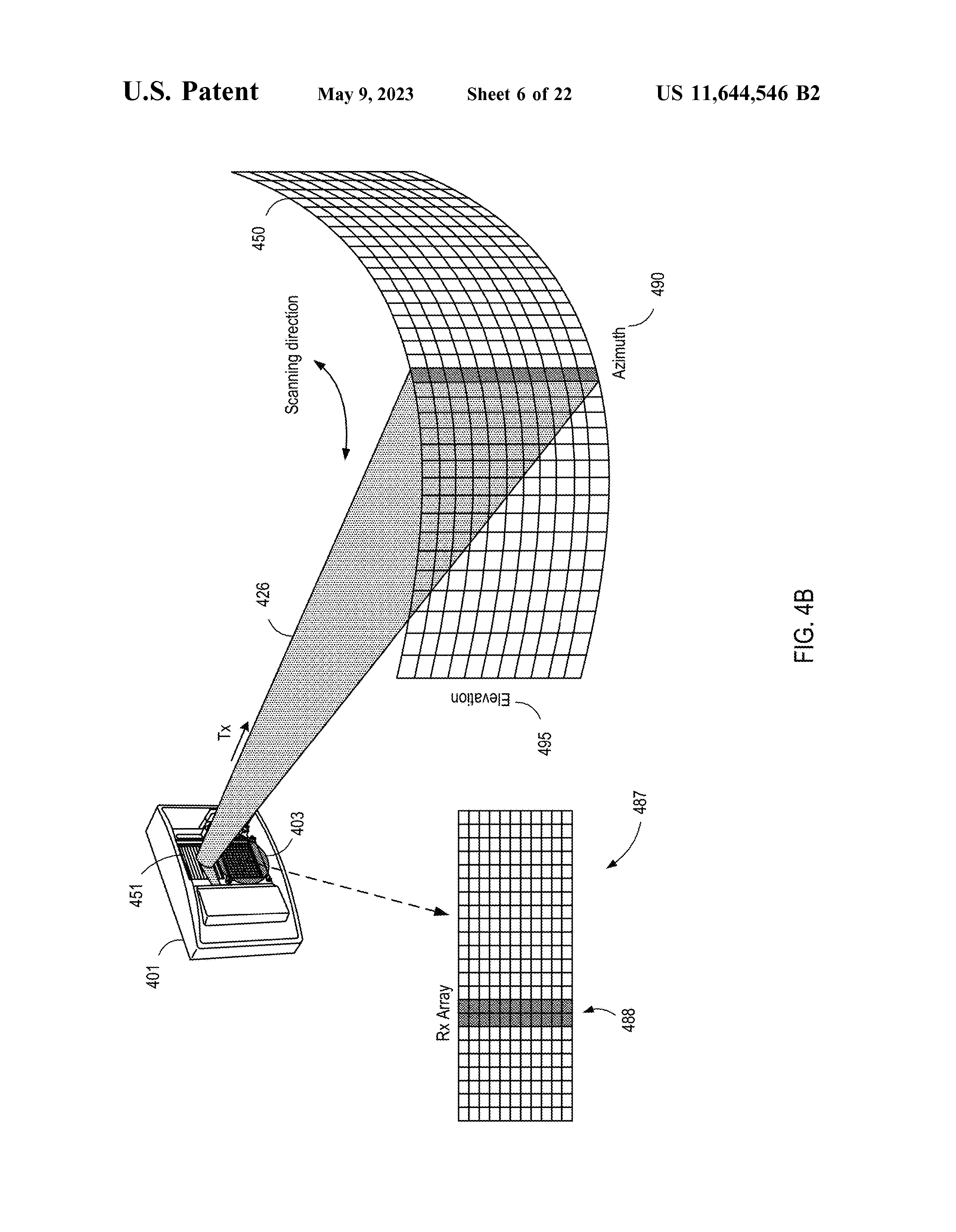
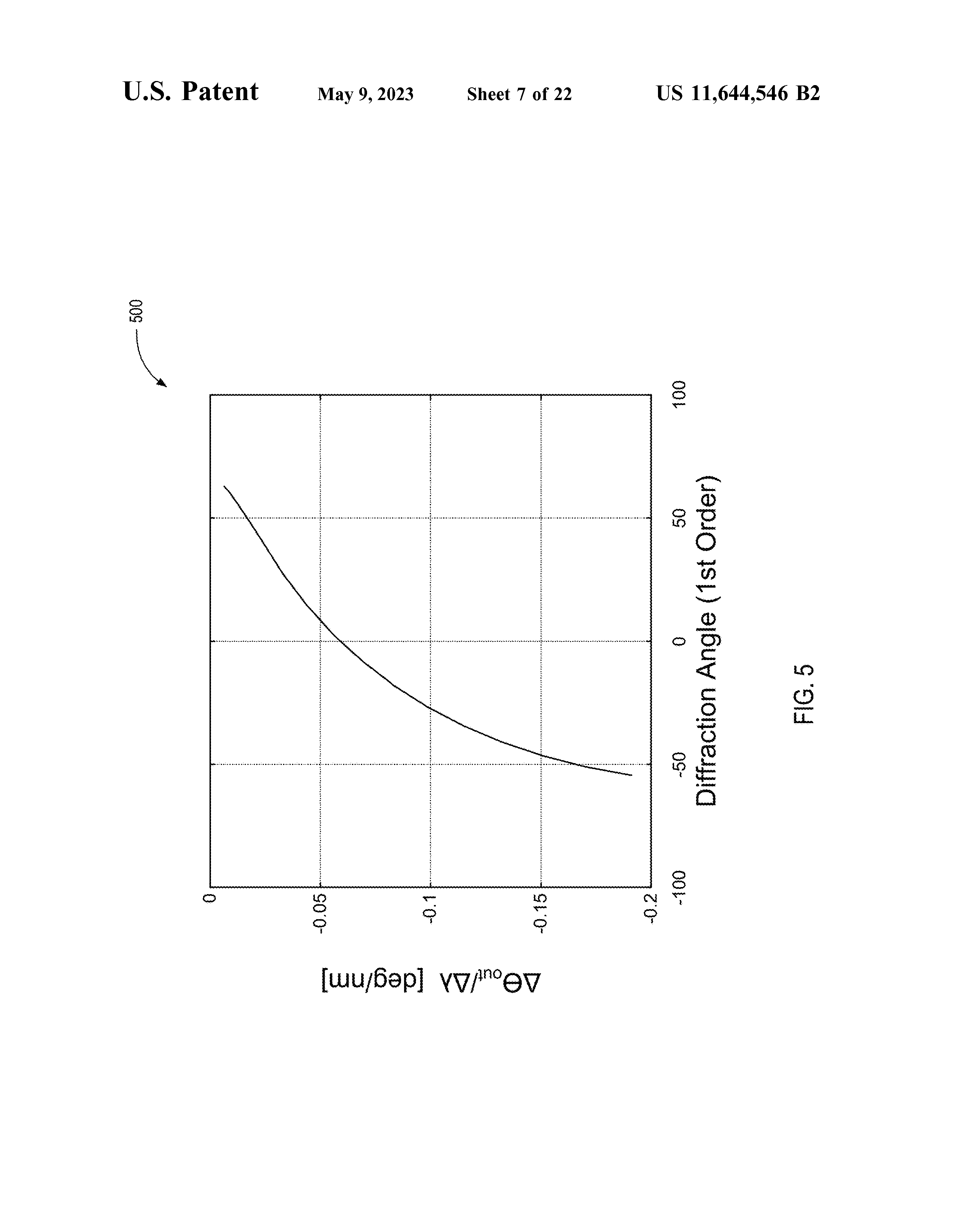
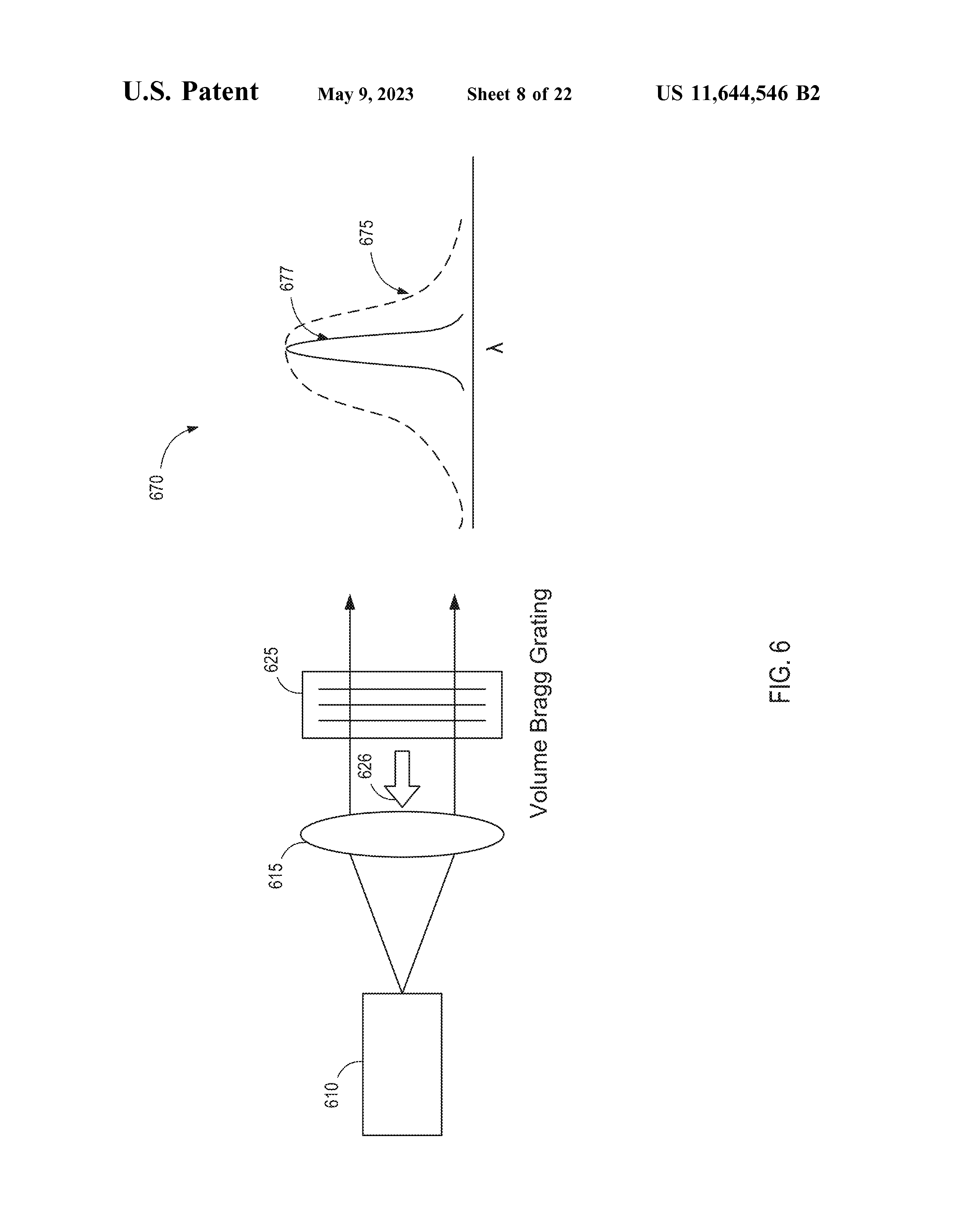
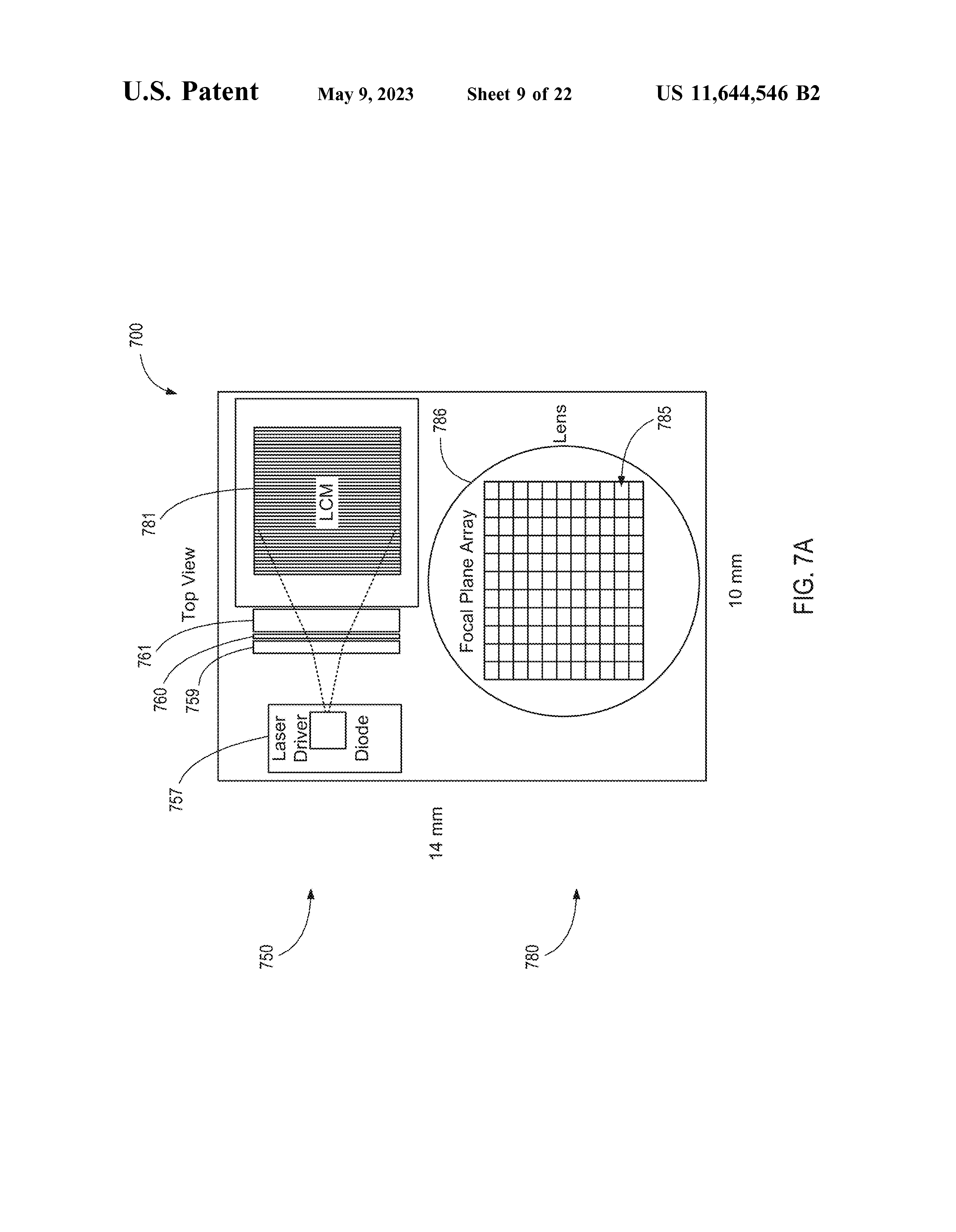
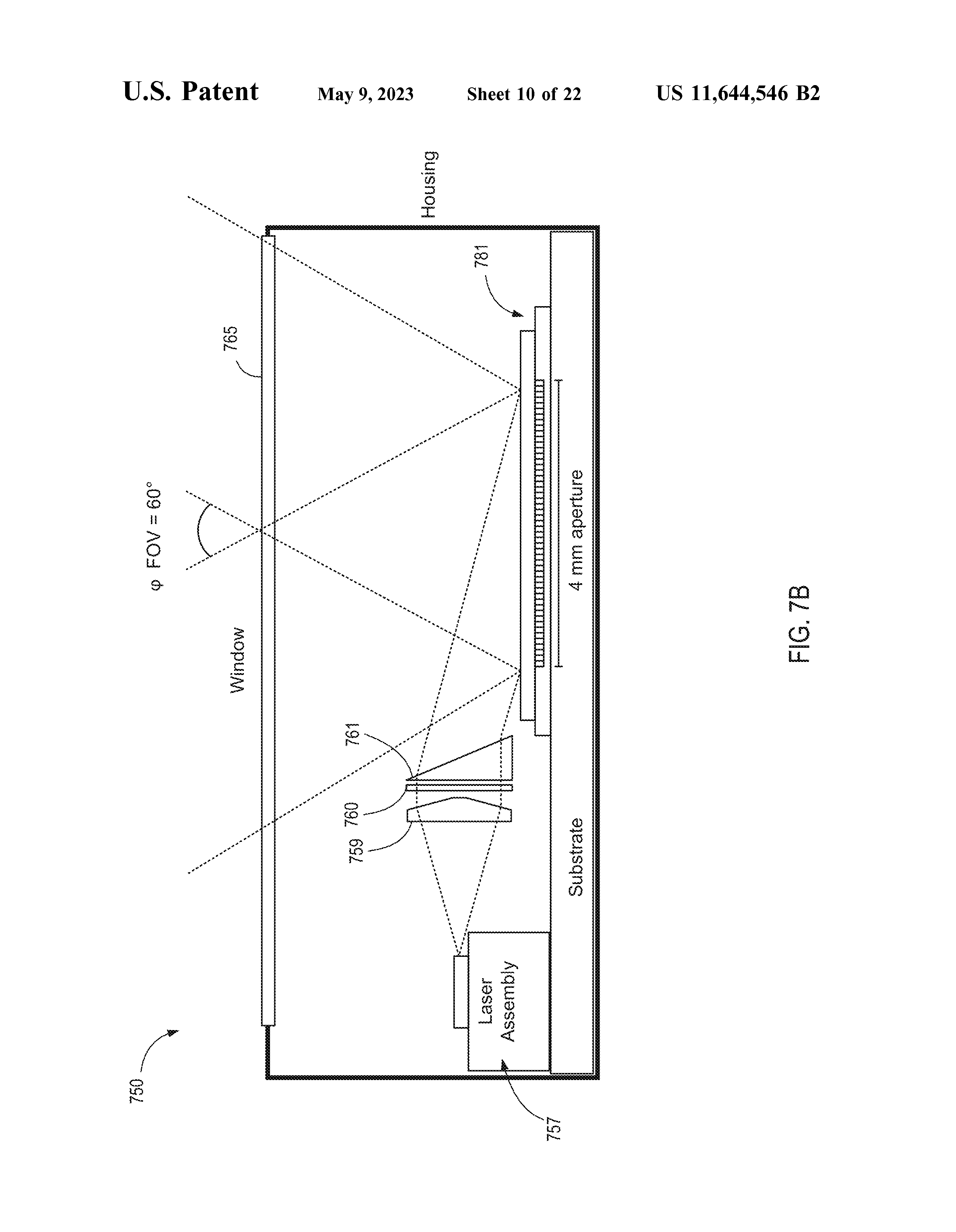
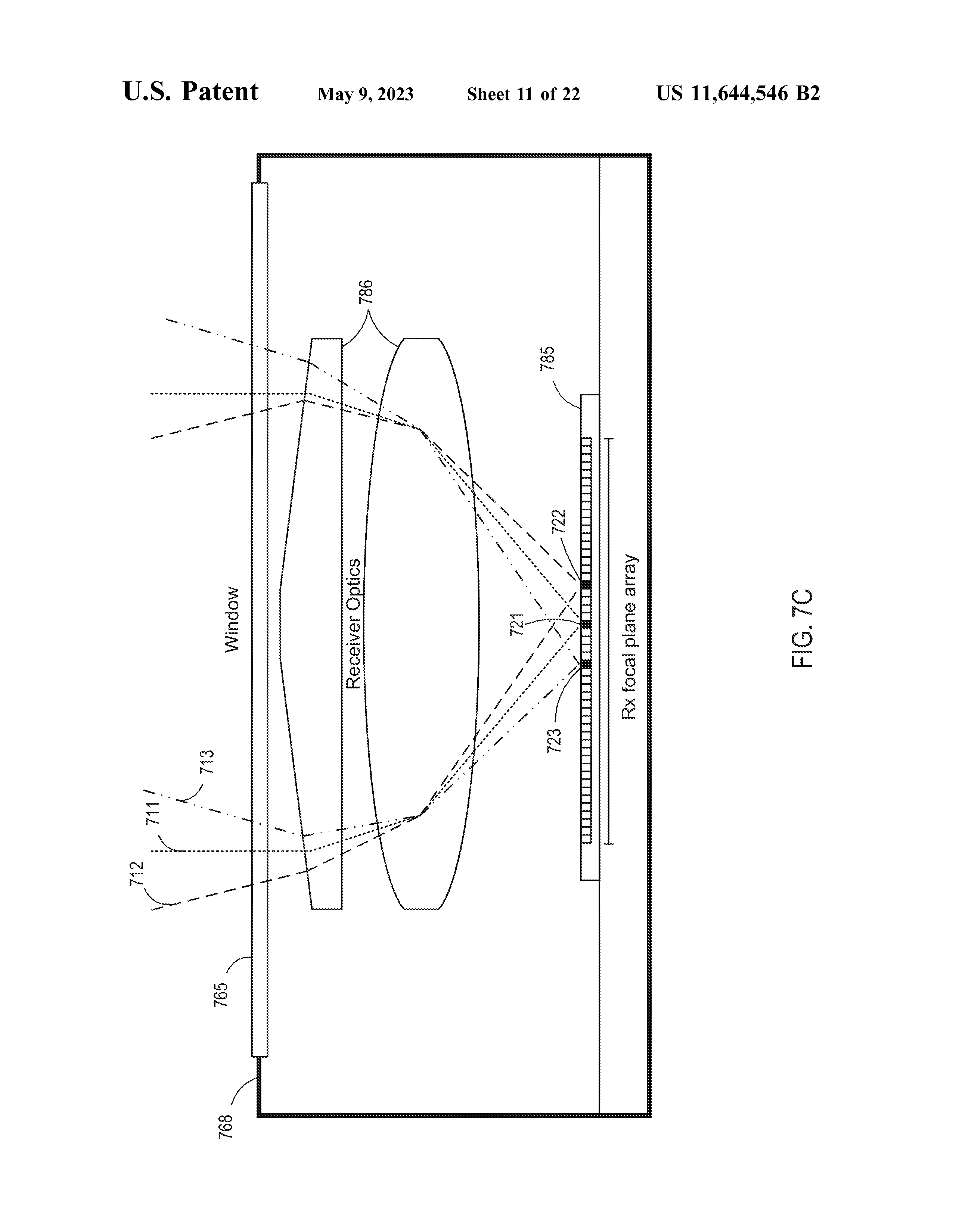
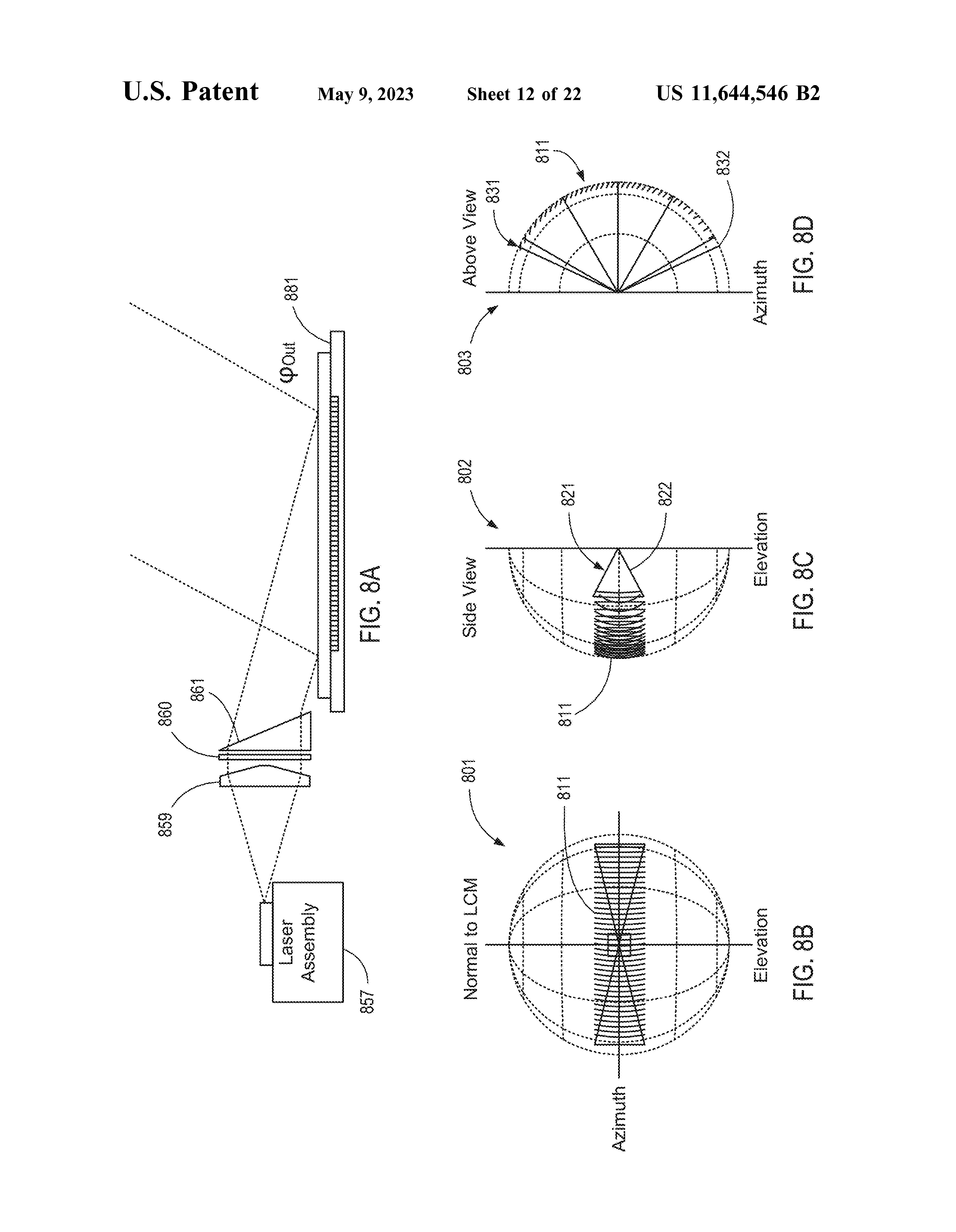
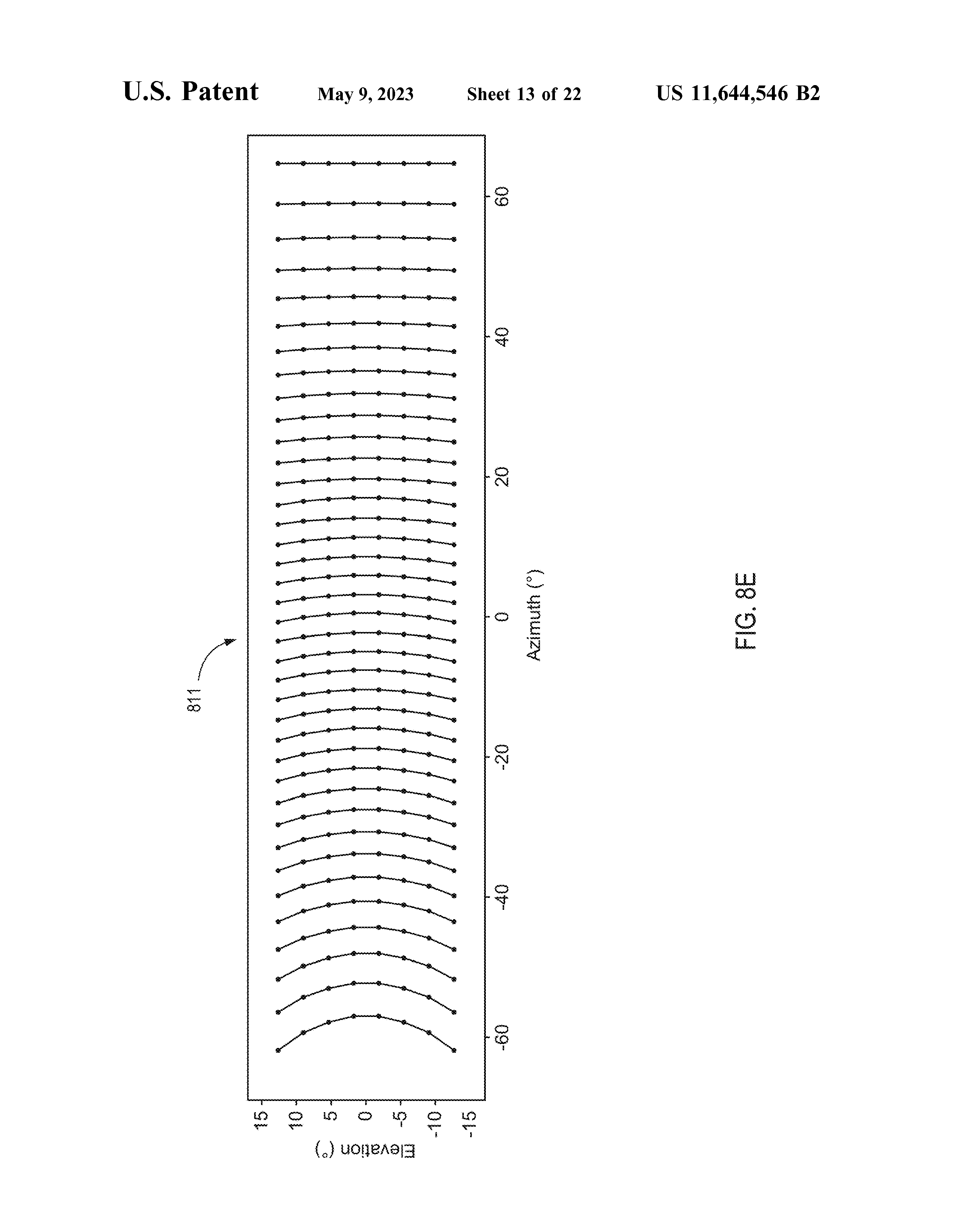
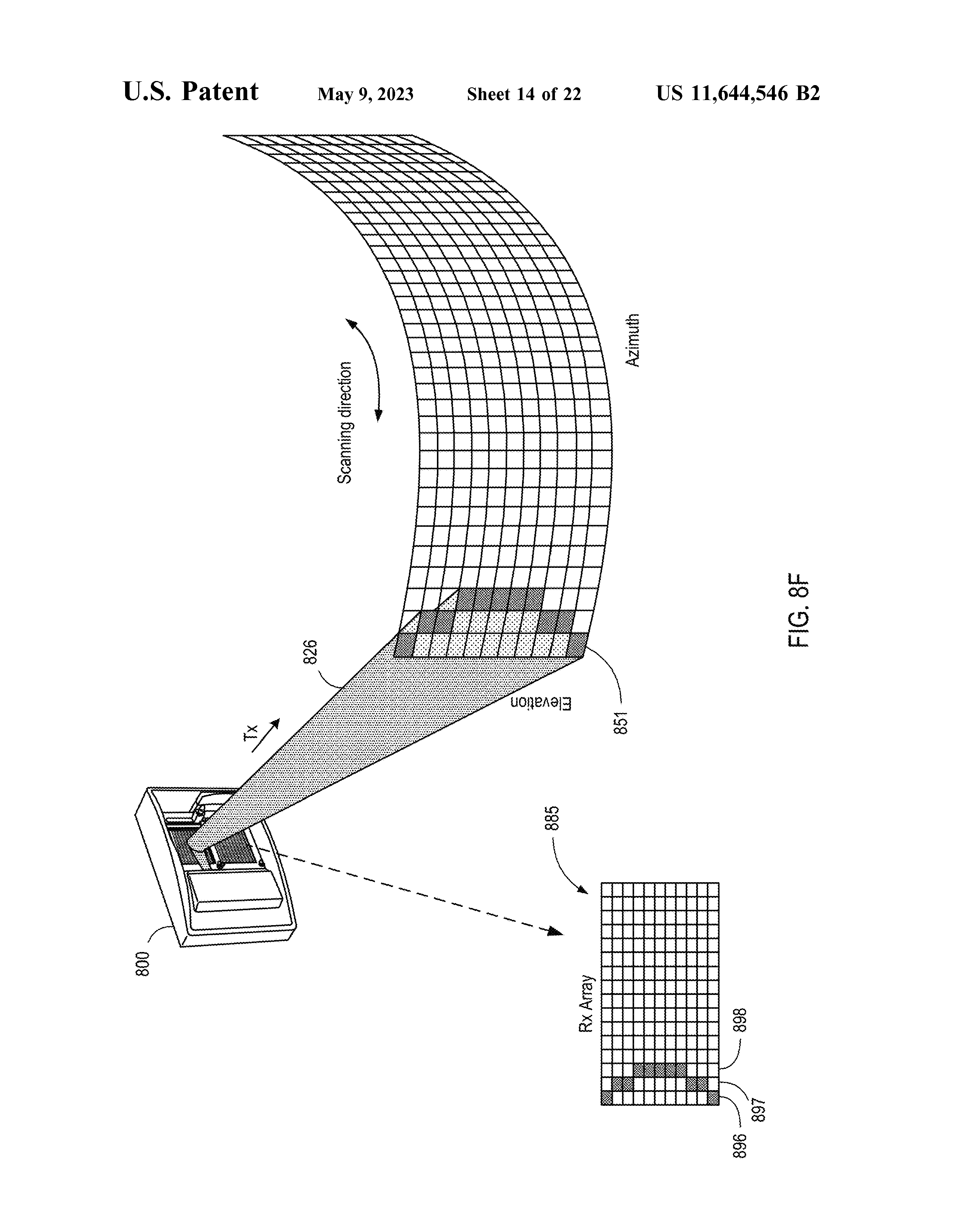
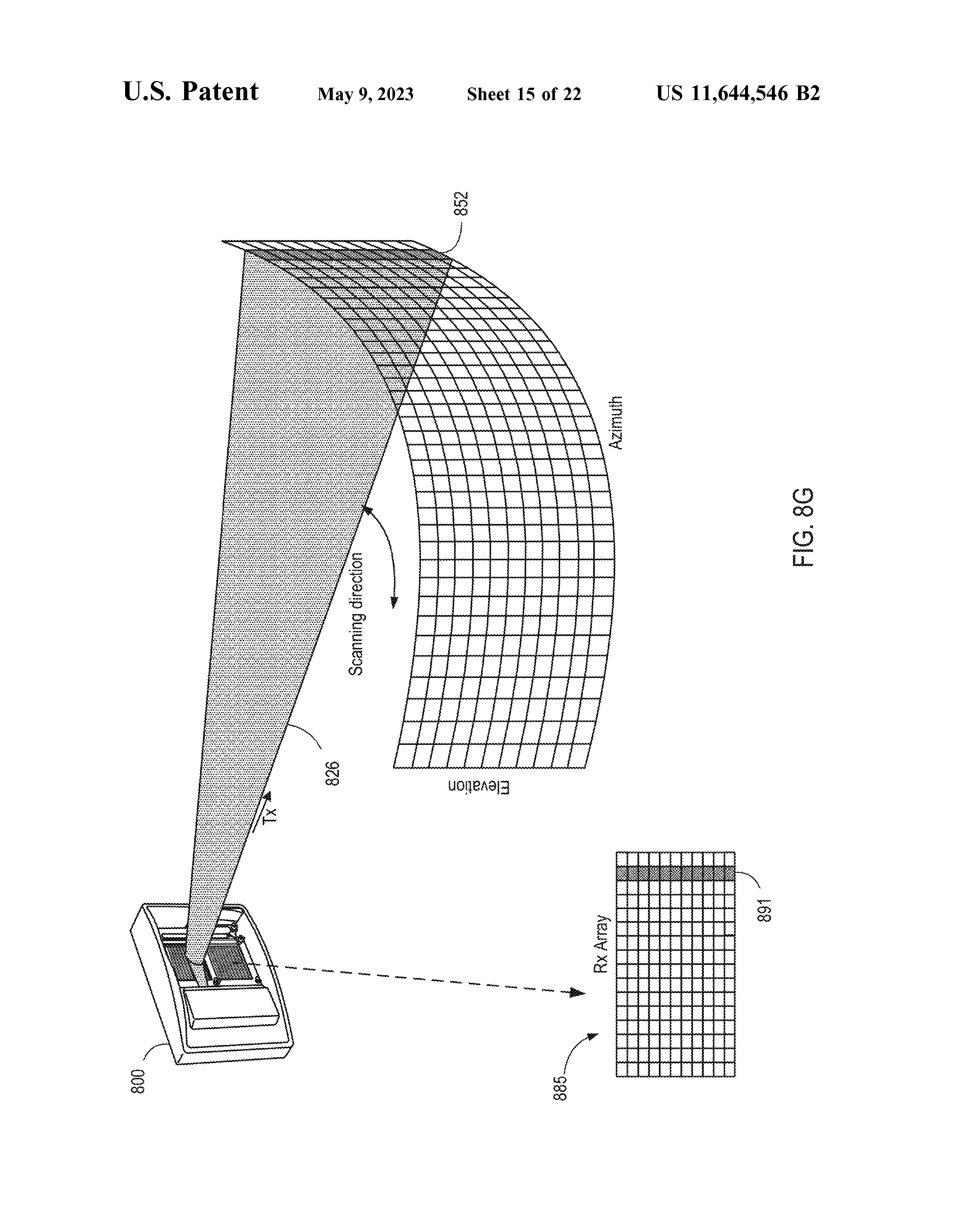
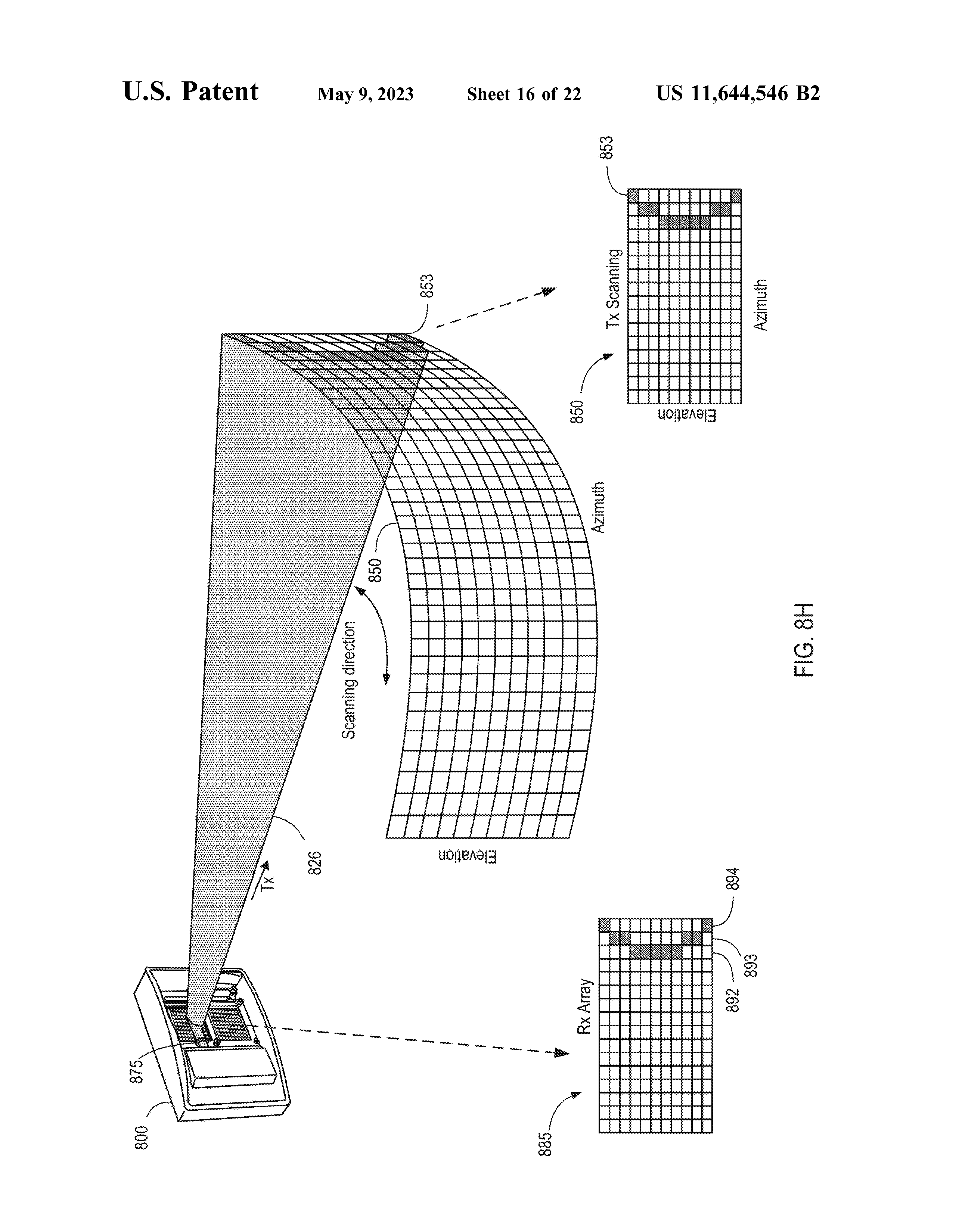
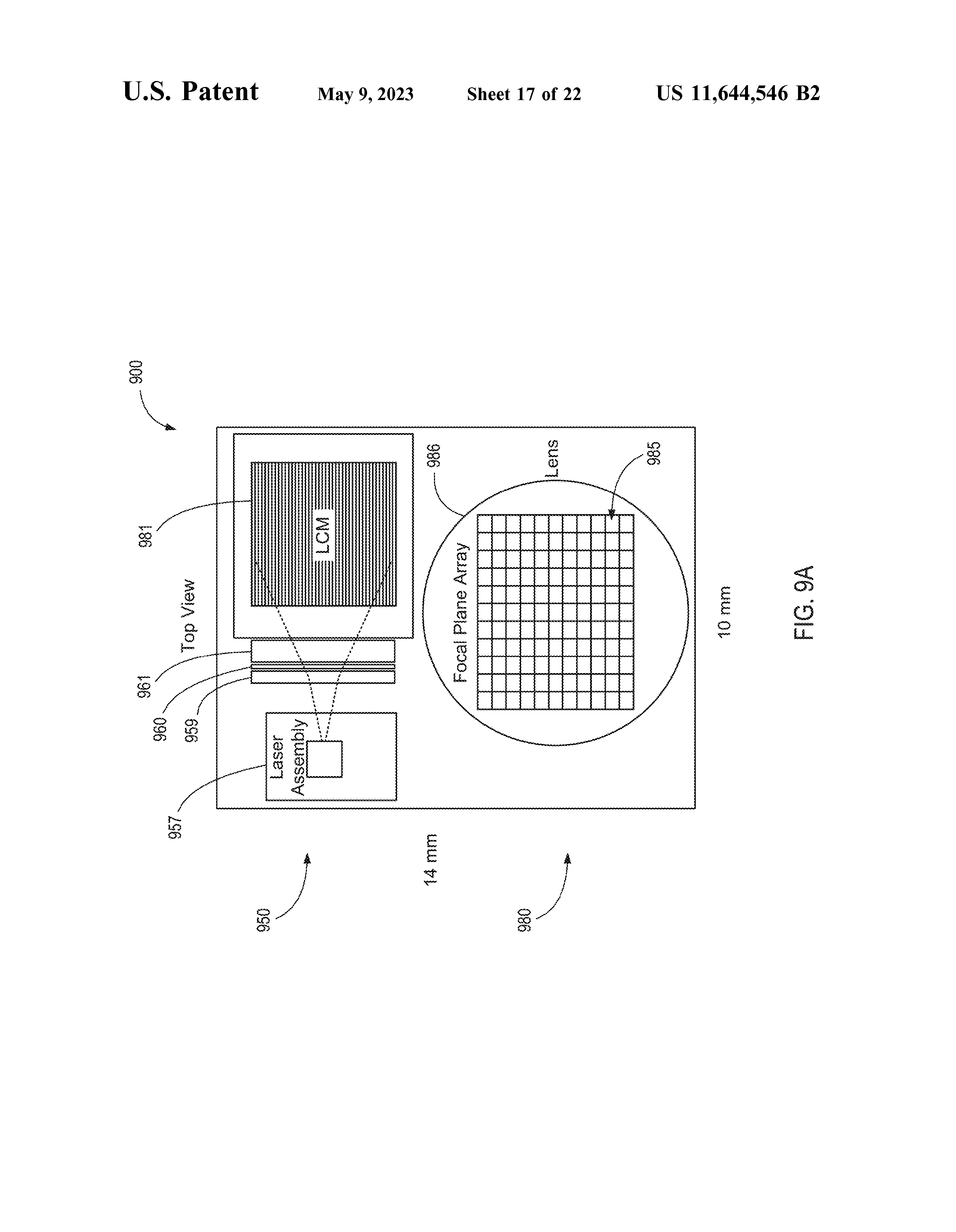
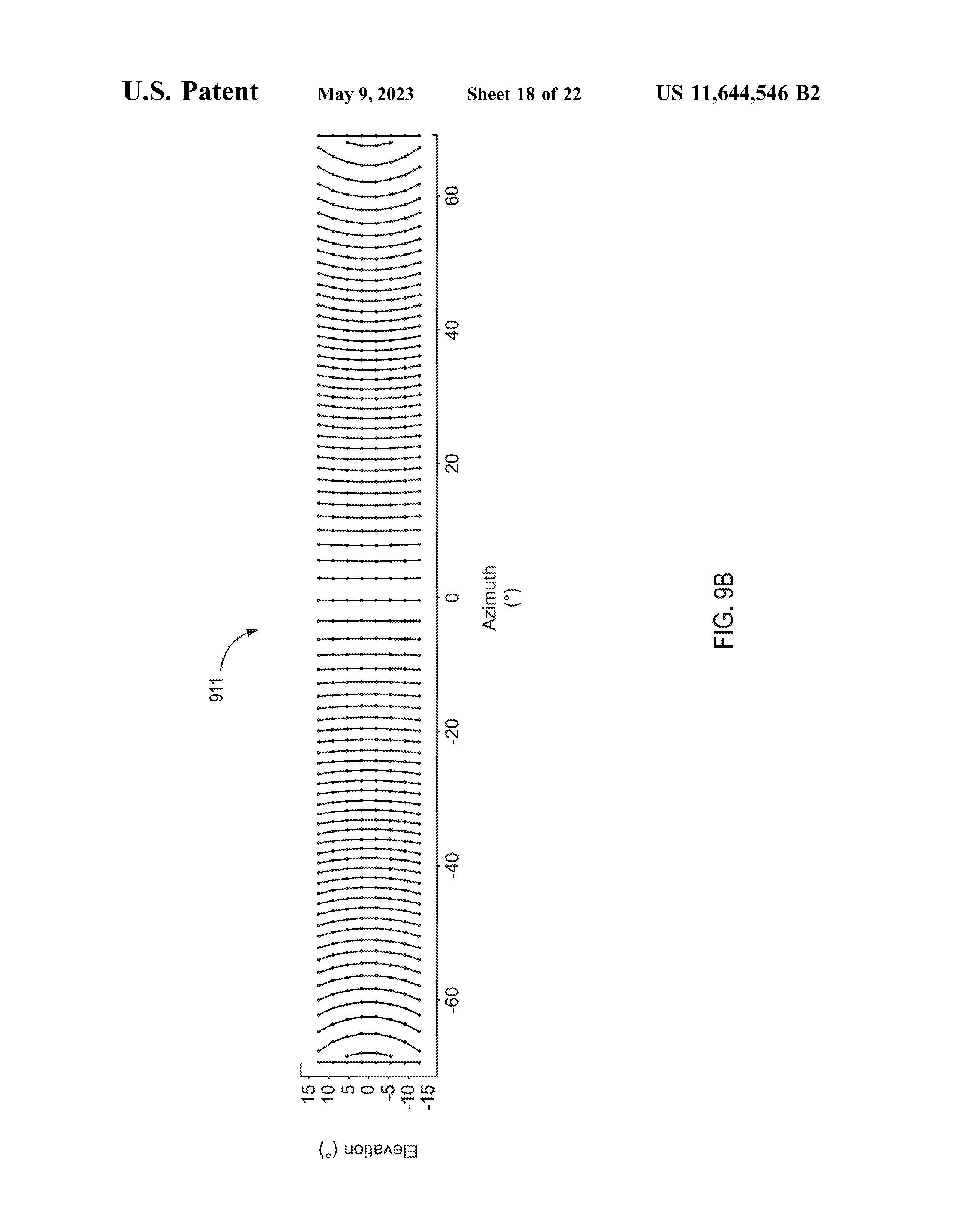
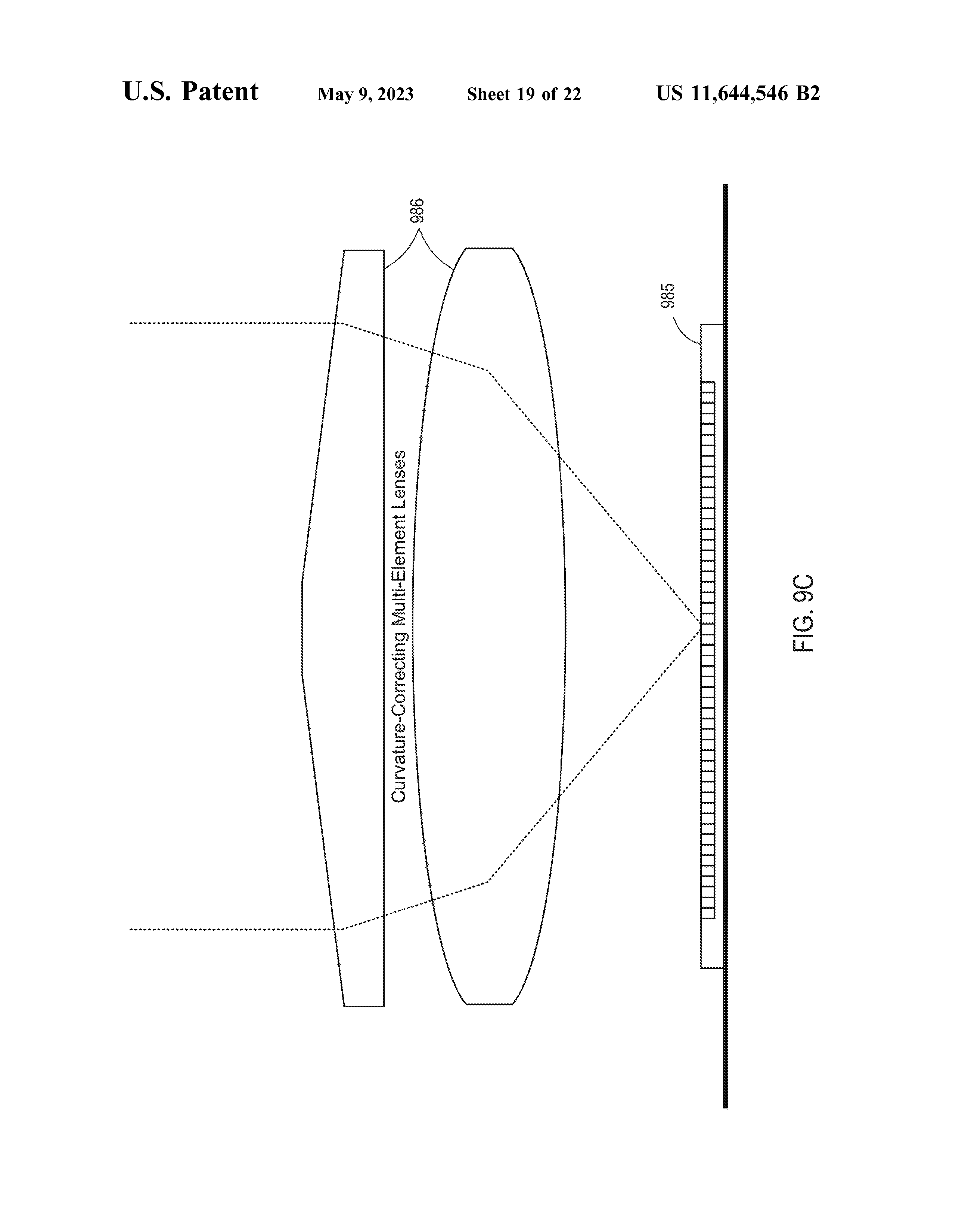
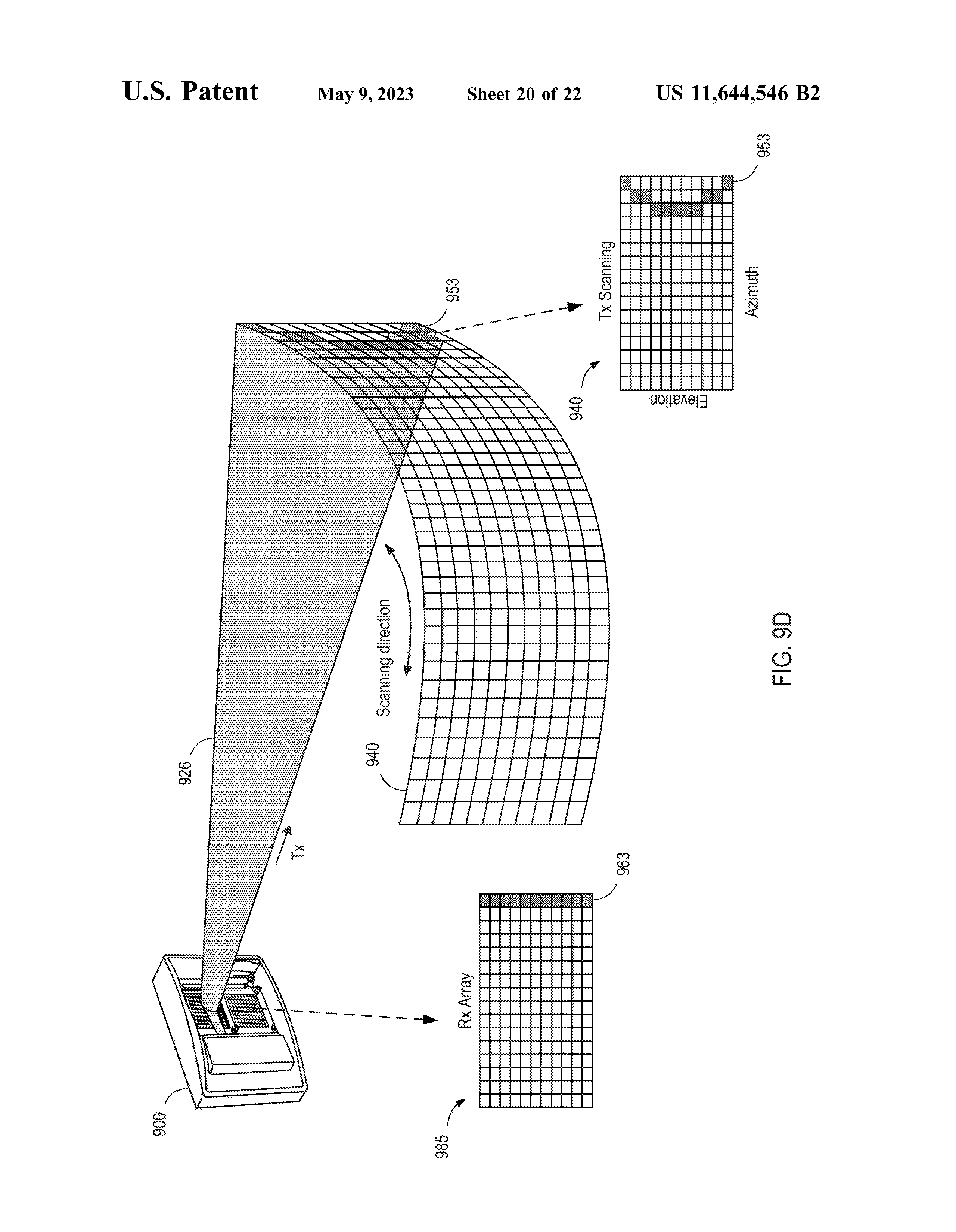
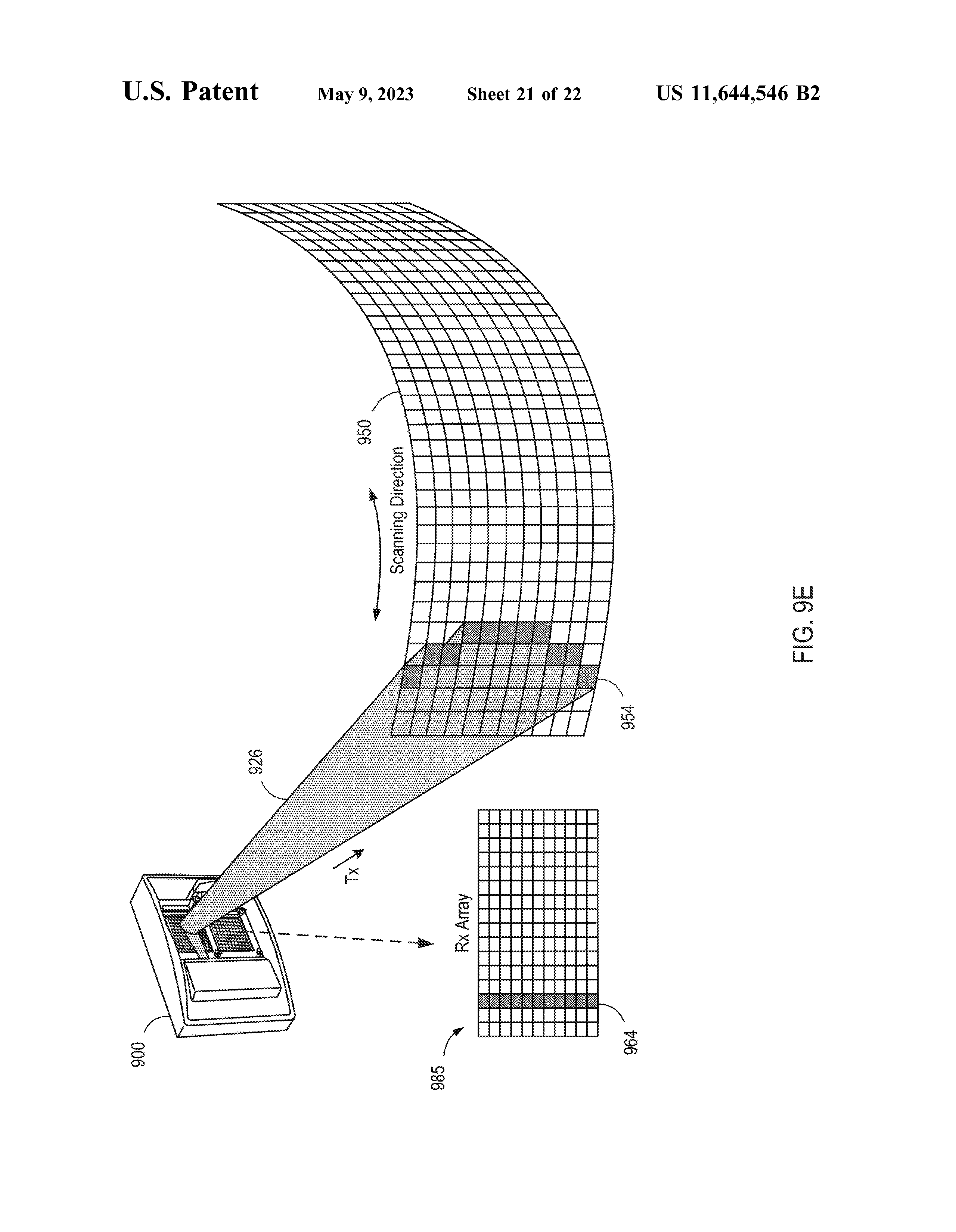
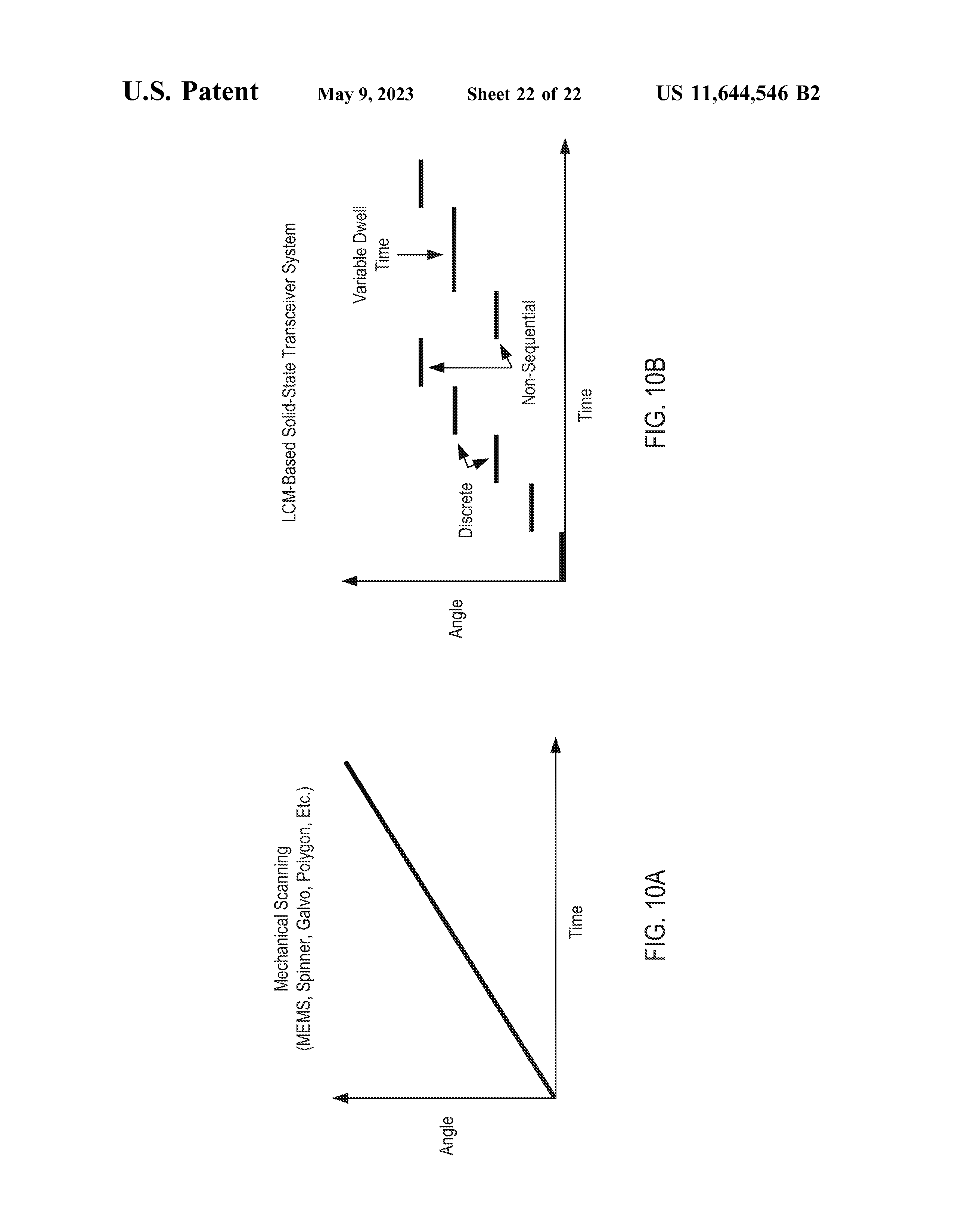
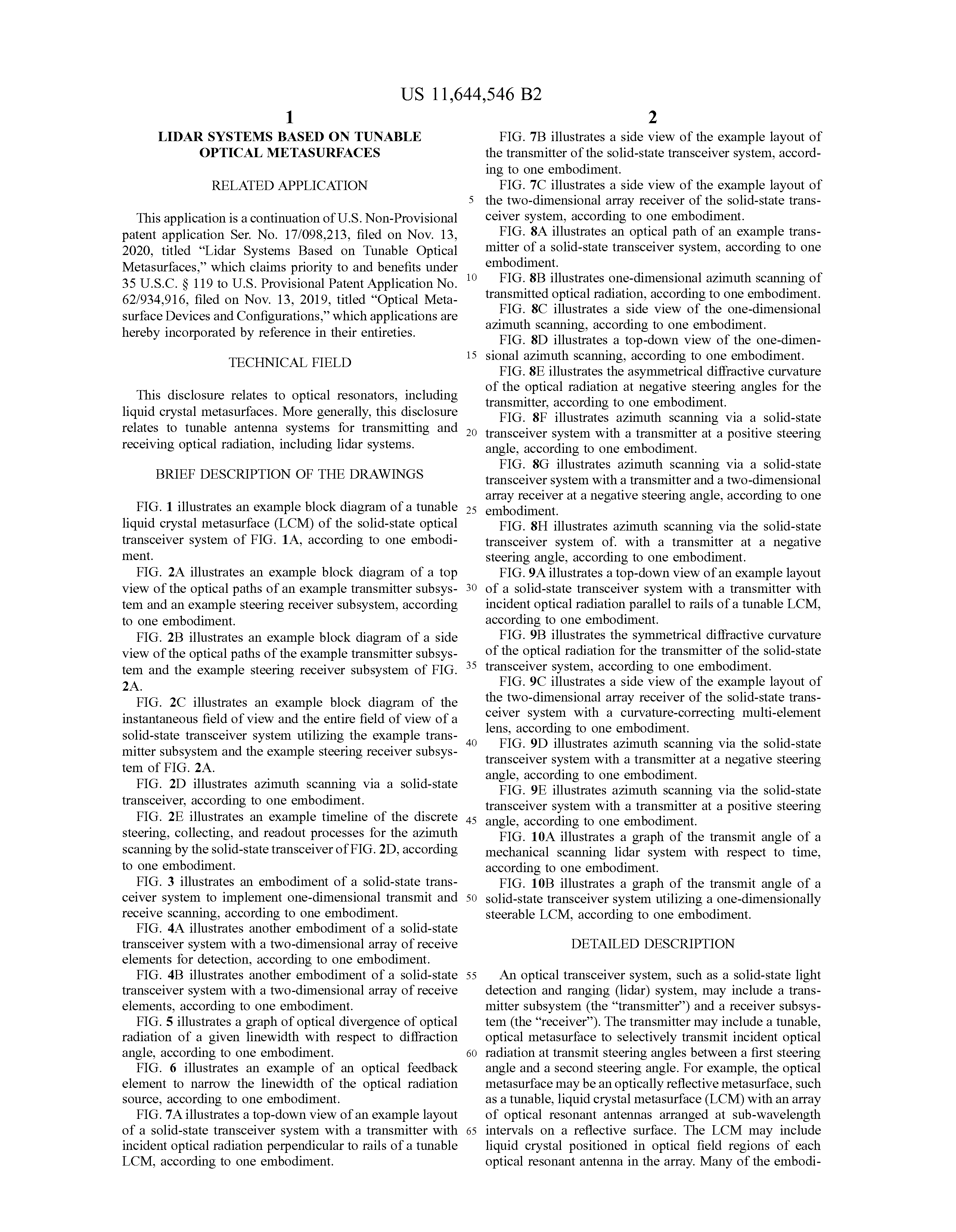
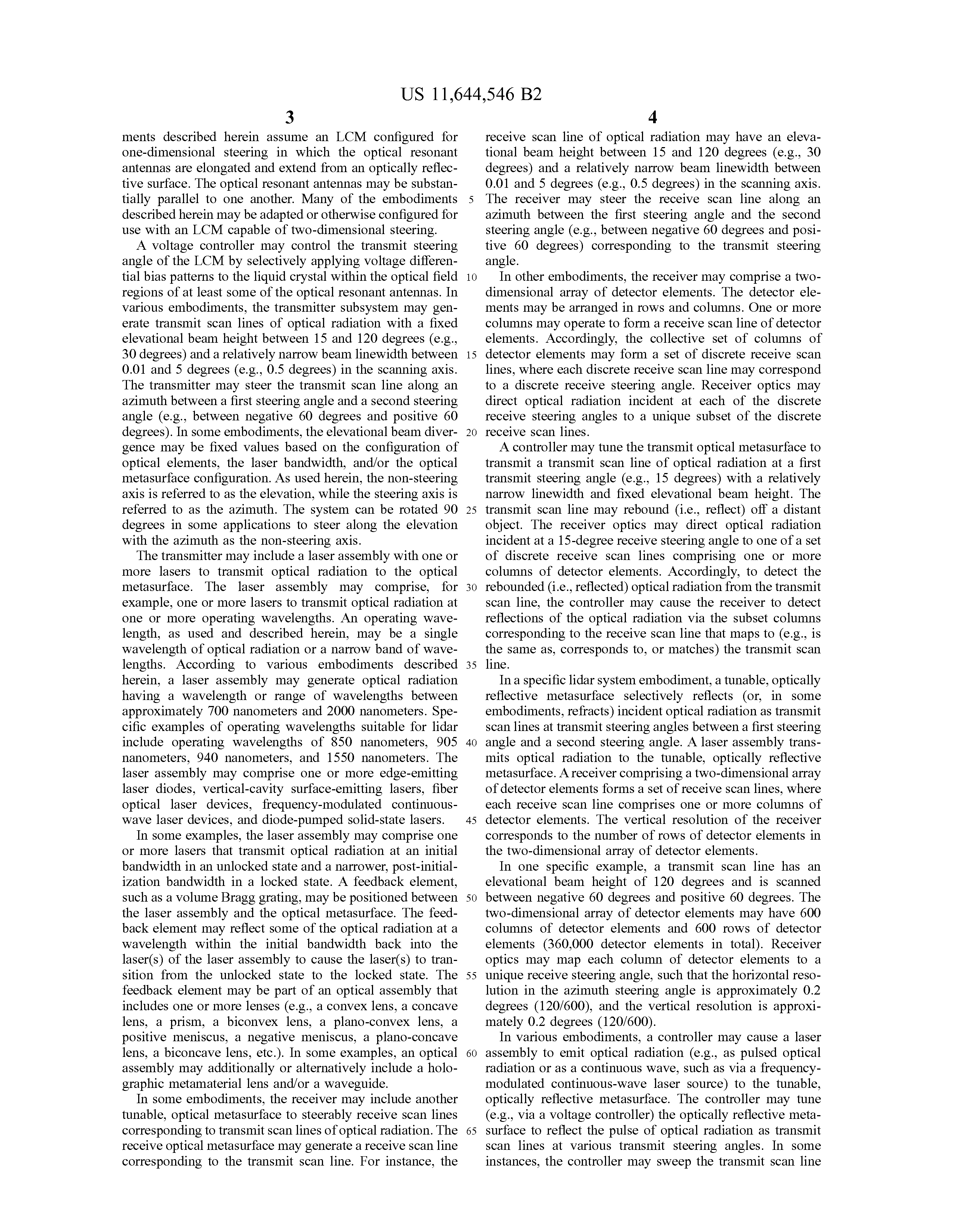
This patent discloses lidar systems based on tunable optical metasurfaces, enabling dynamic beam steering and improved performance for advanced remote sensing and autonomous navigation applications.
3. Tunable optical device configurations and packaging
Published:
Abstract:
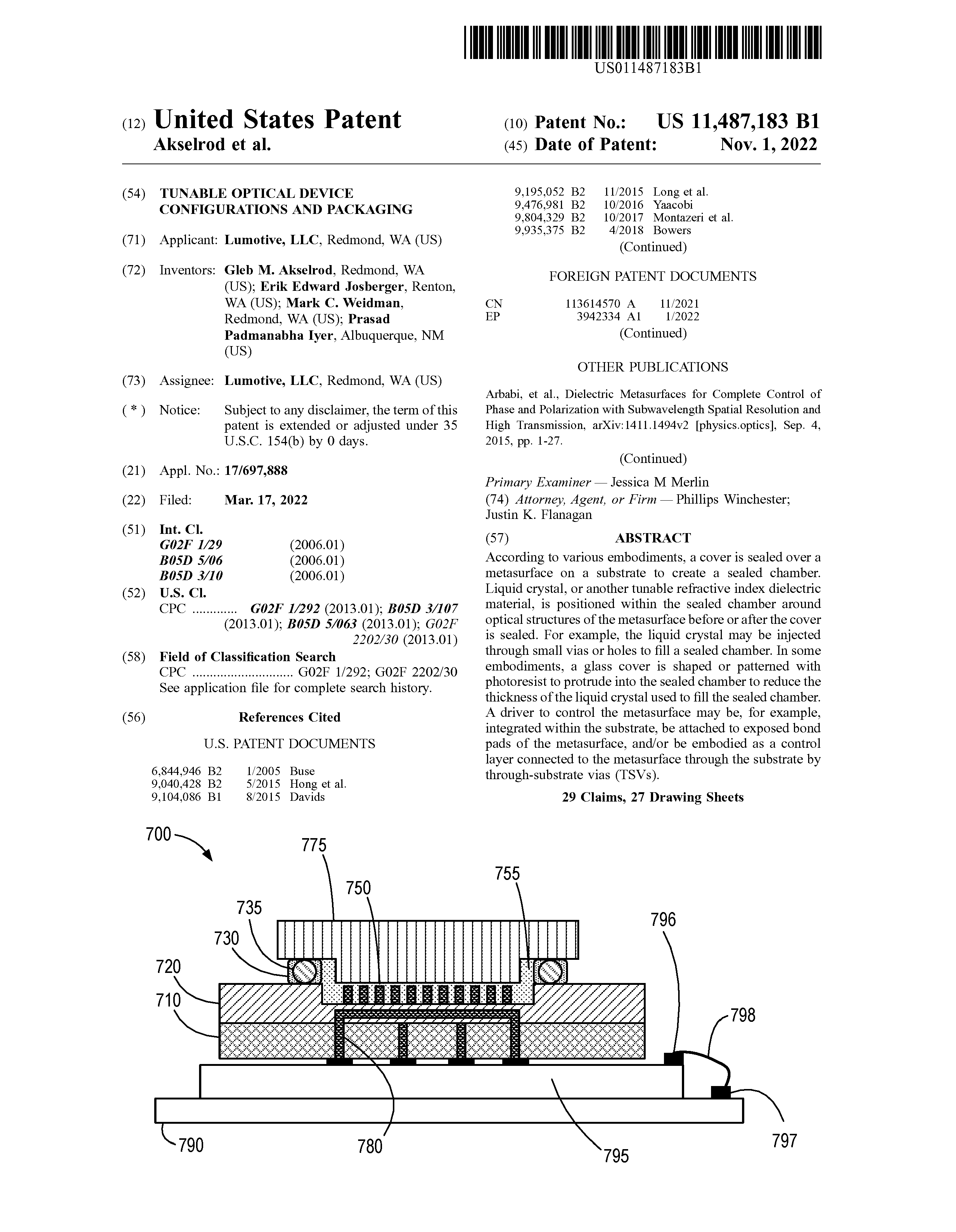
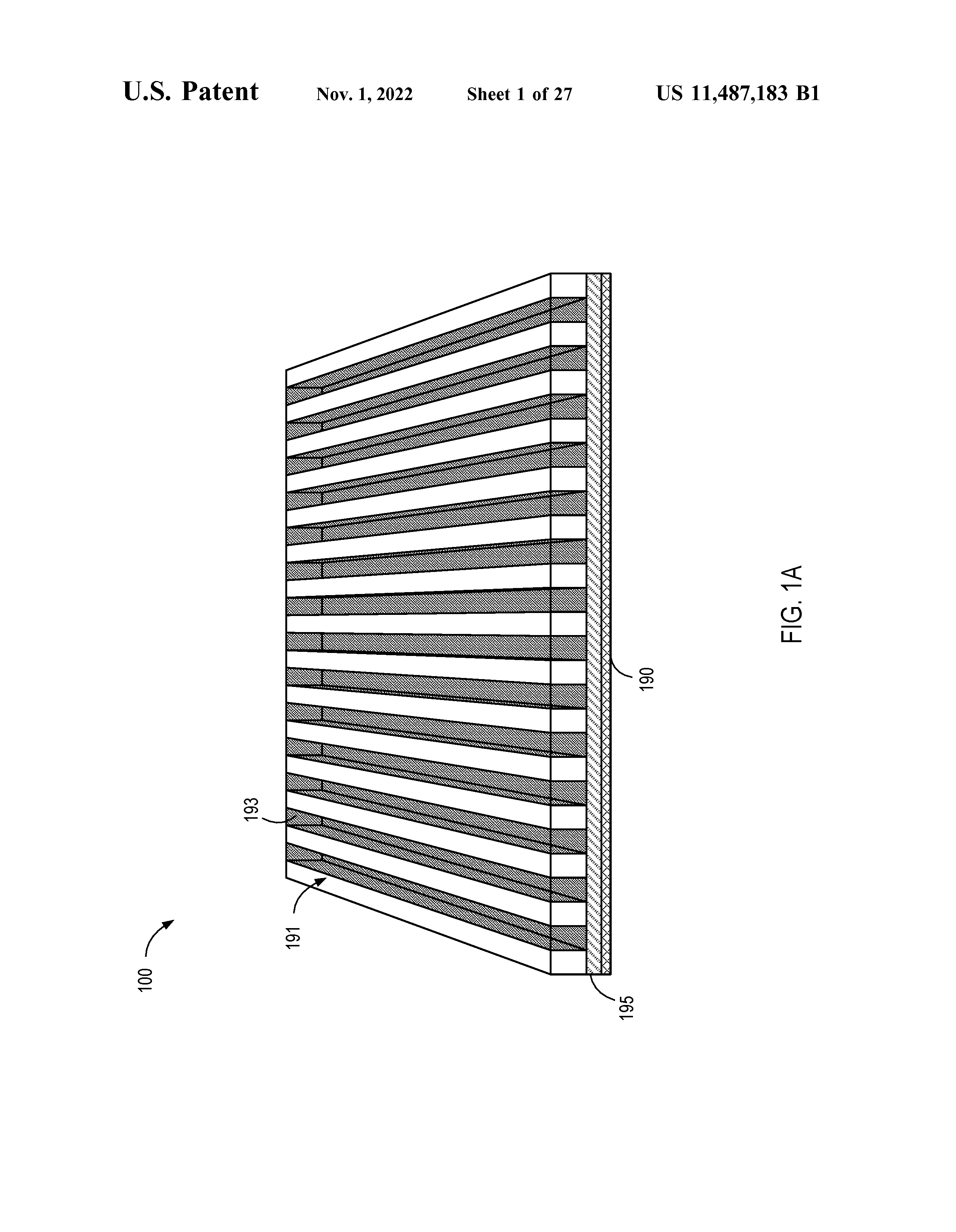
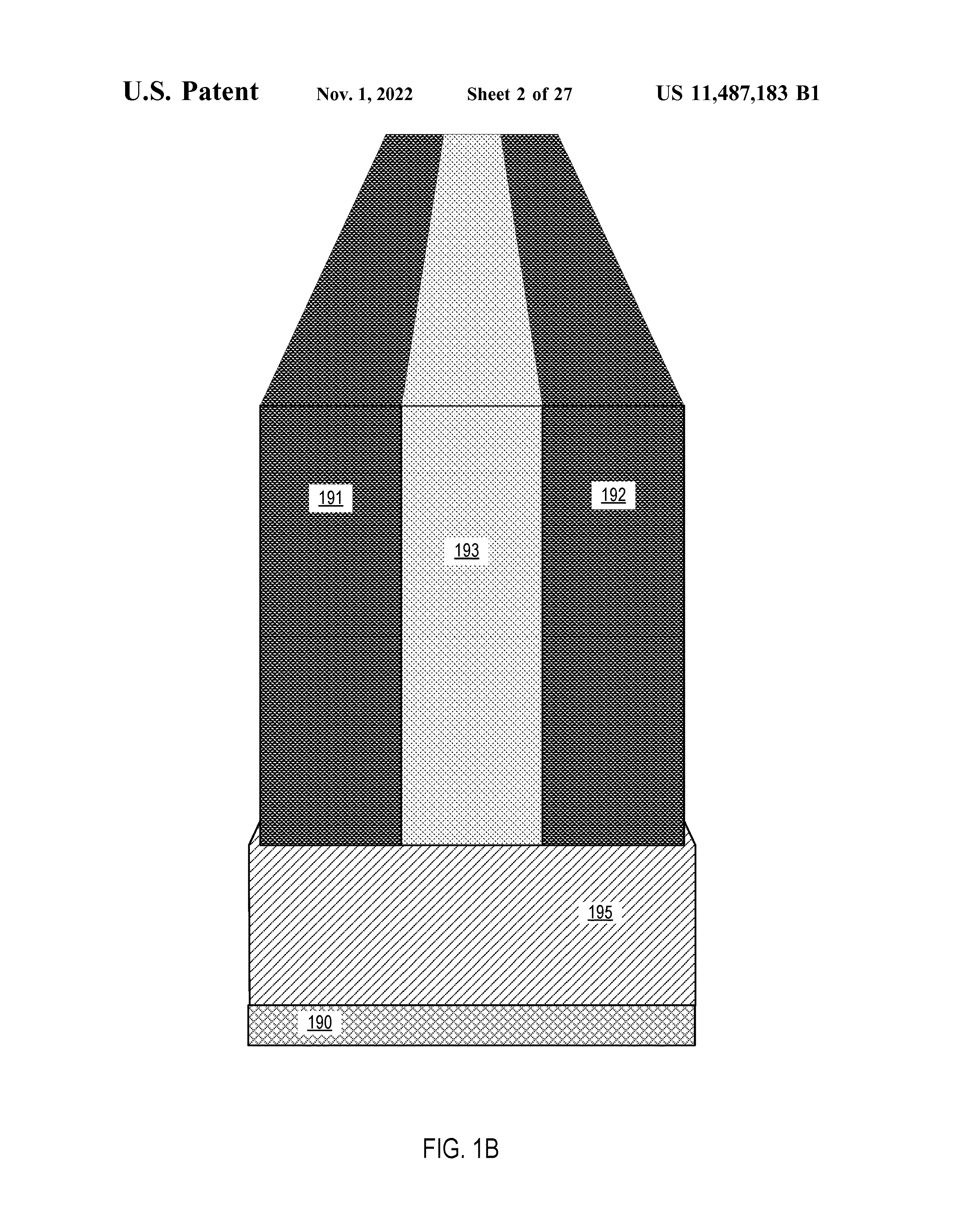
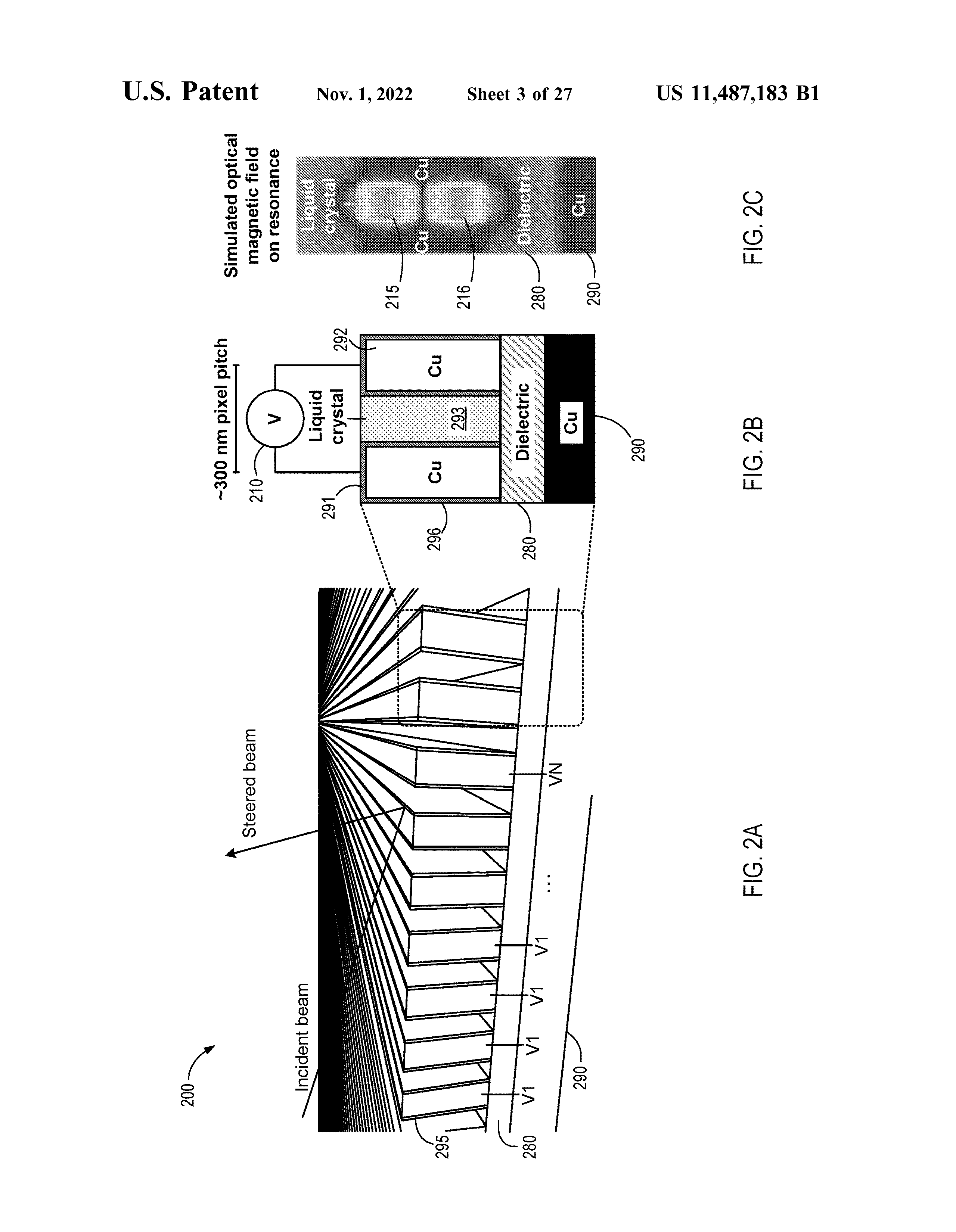
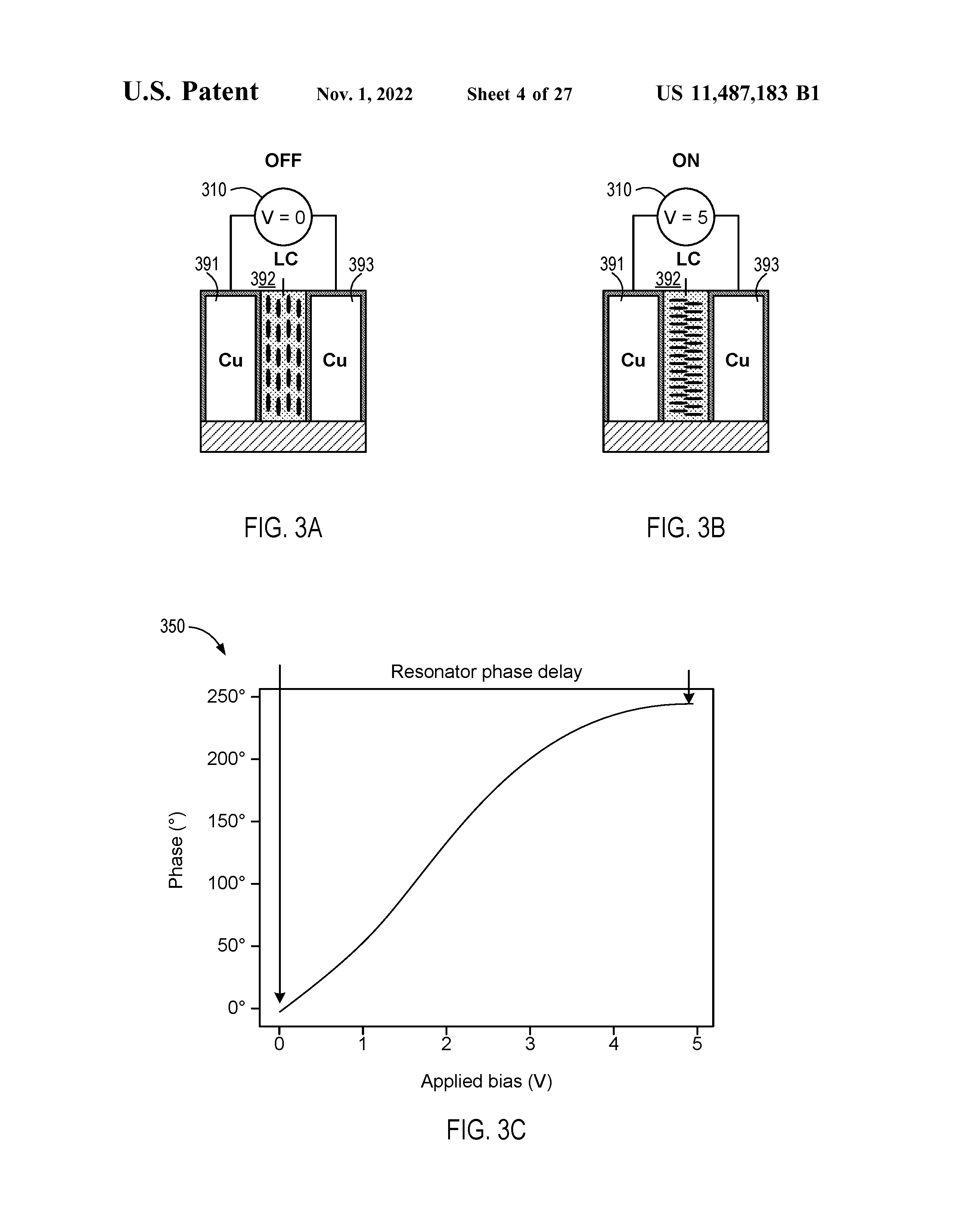
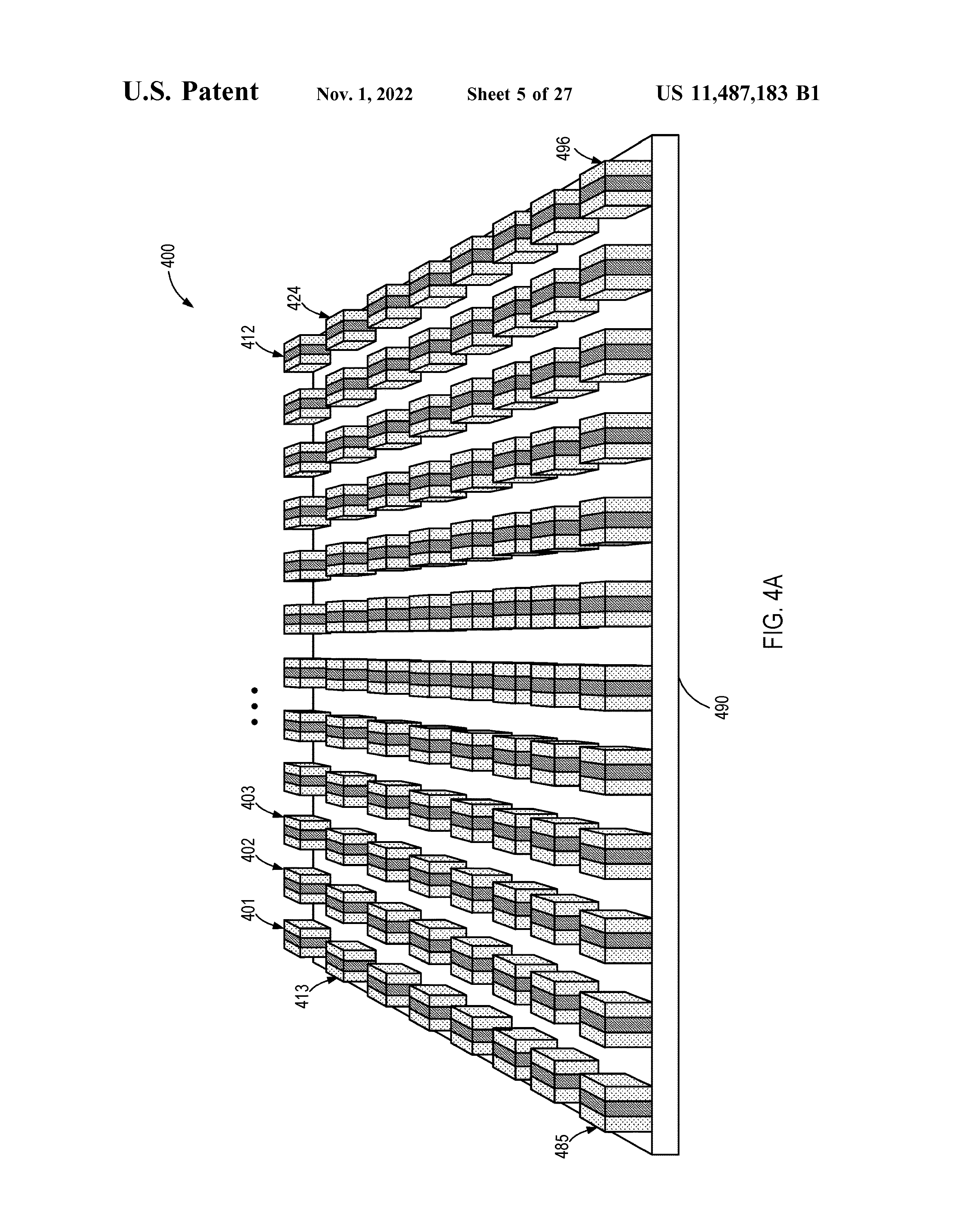
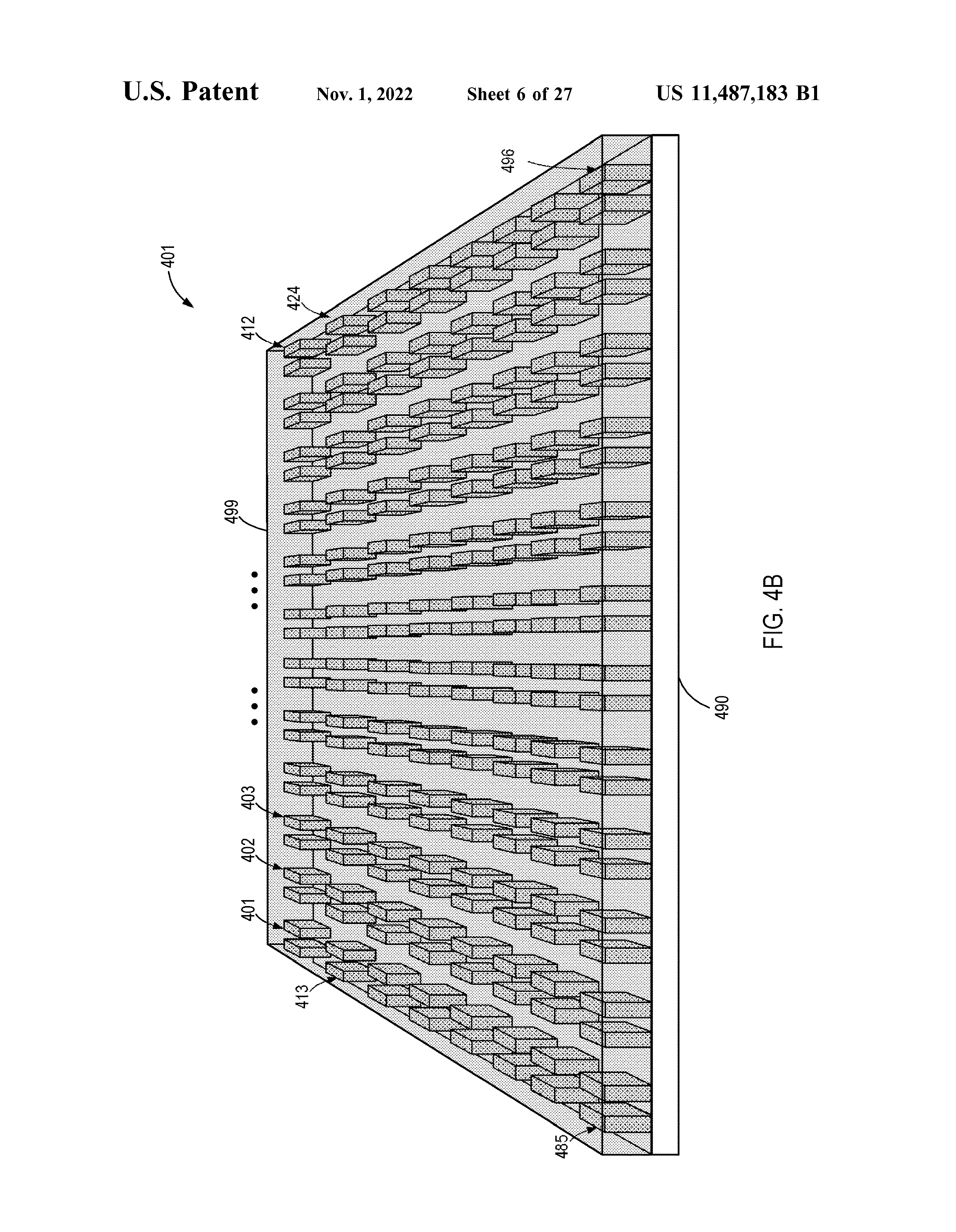
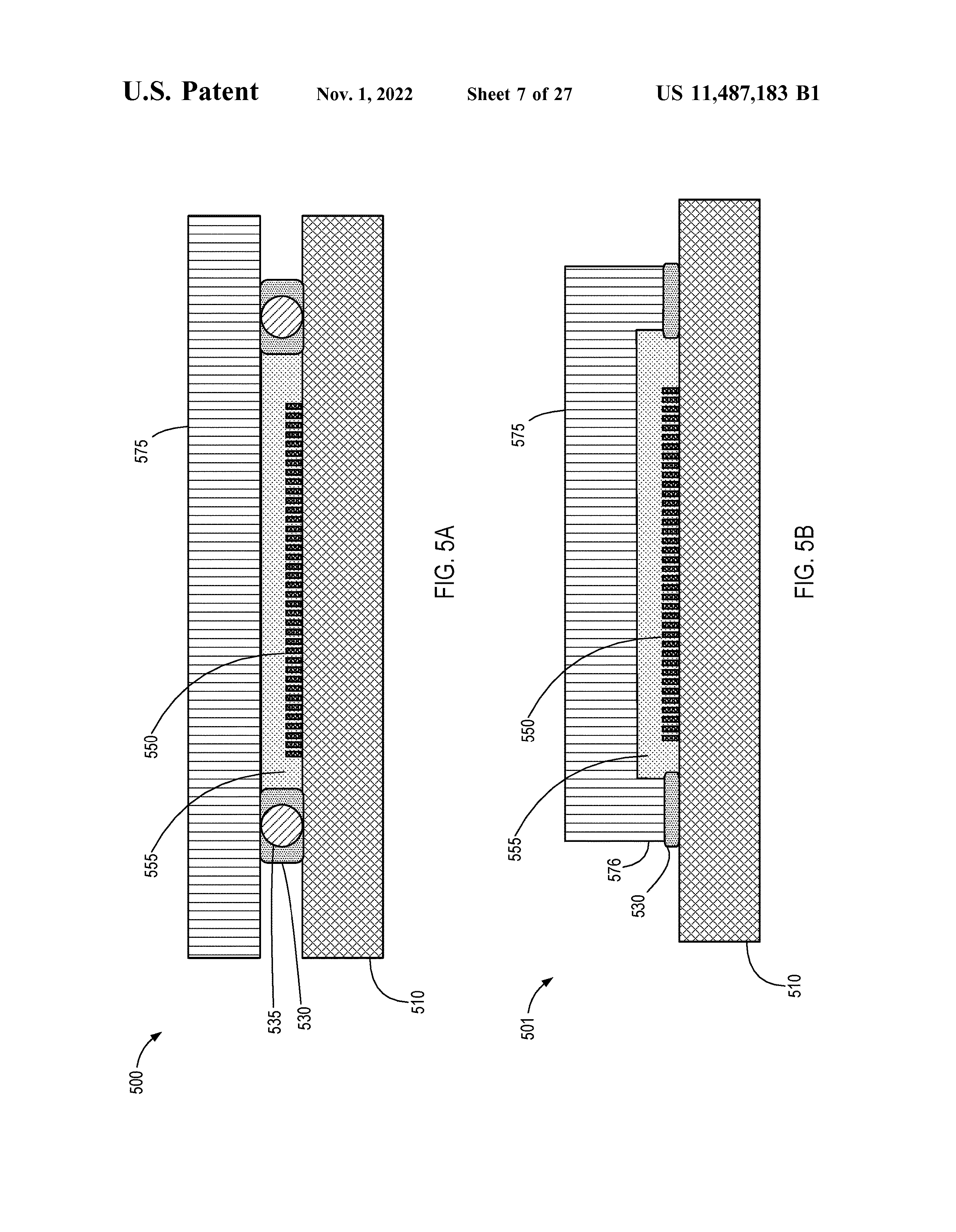
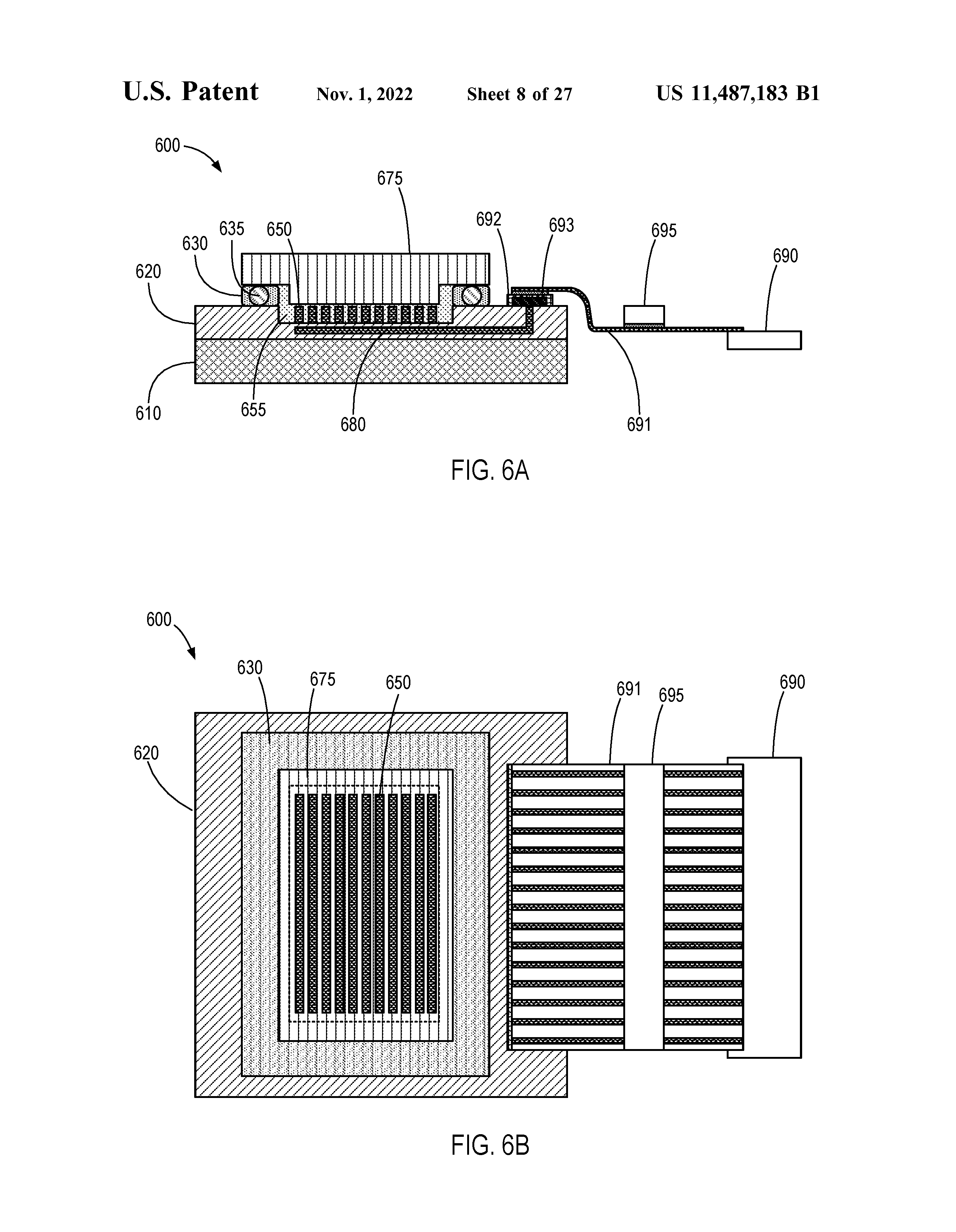
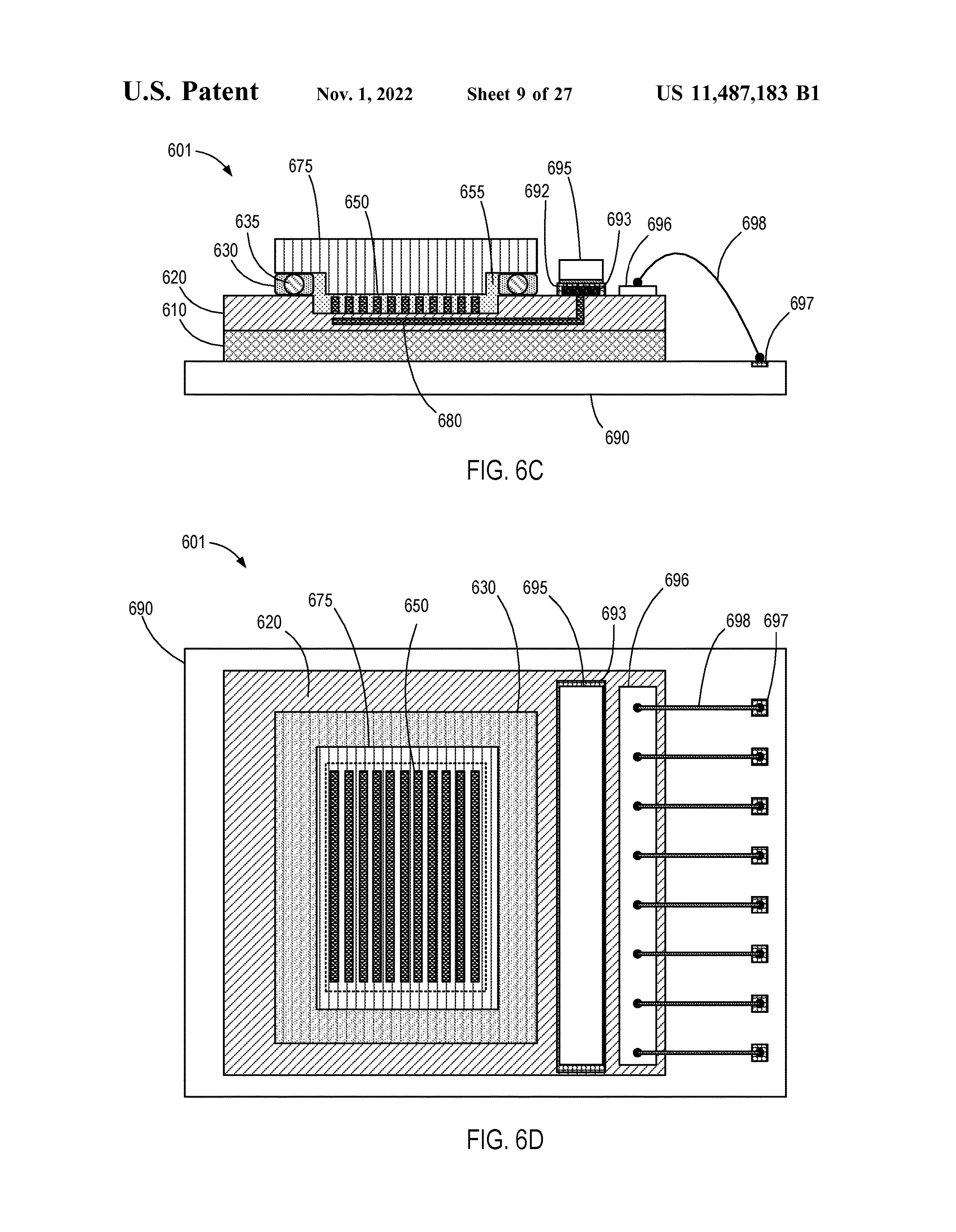
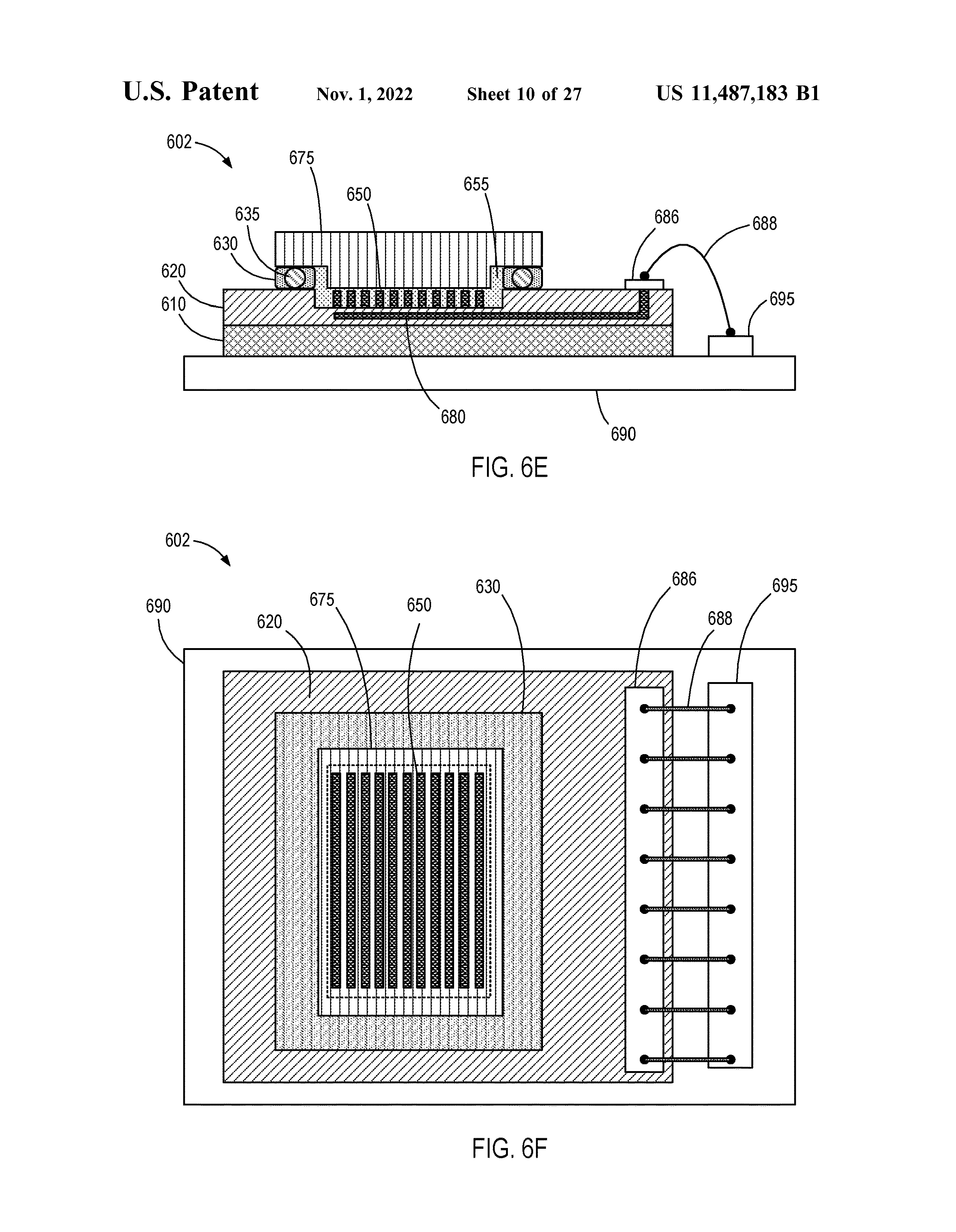
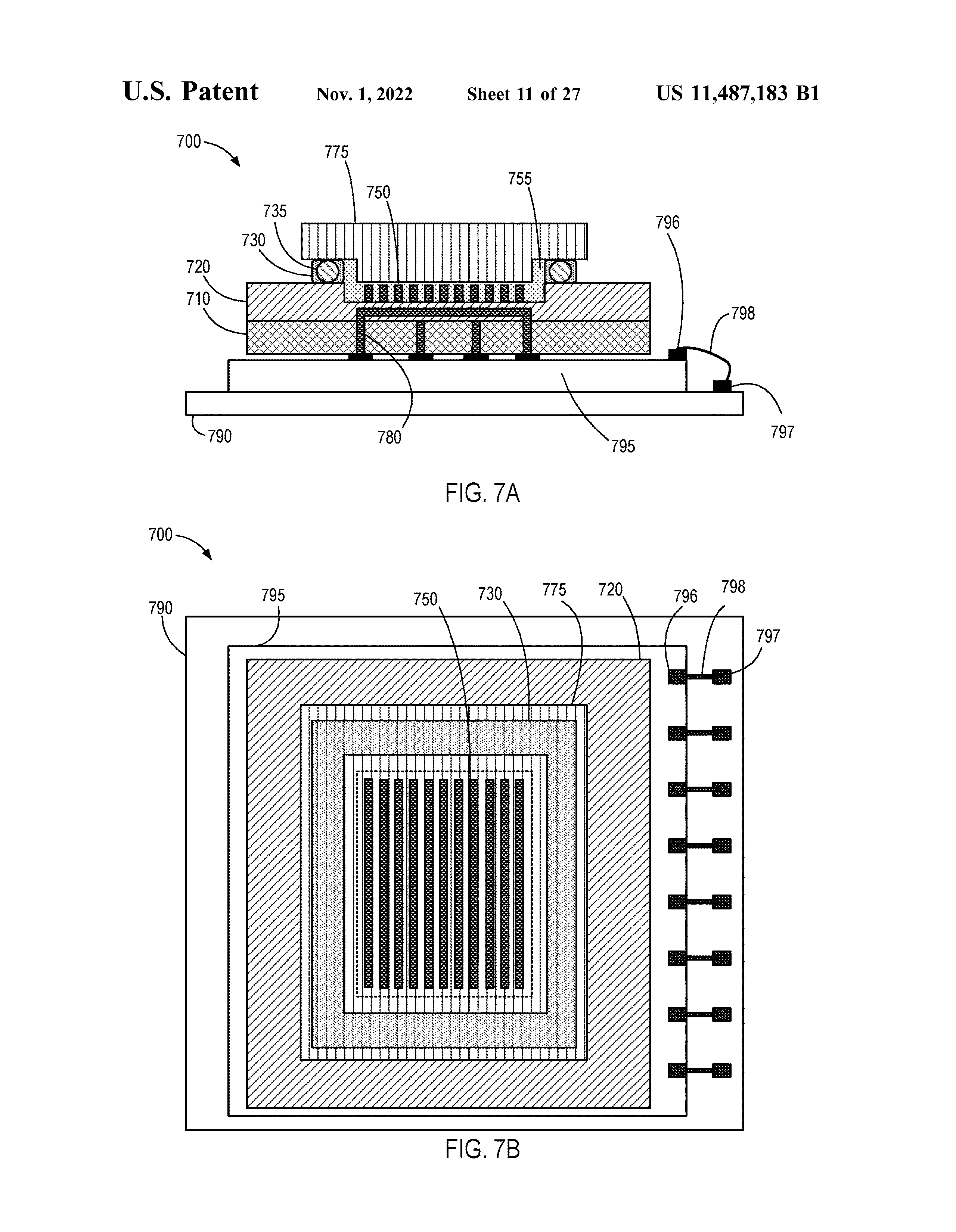
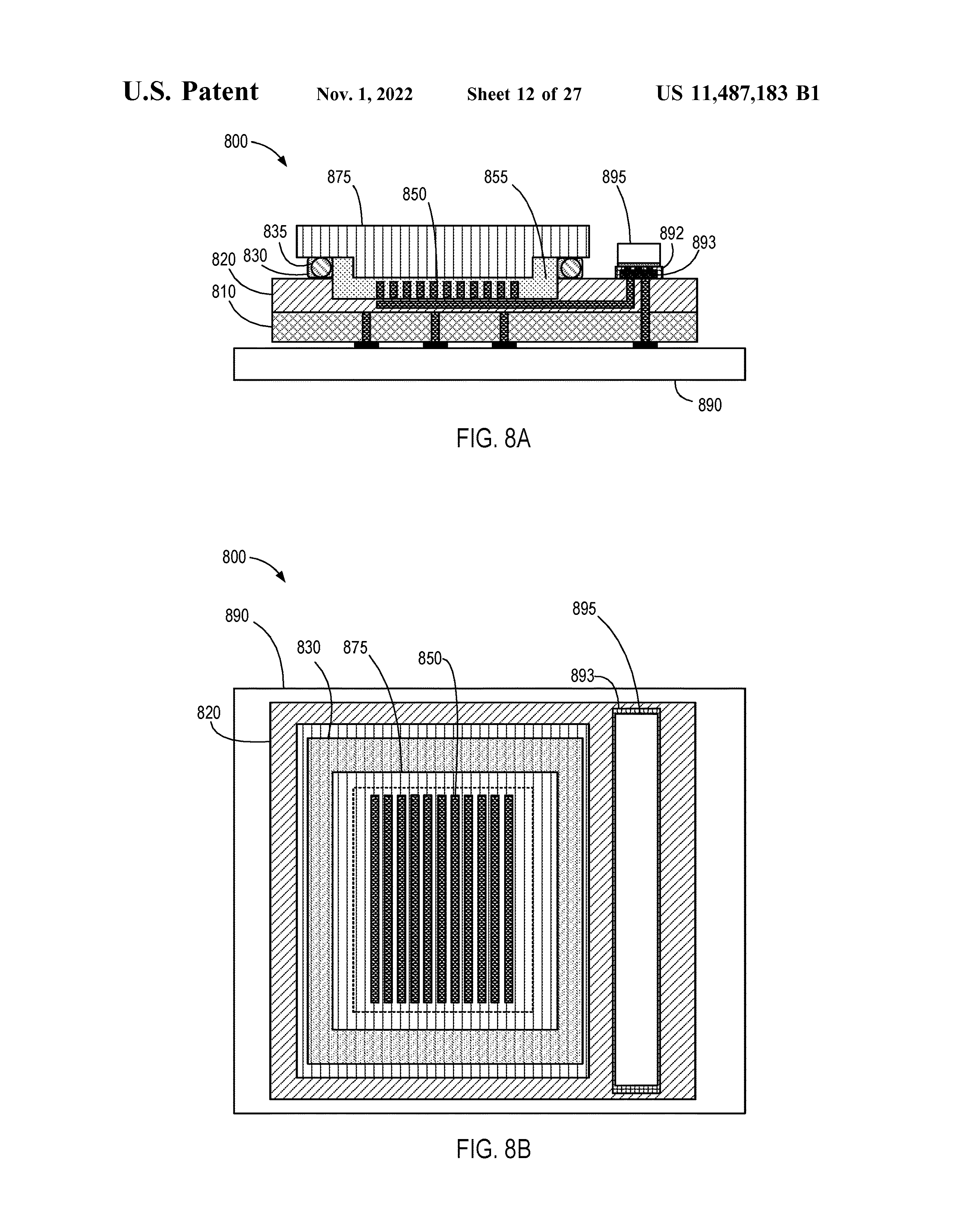
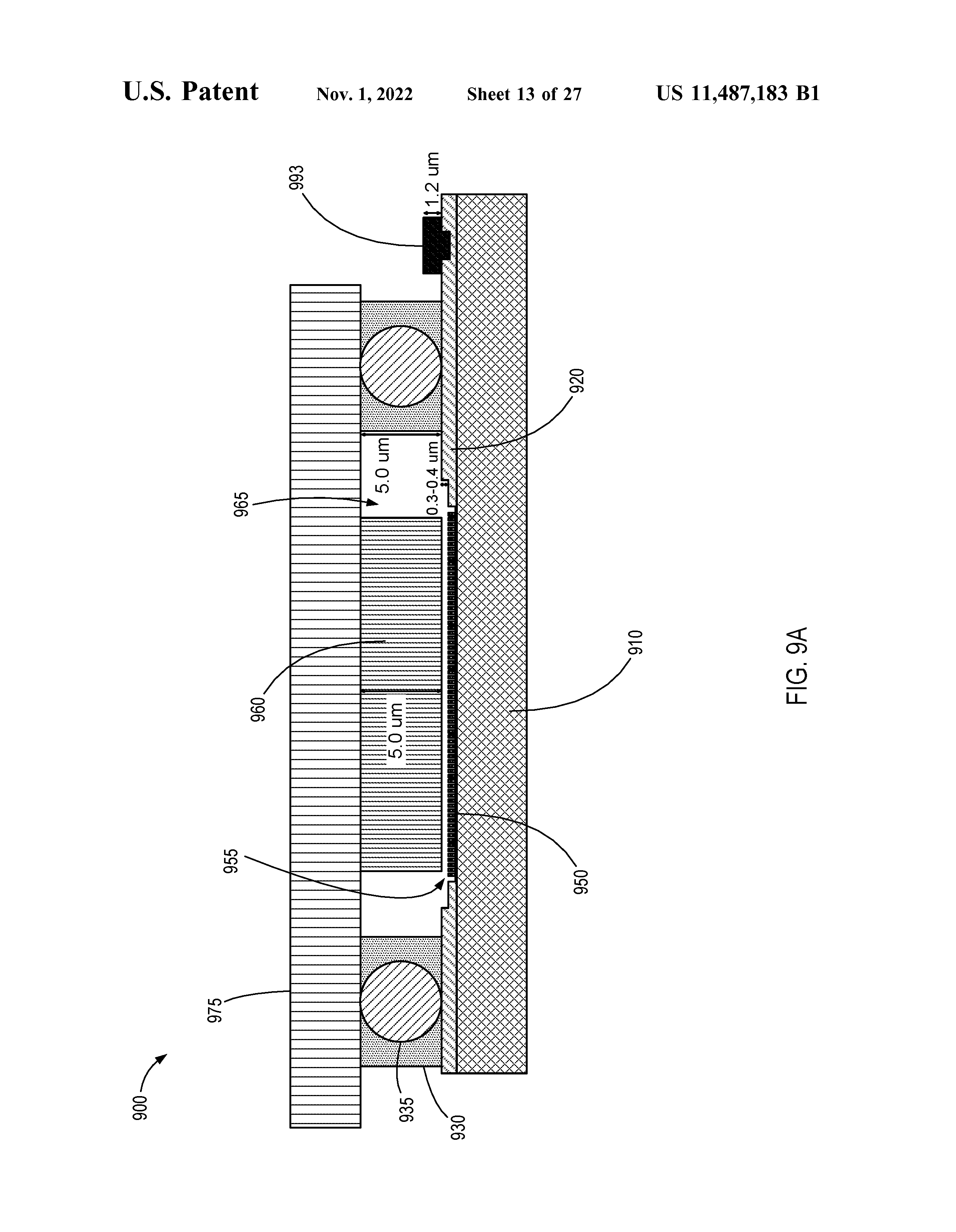
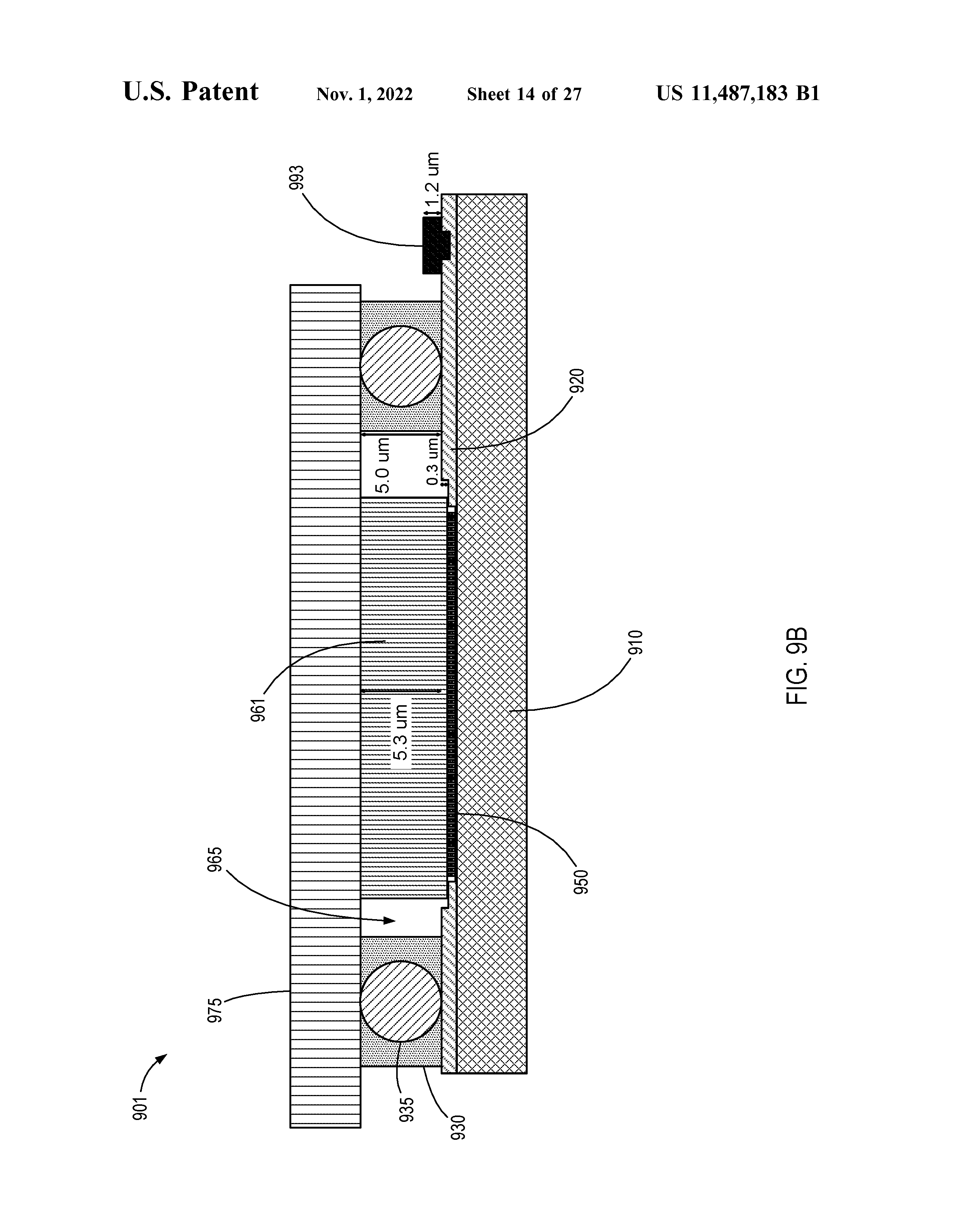
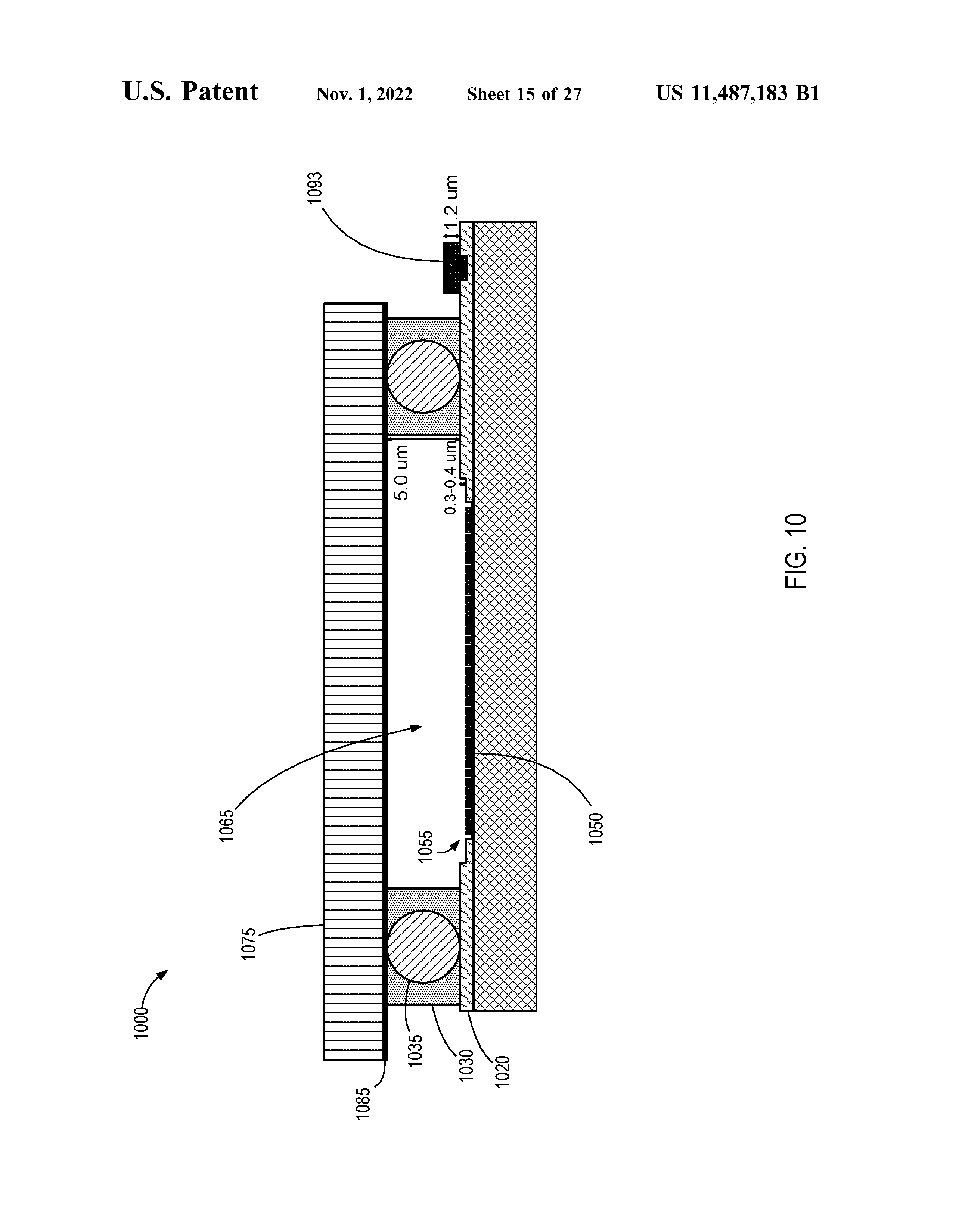
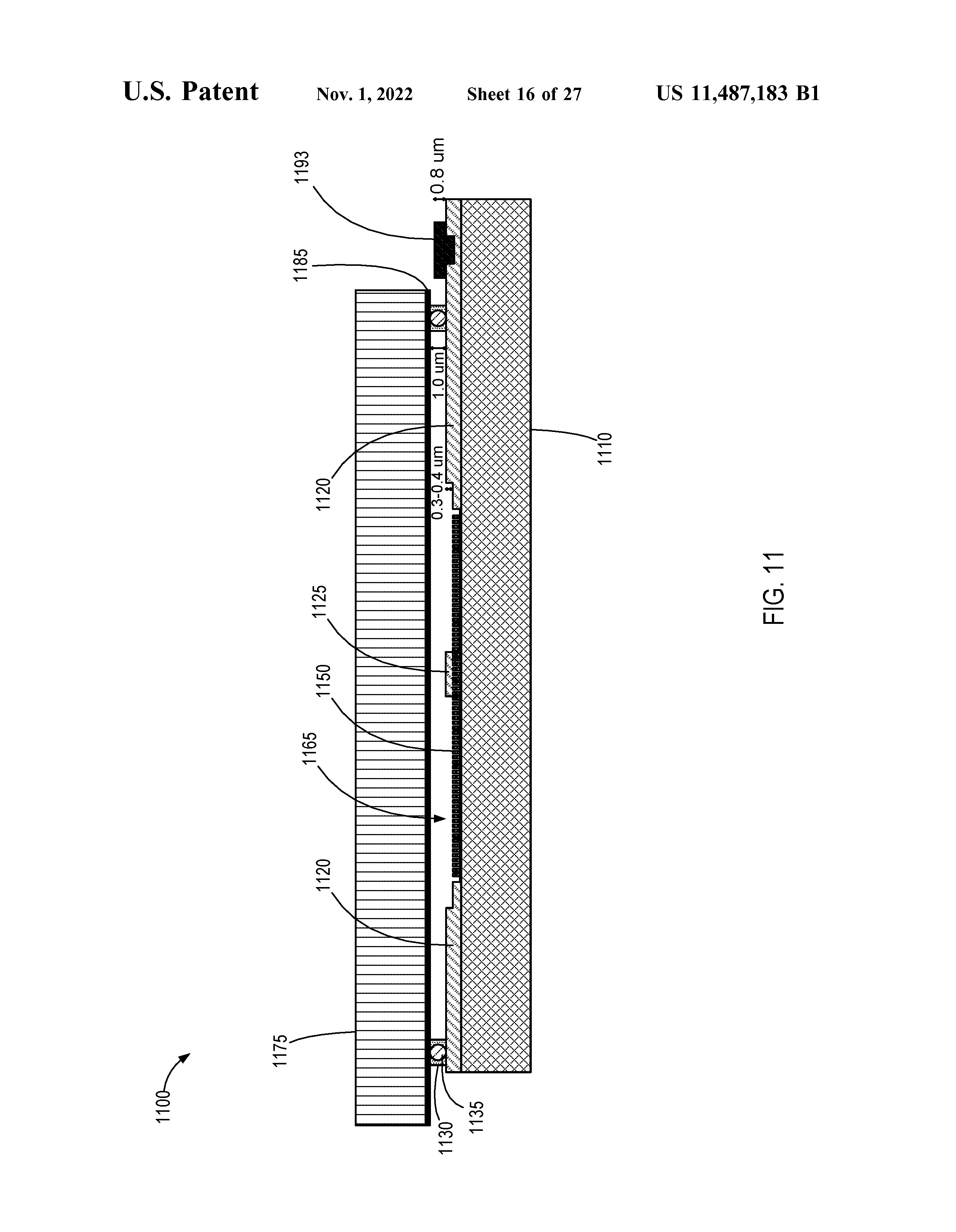
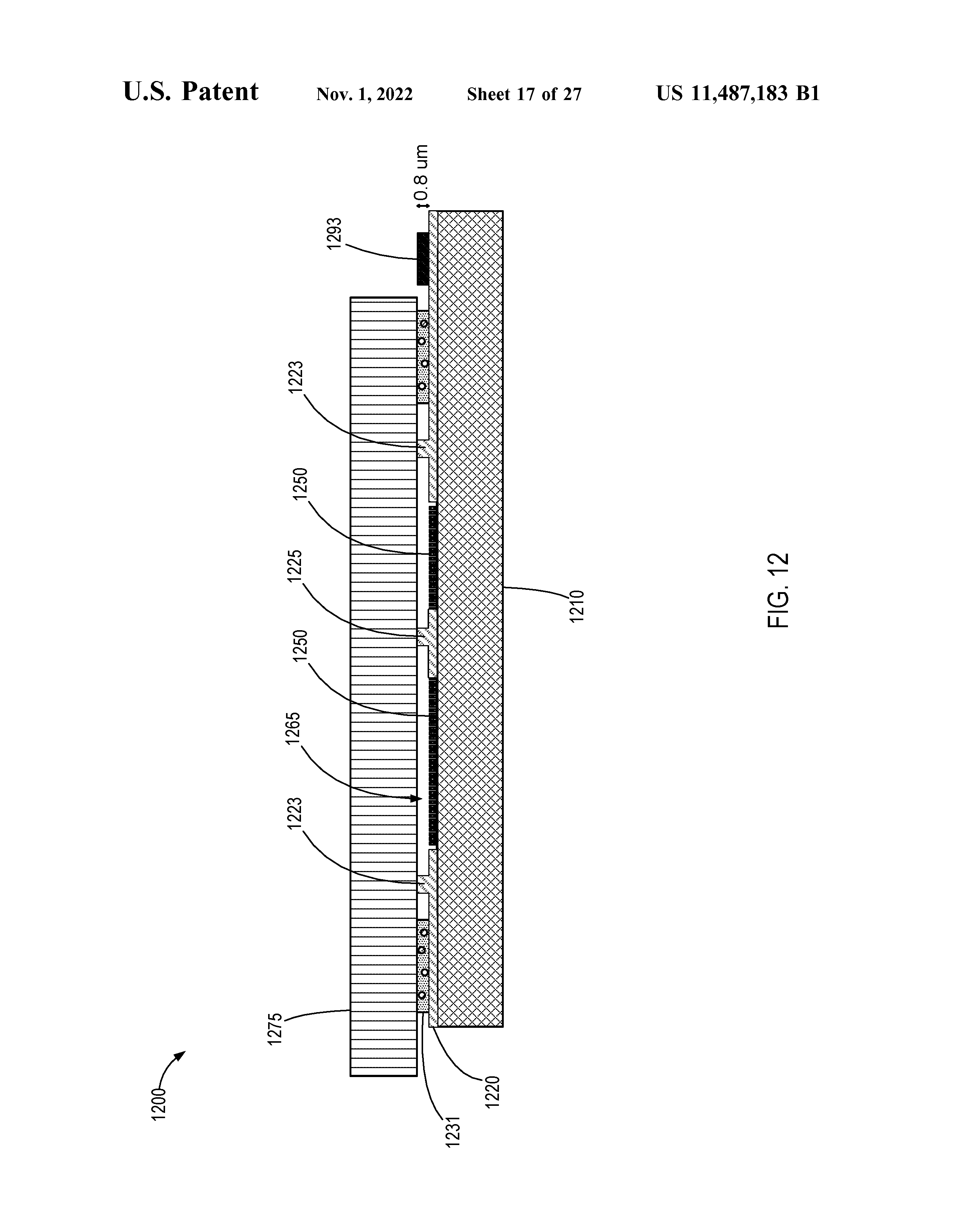
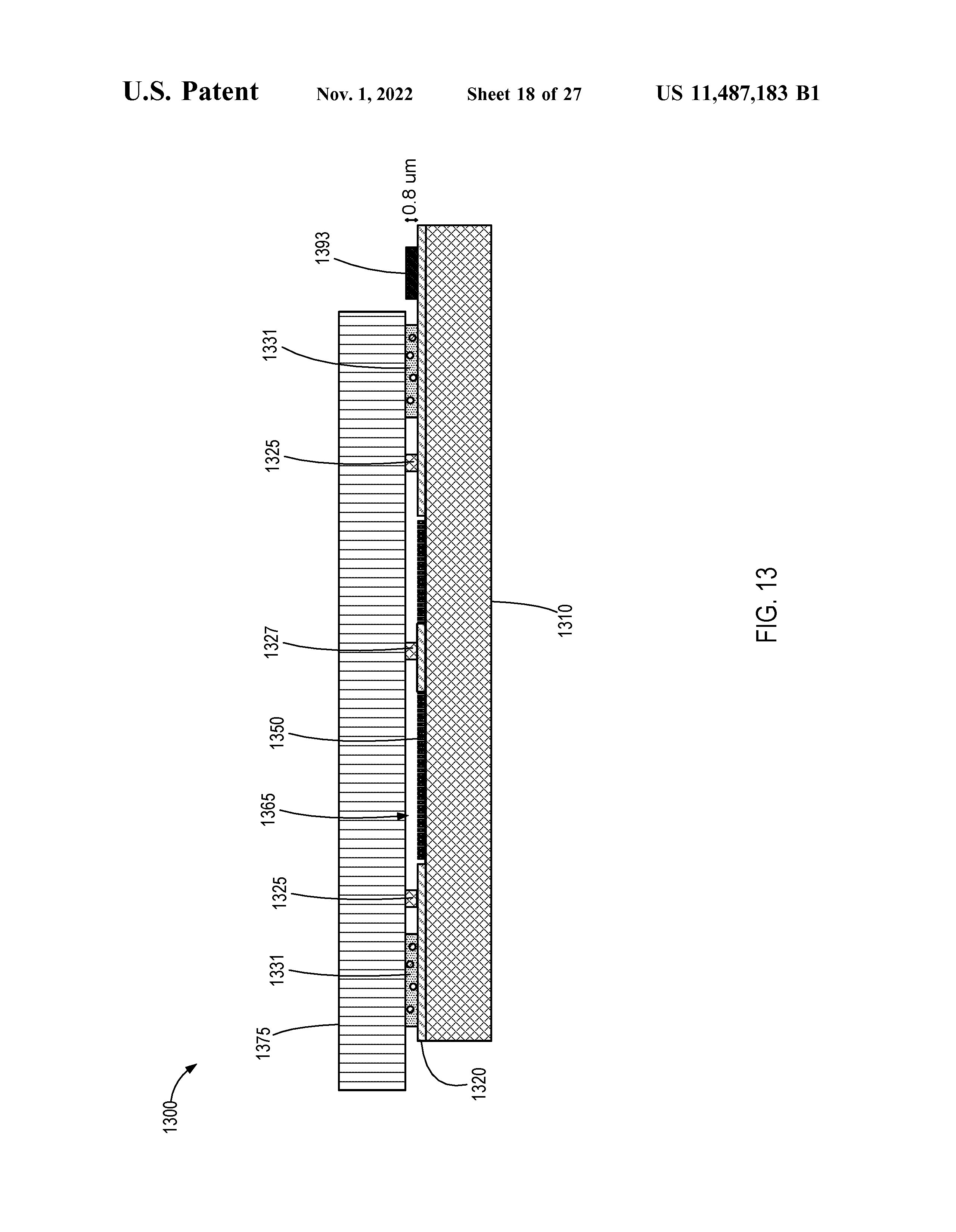
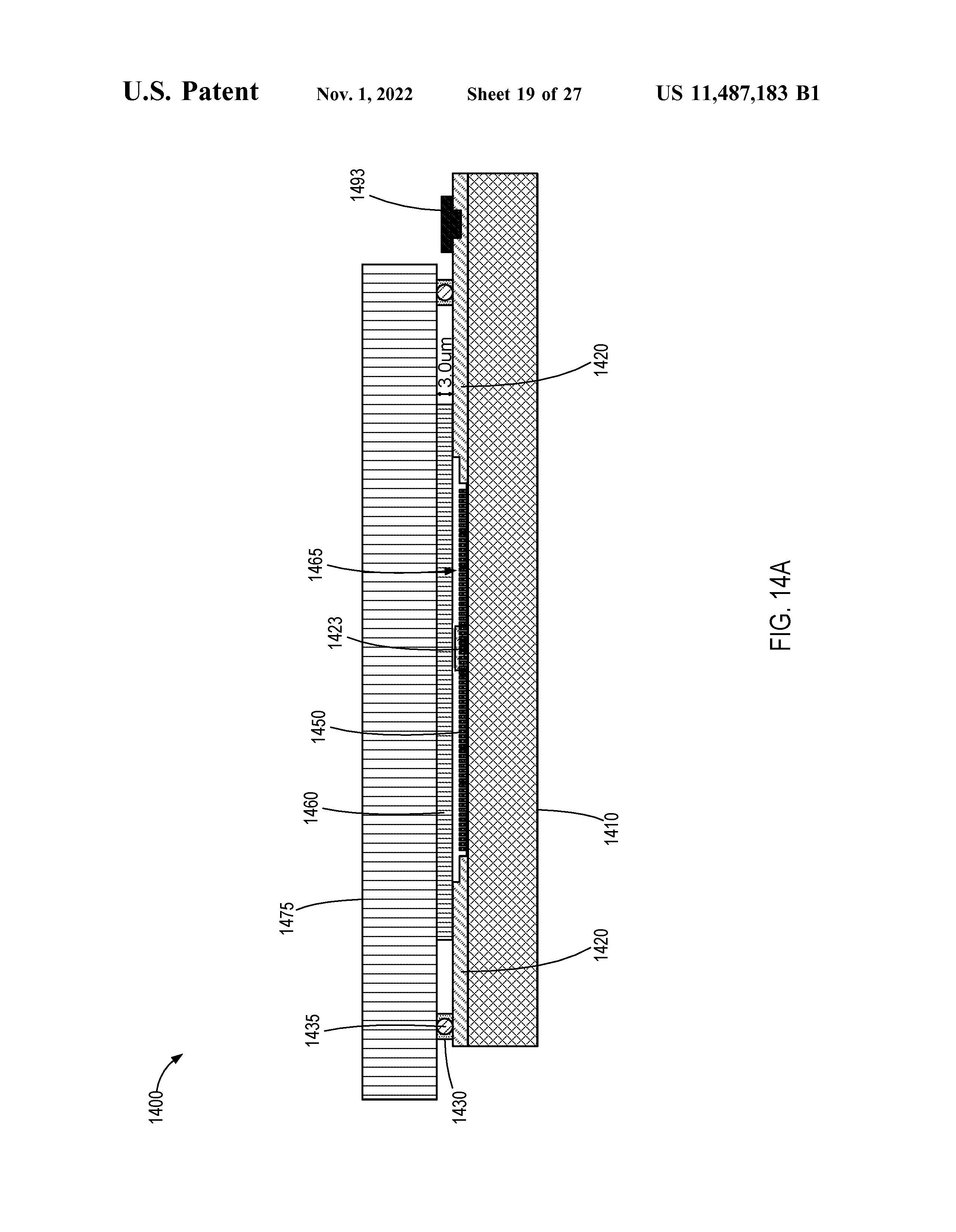
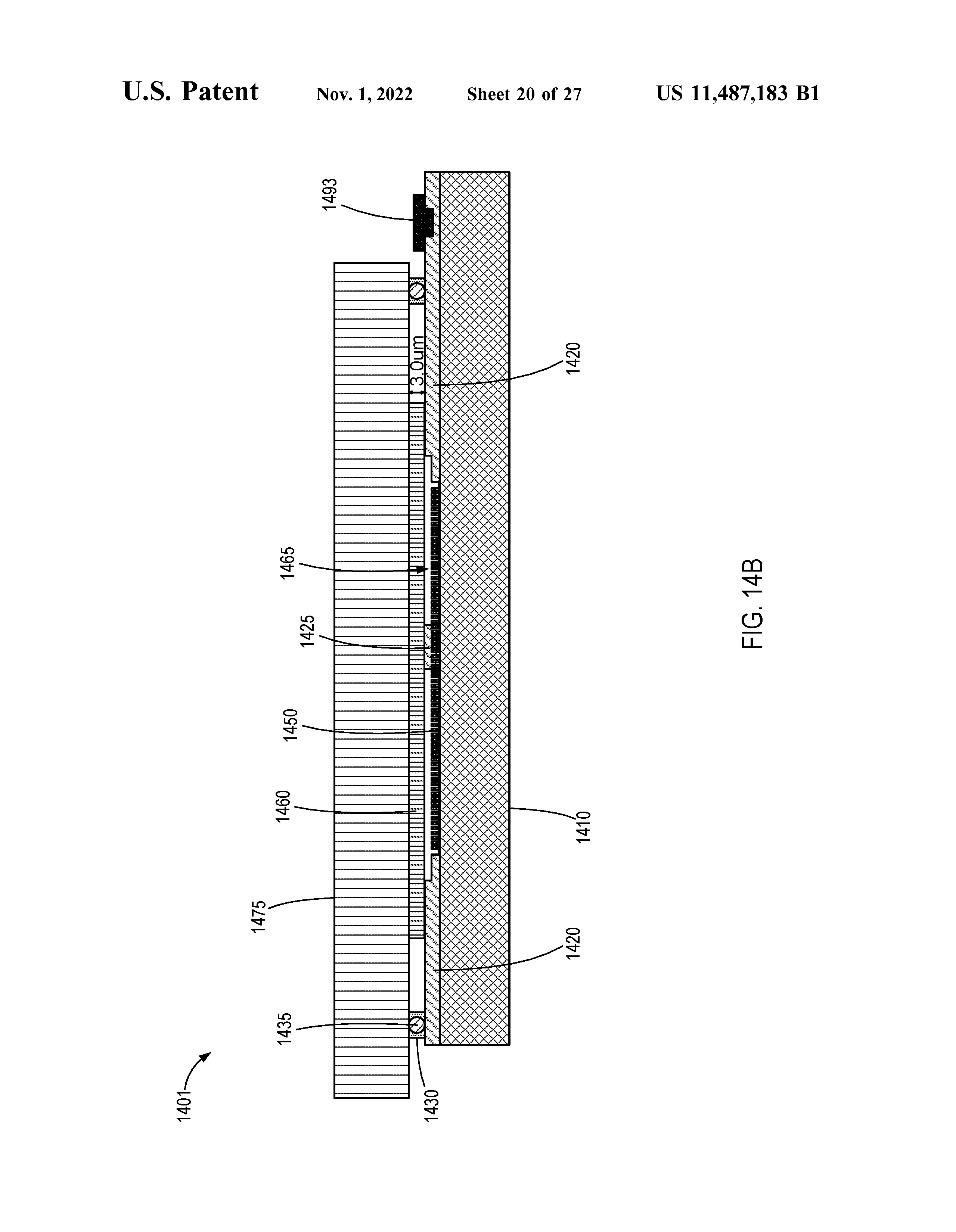
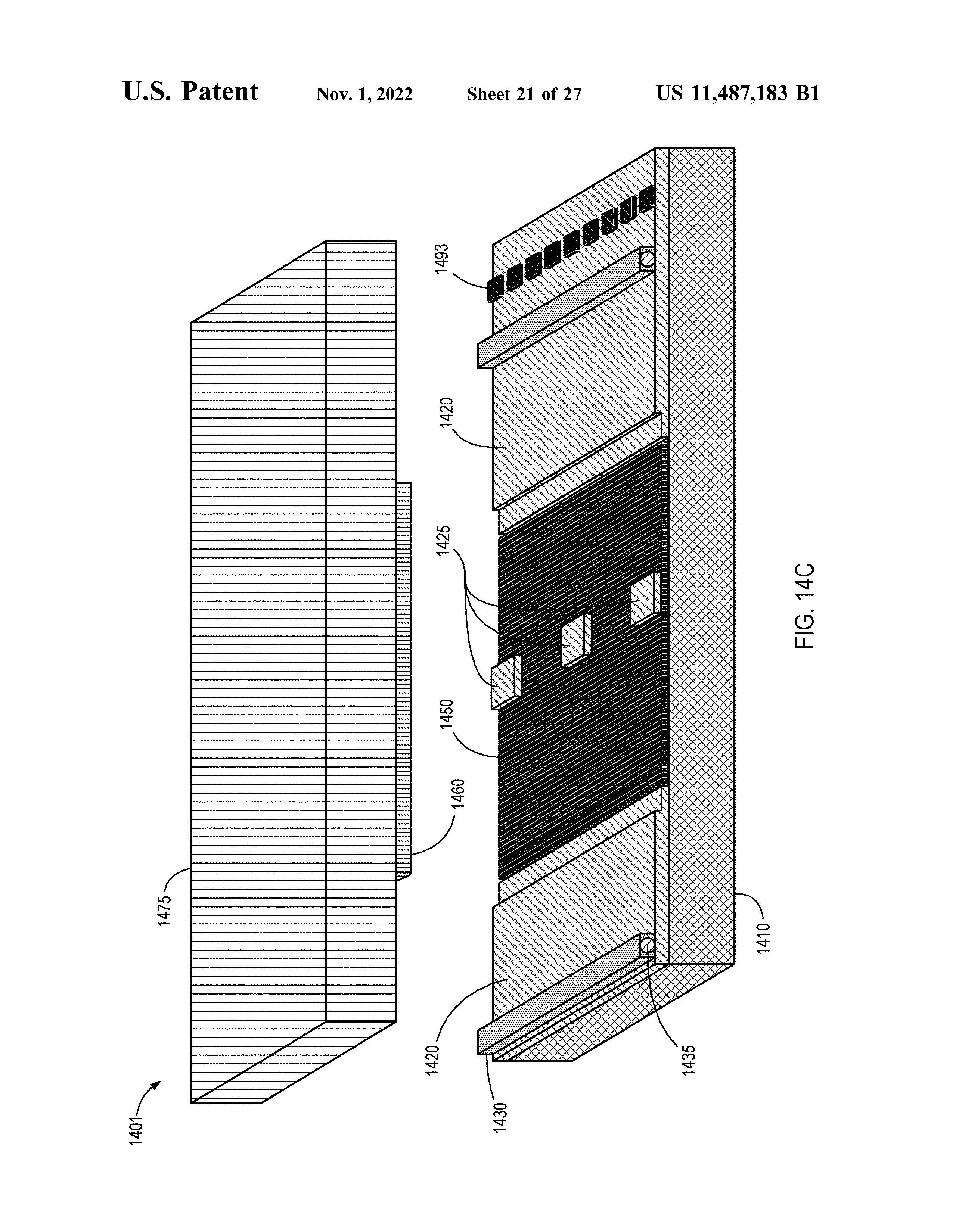
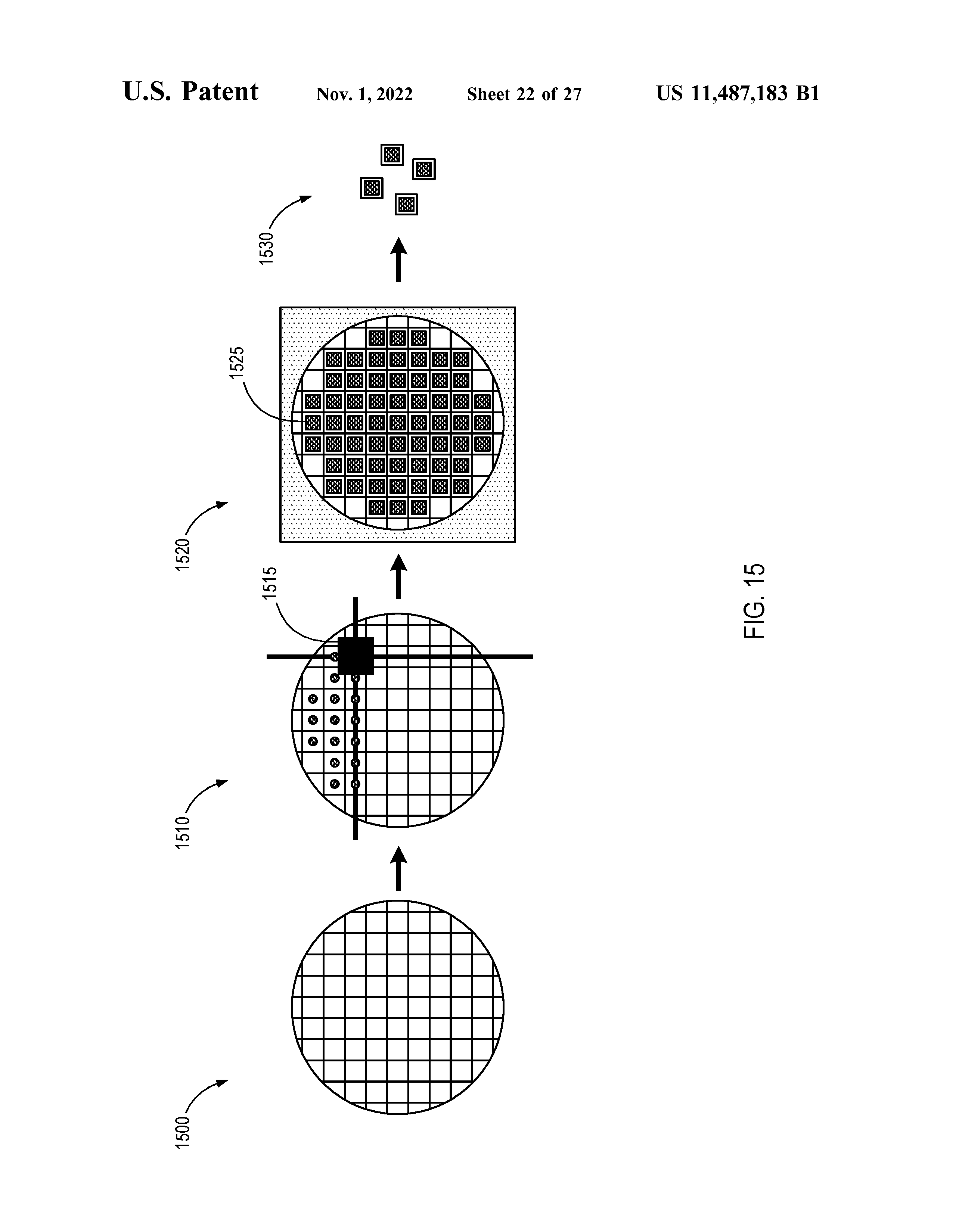
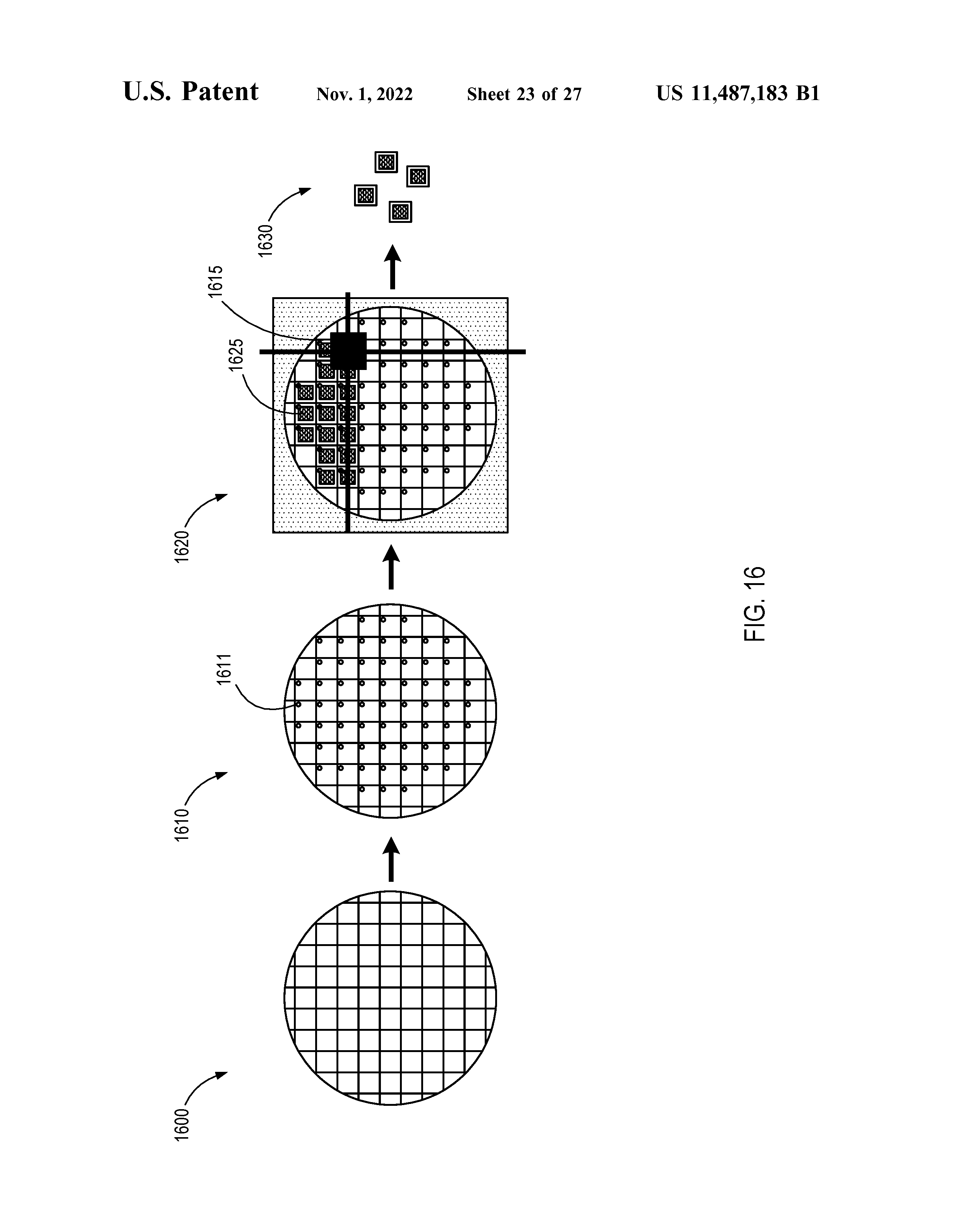
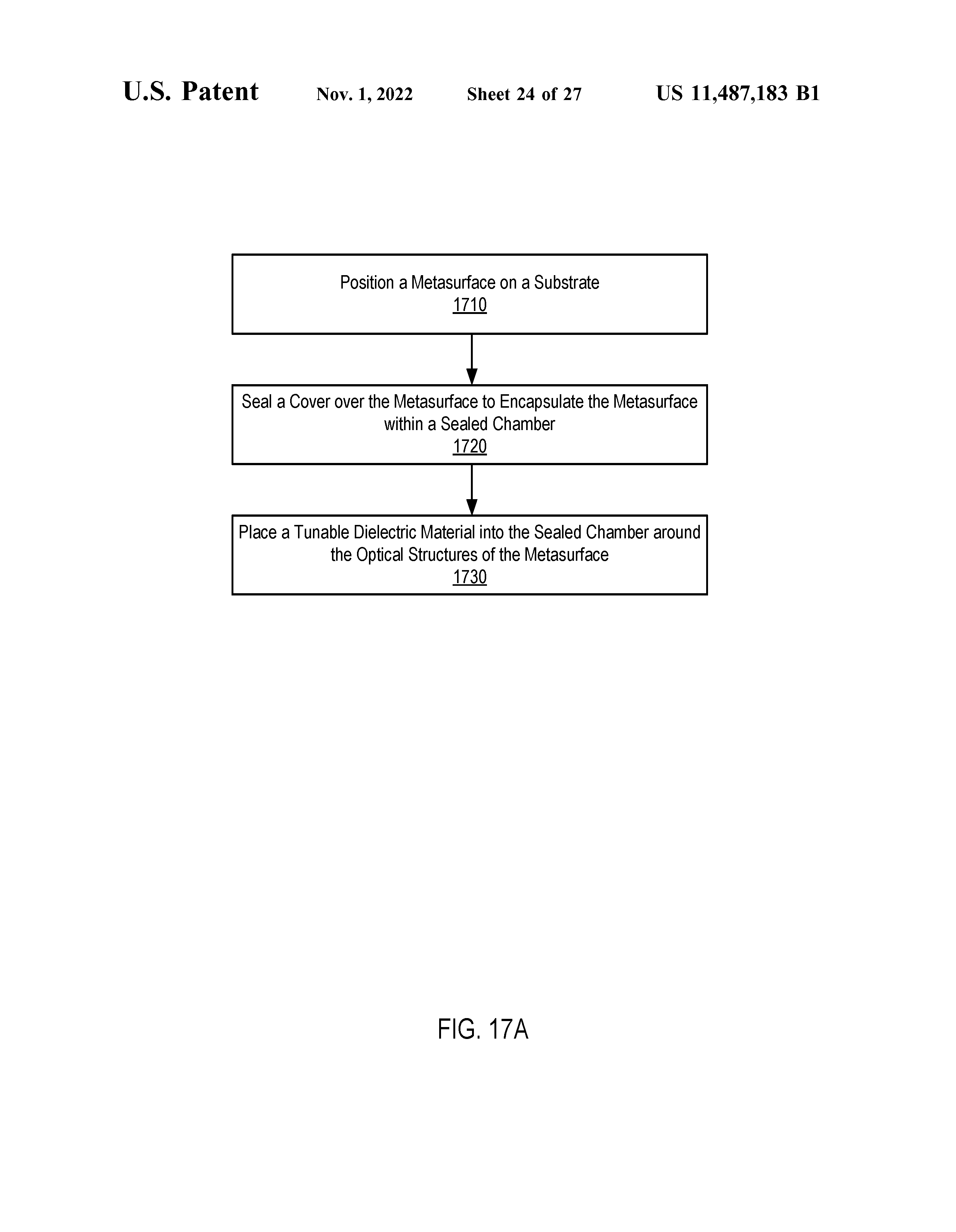
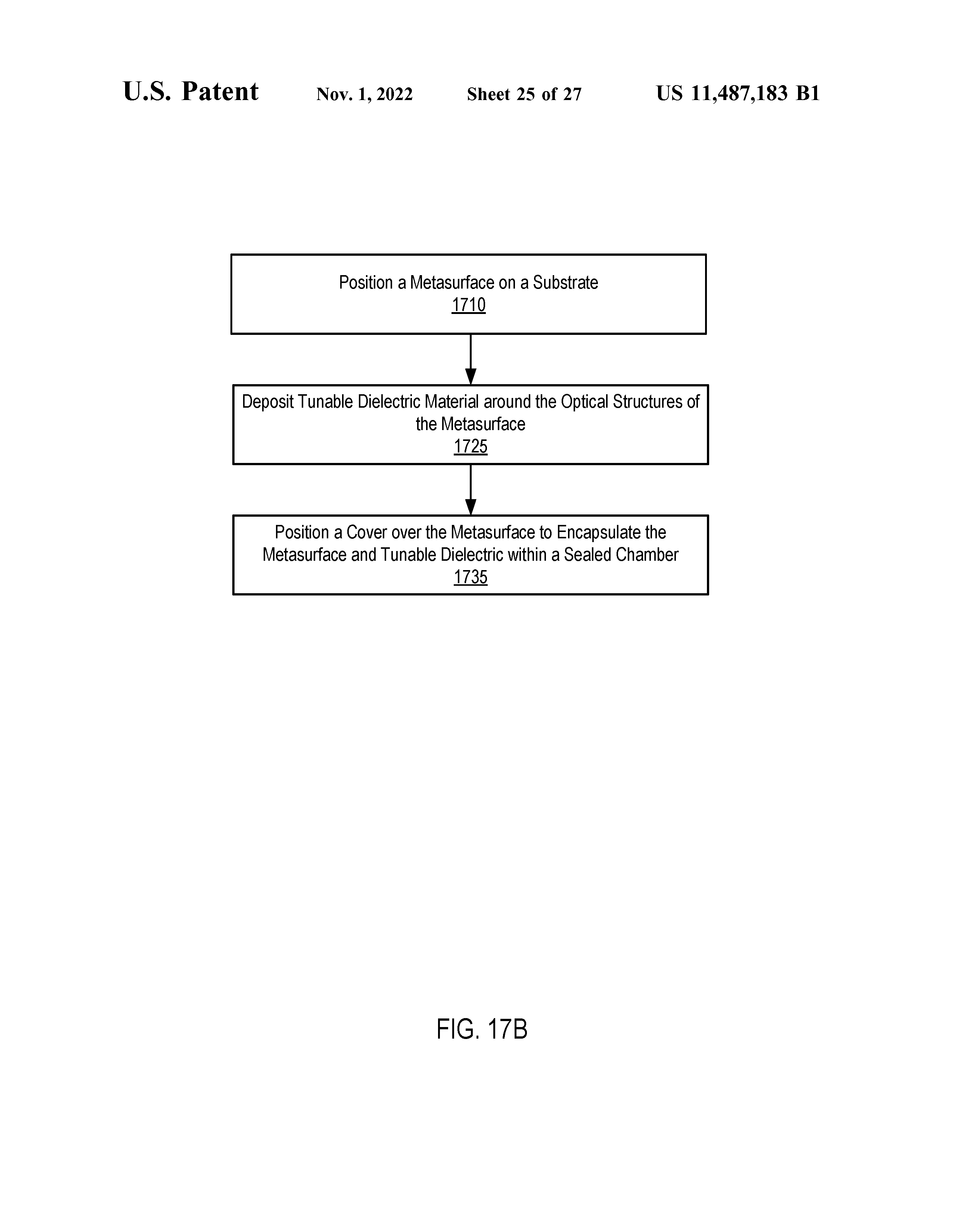
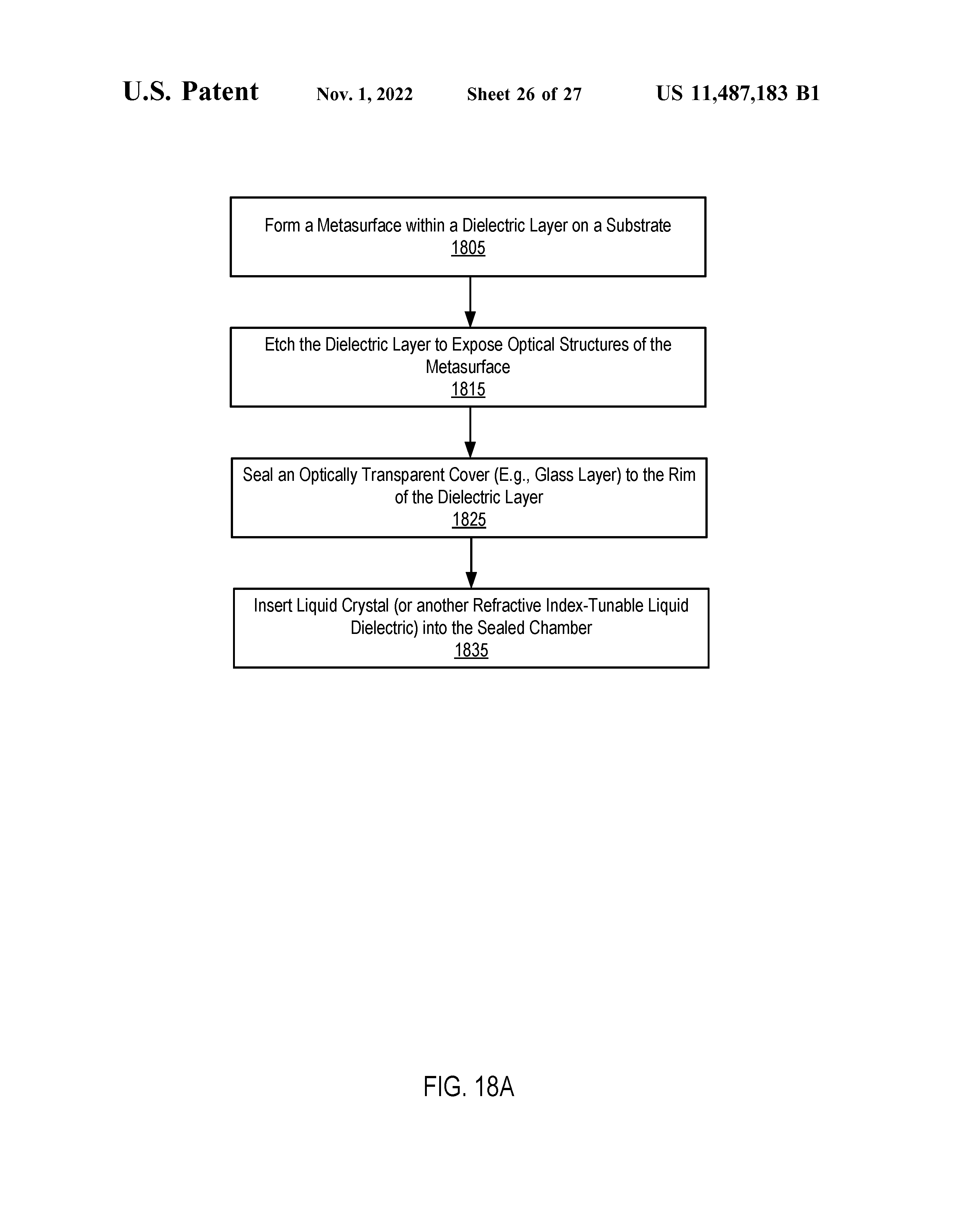
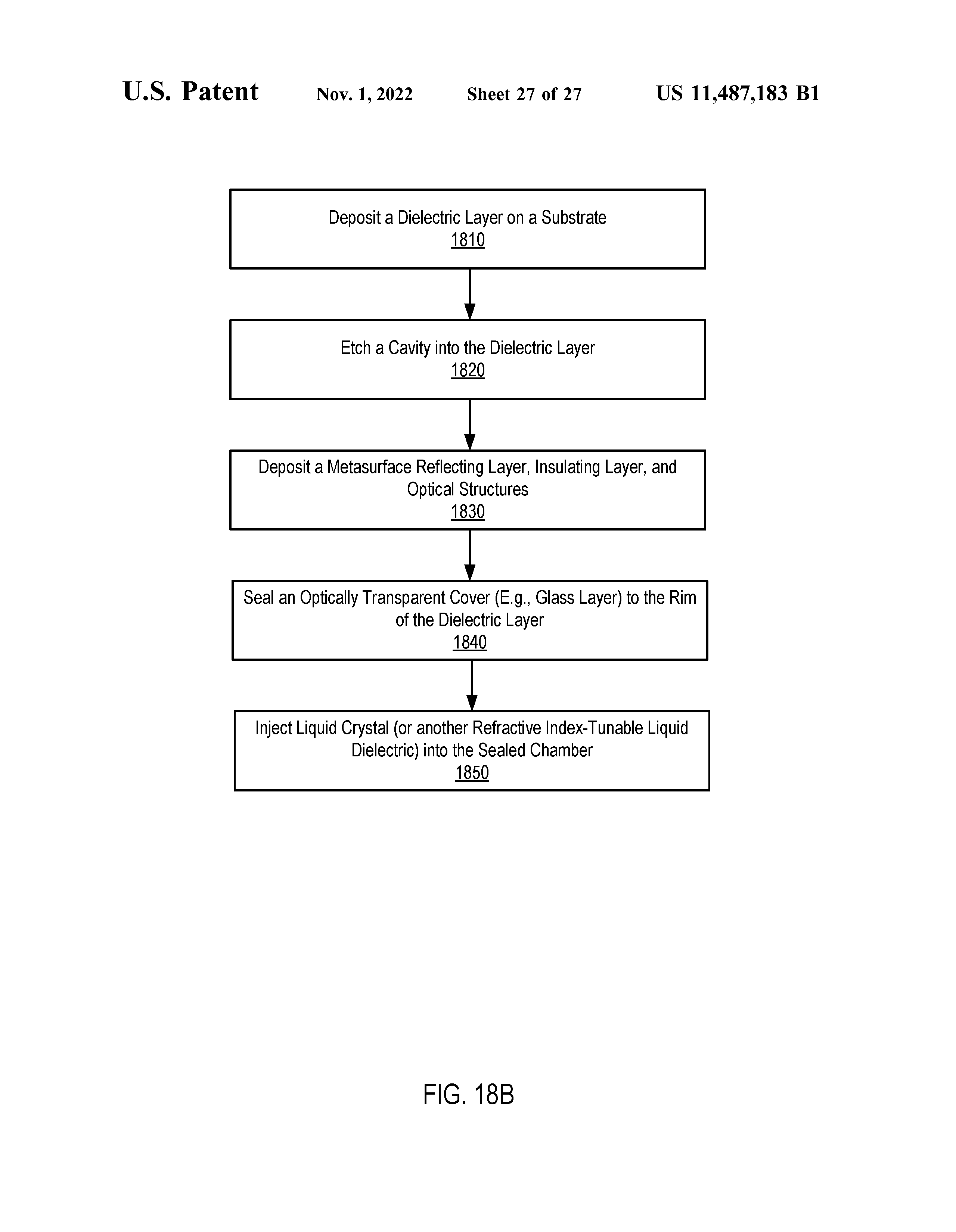
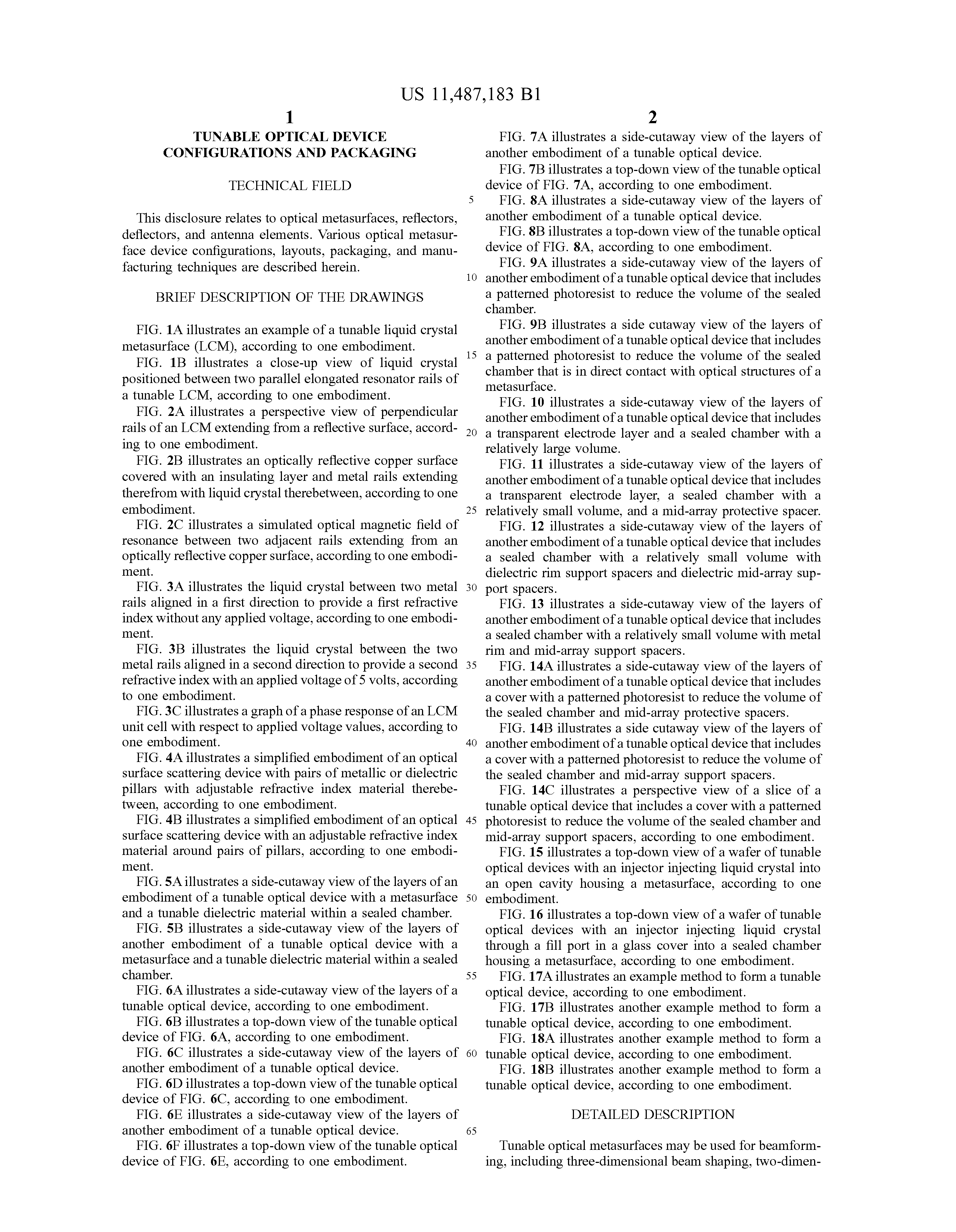
According to various embodiments, a cover is sealed over a metasurface on a substrate to create a sealed chamber. Liquid crystal, or another tunable refractive index dielectric material, is positioned within the sealed chamber around optical structures of the metasurface before or after the cover is sealed. For example, the liquid crystal may be injected through small vias or holes to fill a sealed chamber. In some embodiments, a glass cover is shaped or patterned with photoresist to protrude into the sealed chamber to reduce the thickness of the liquid crystal used to fill the sealed chamber. A driver to control the metasurface may be, for example, integrated within the substrate, be attached to exposed bond pads of the metasurface, and/or be embodied as a control layer connected to the metasurface through the substrate by through-substrate vias (TSVs).
2. Liquid crystal metasurfaces with cross-backplane optical reflectors
Published:
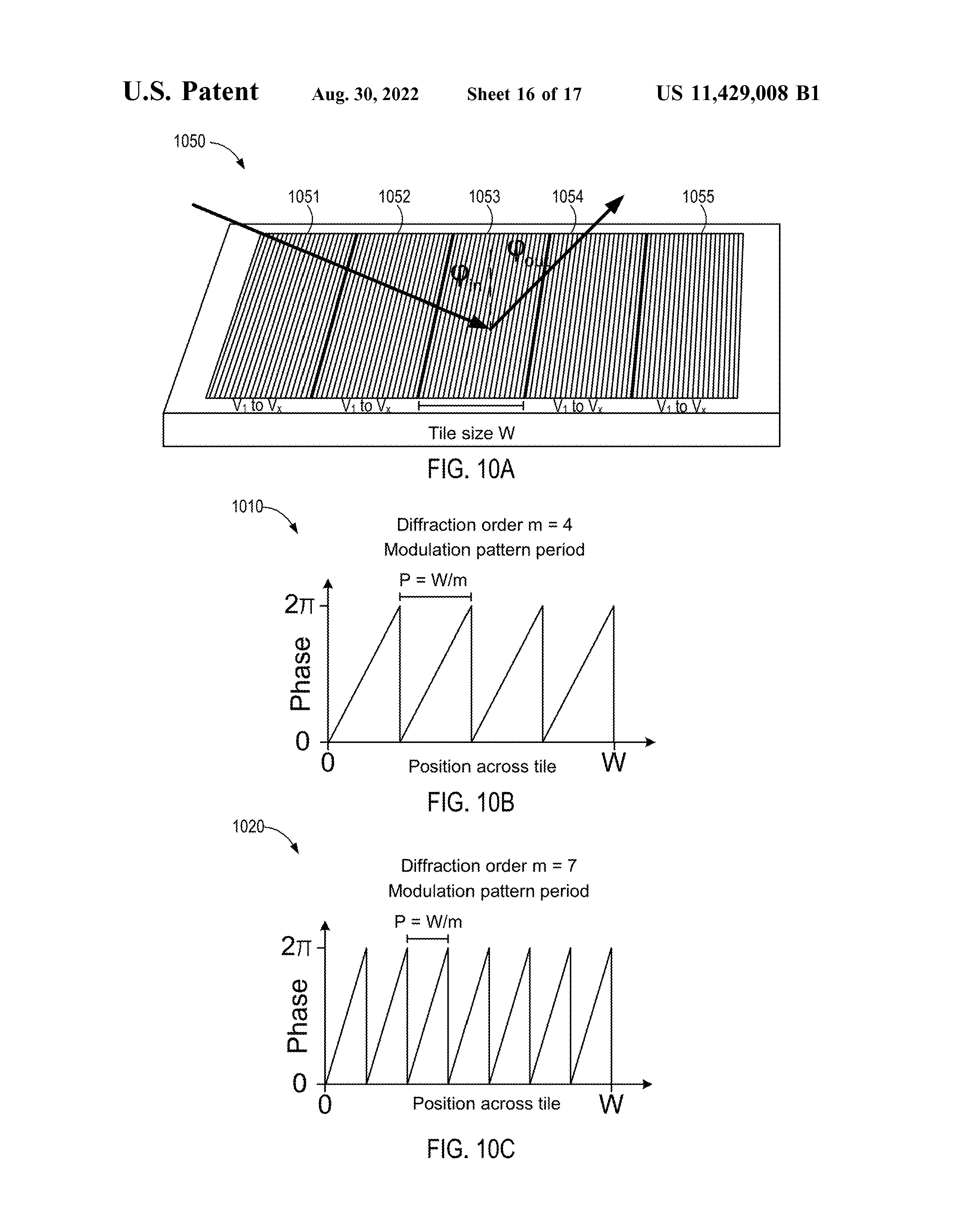
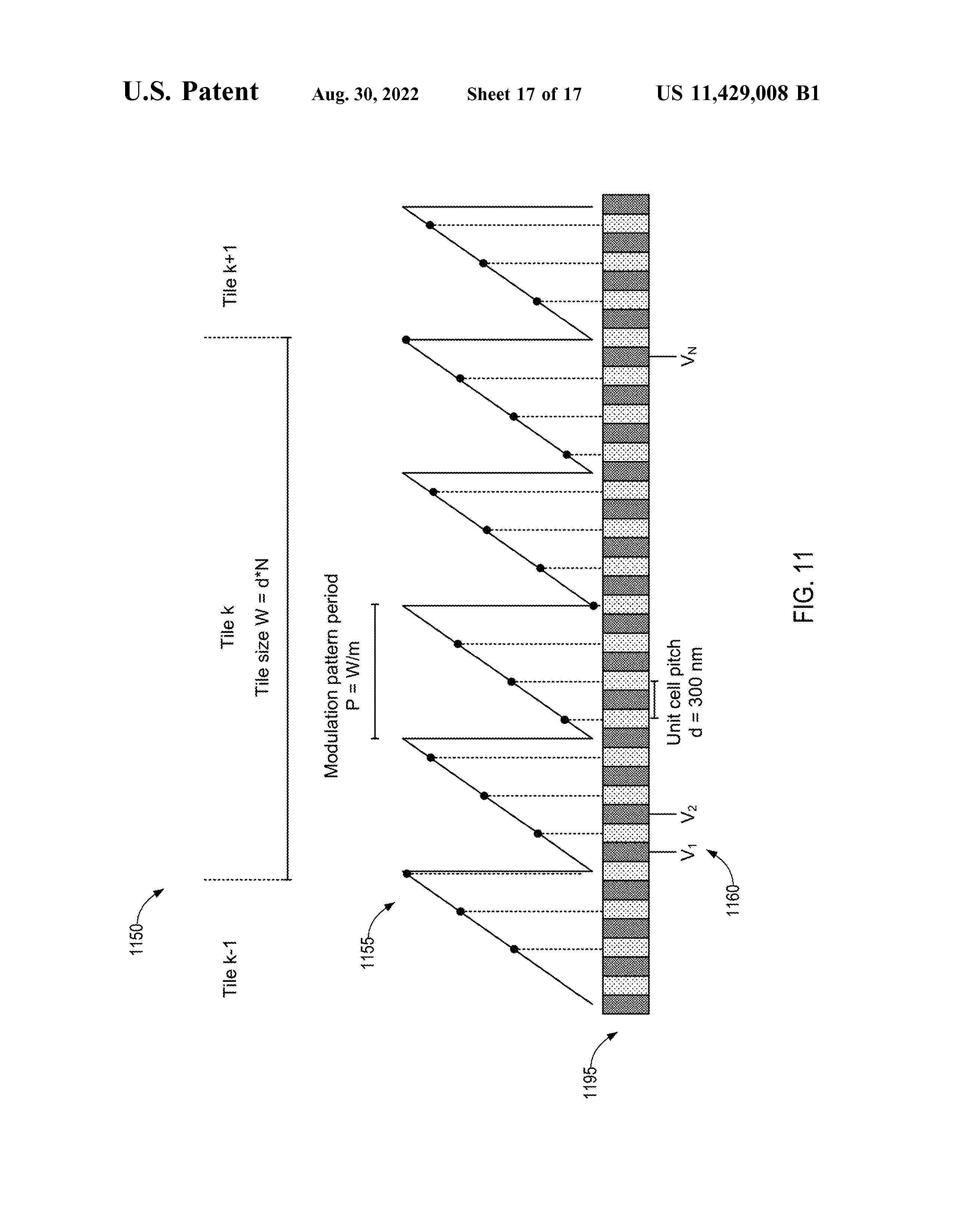
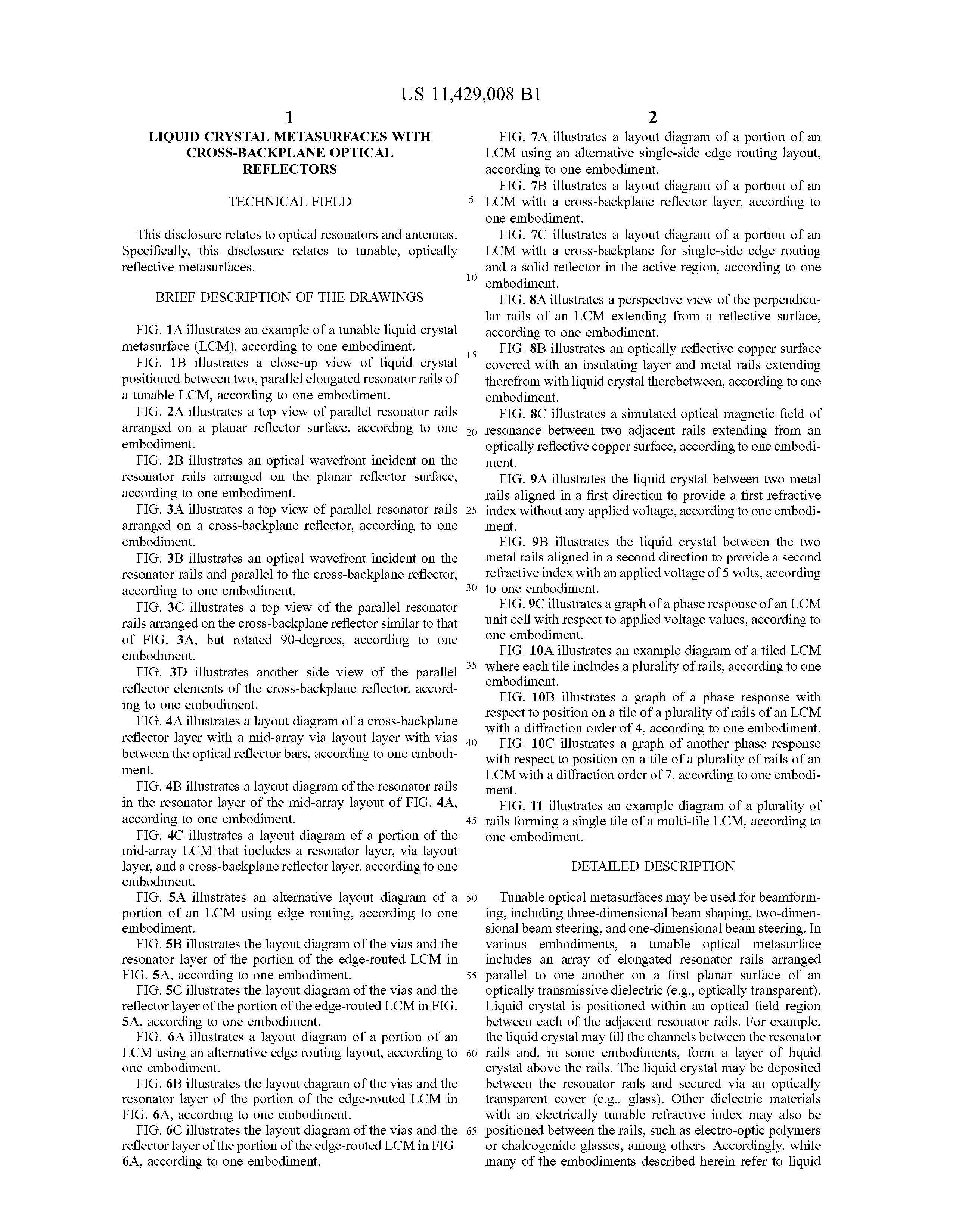
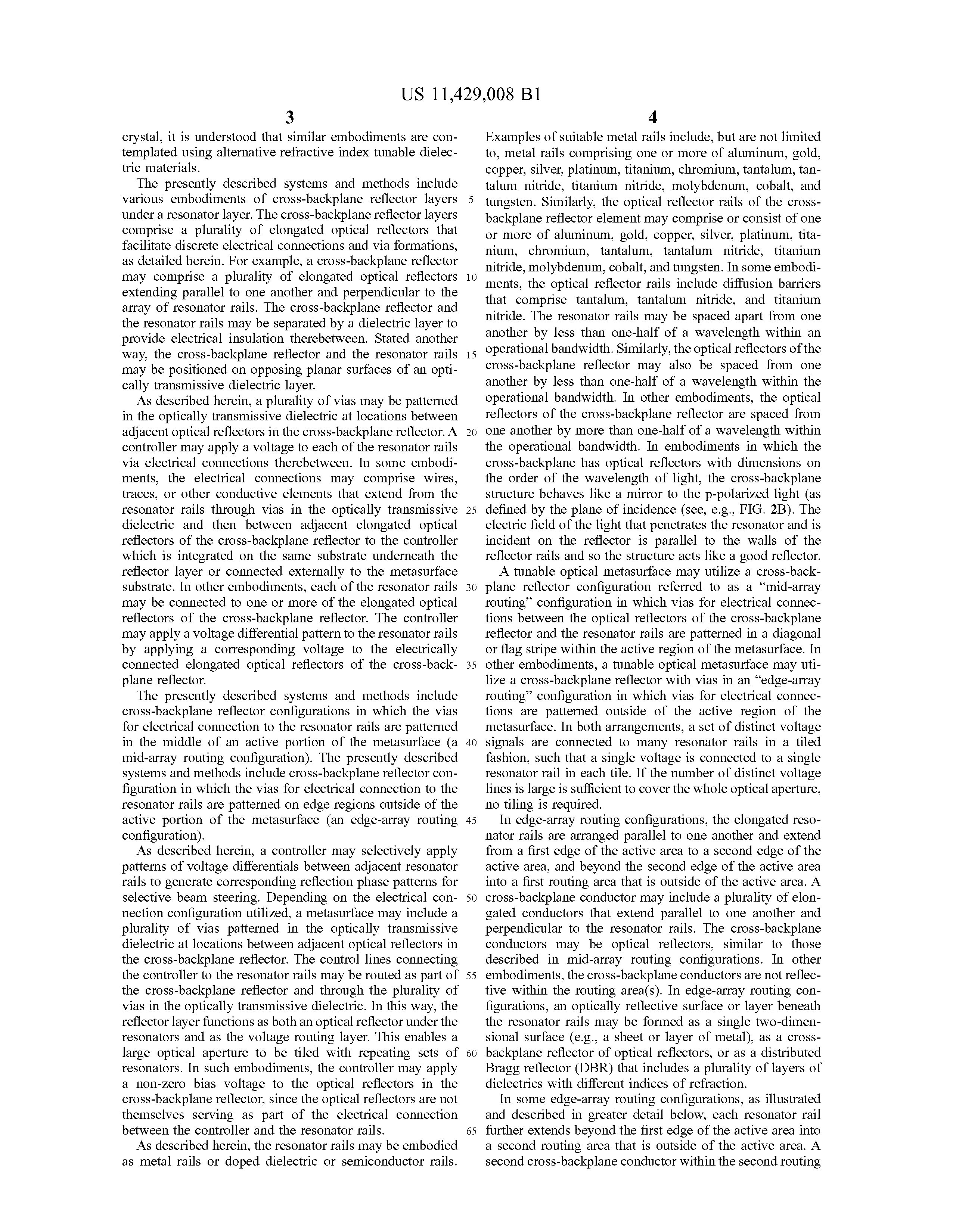
Abstract:
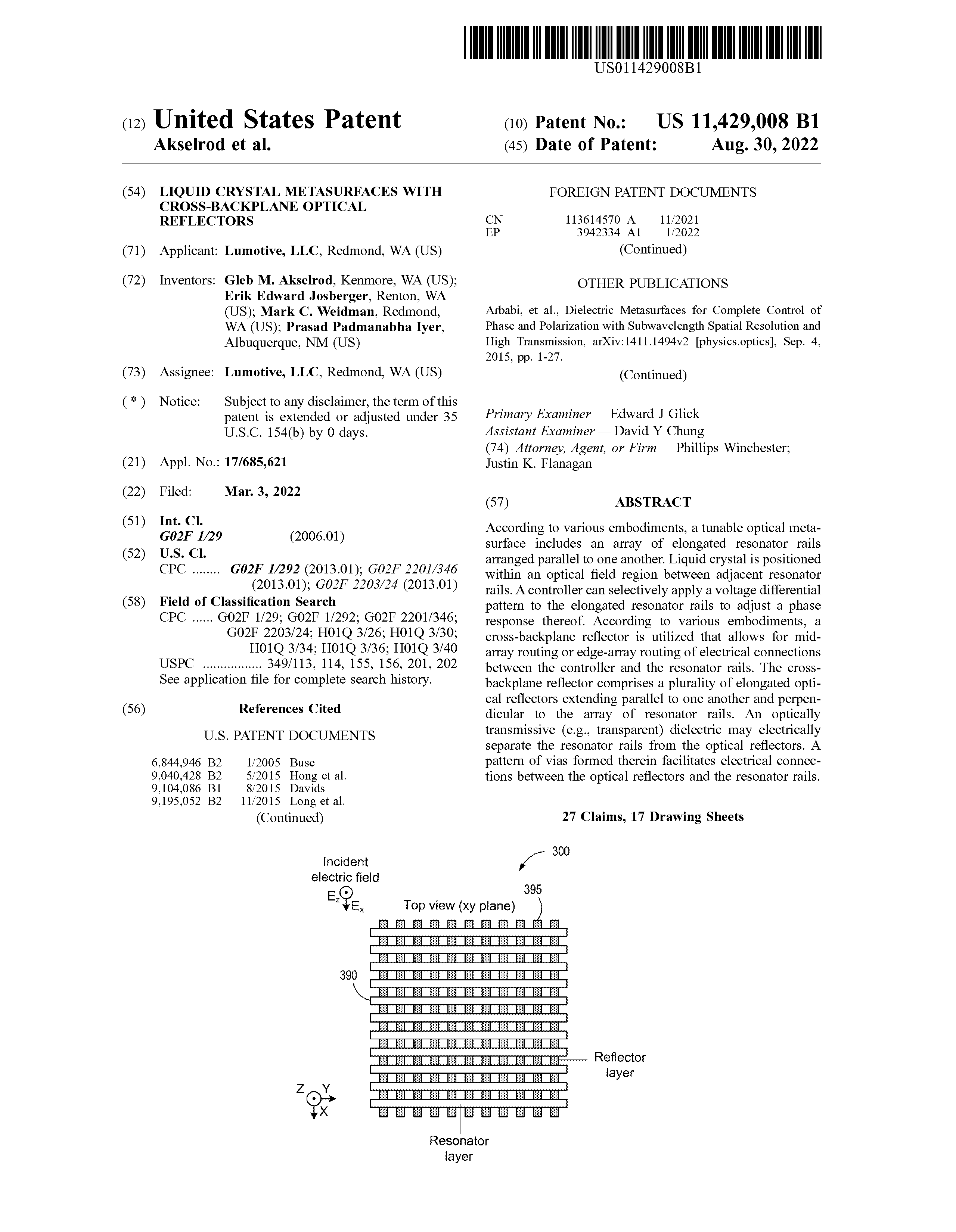
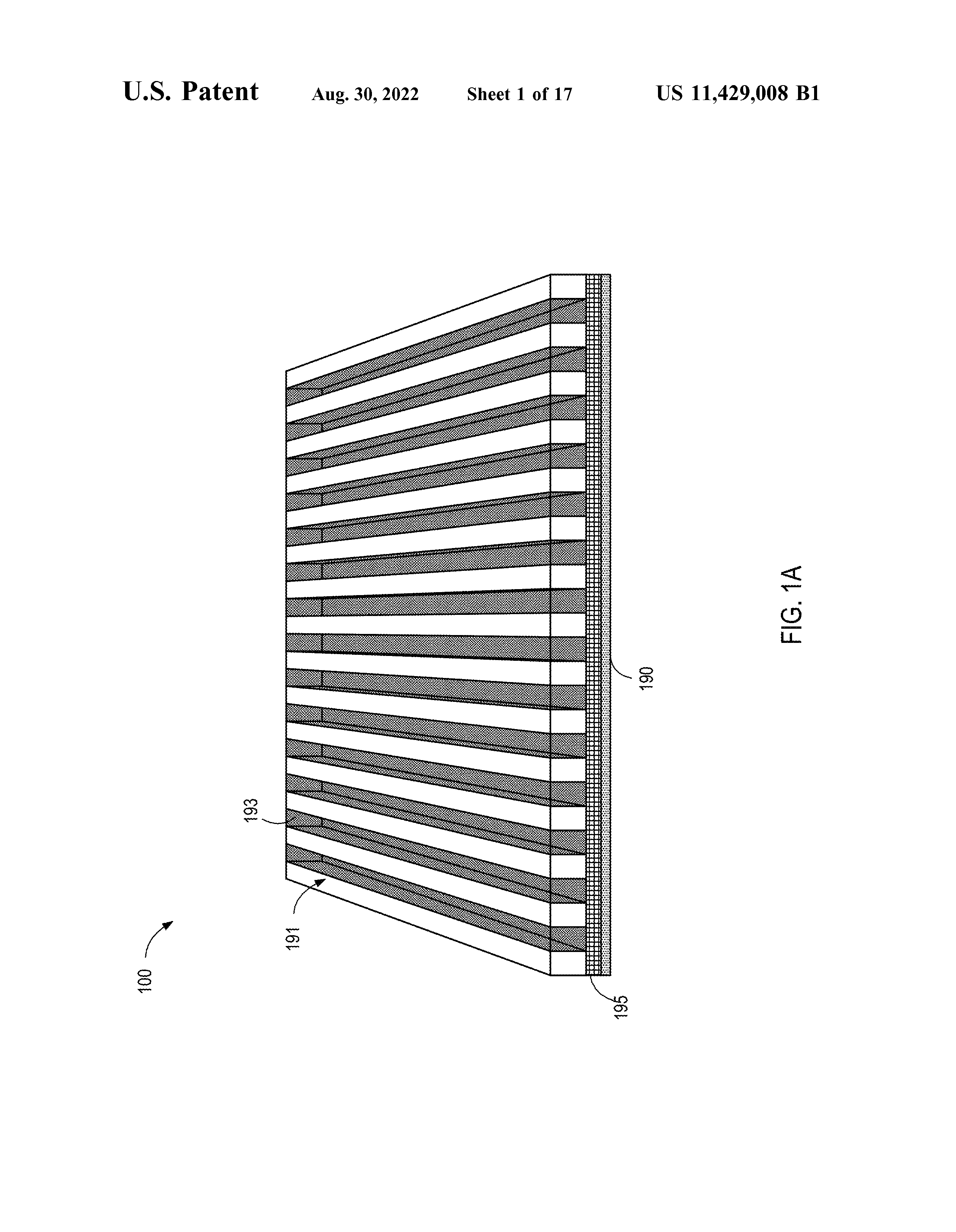
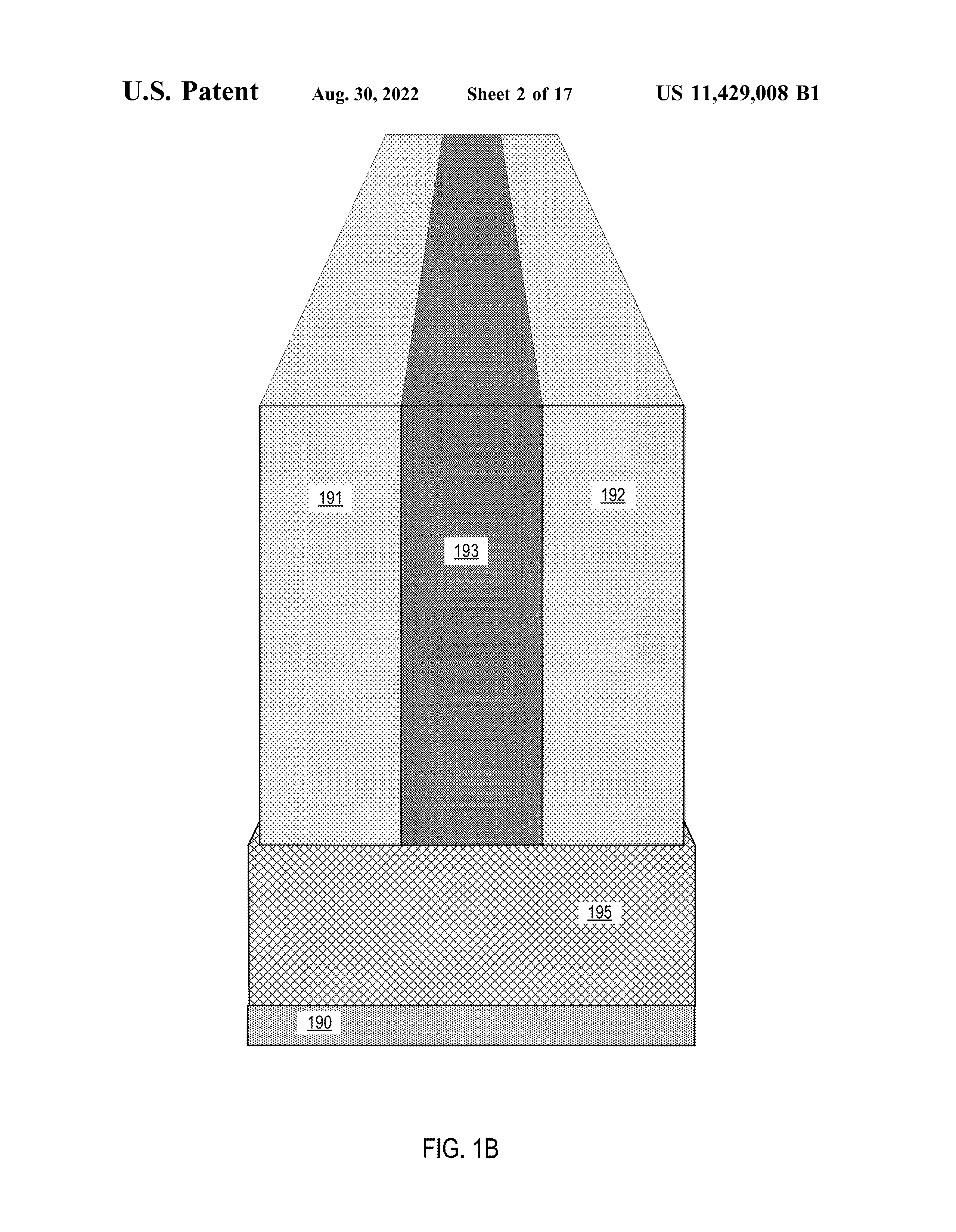
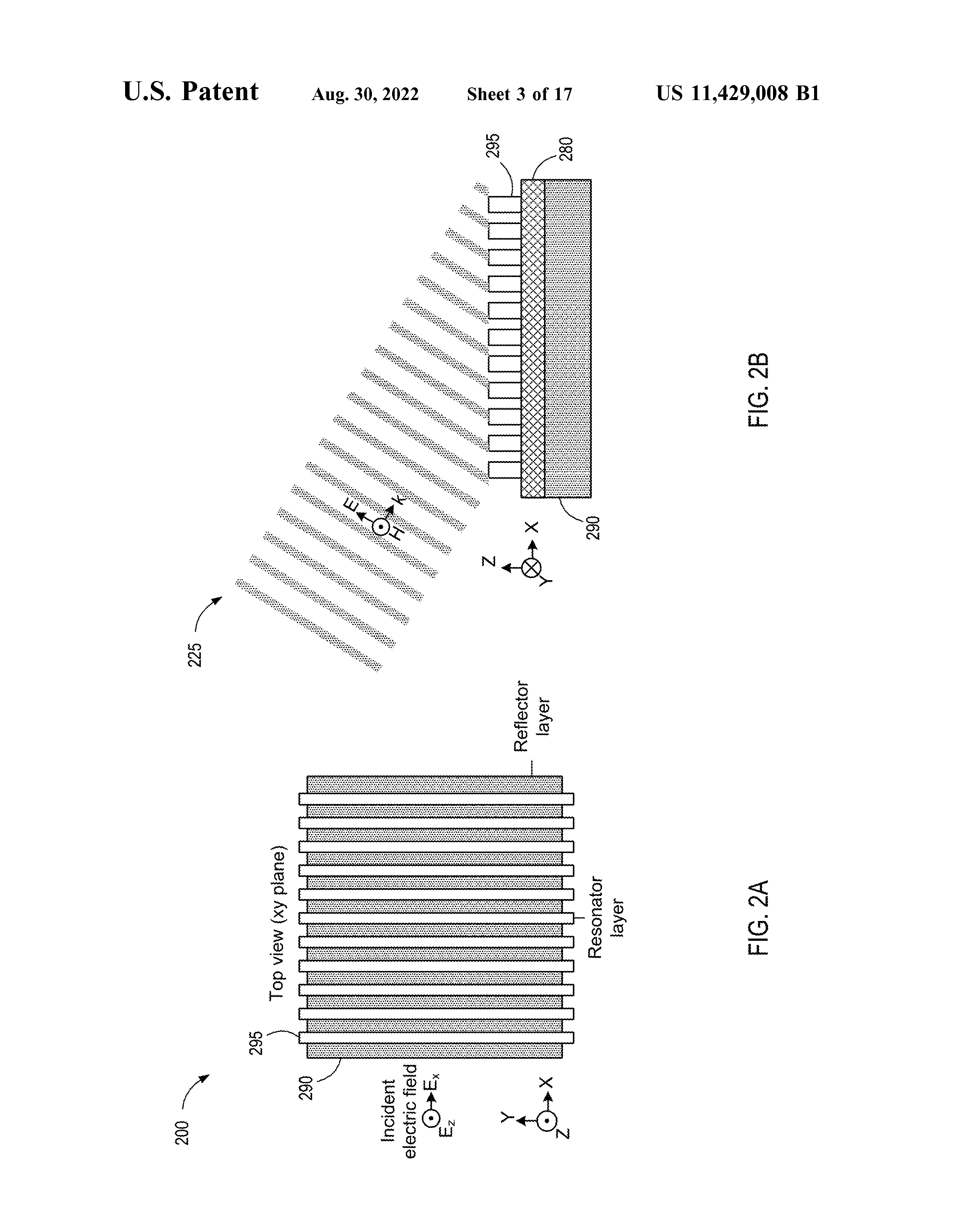
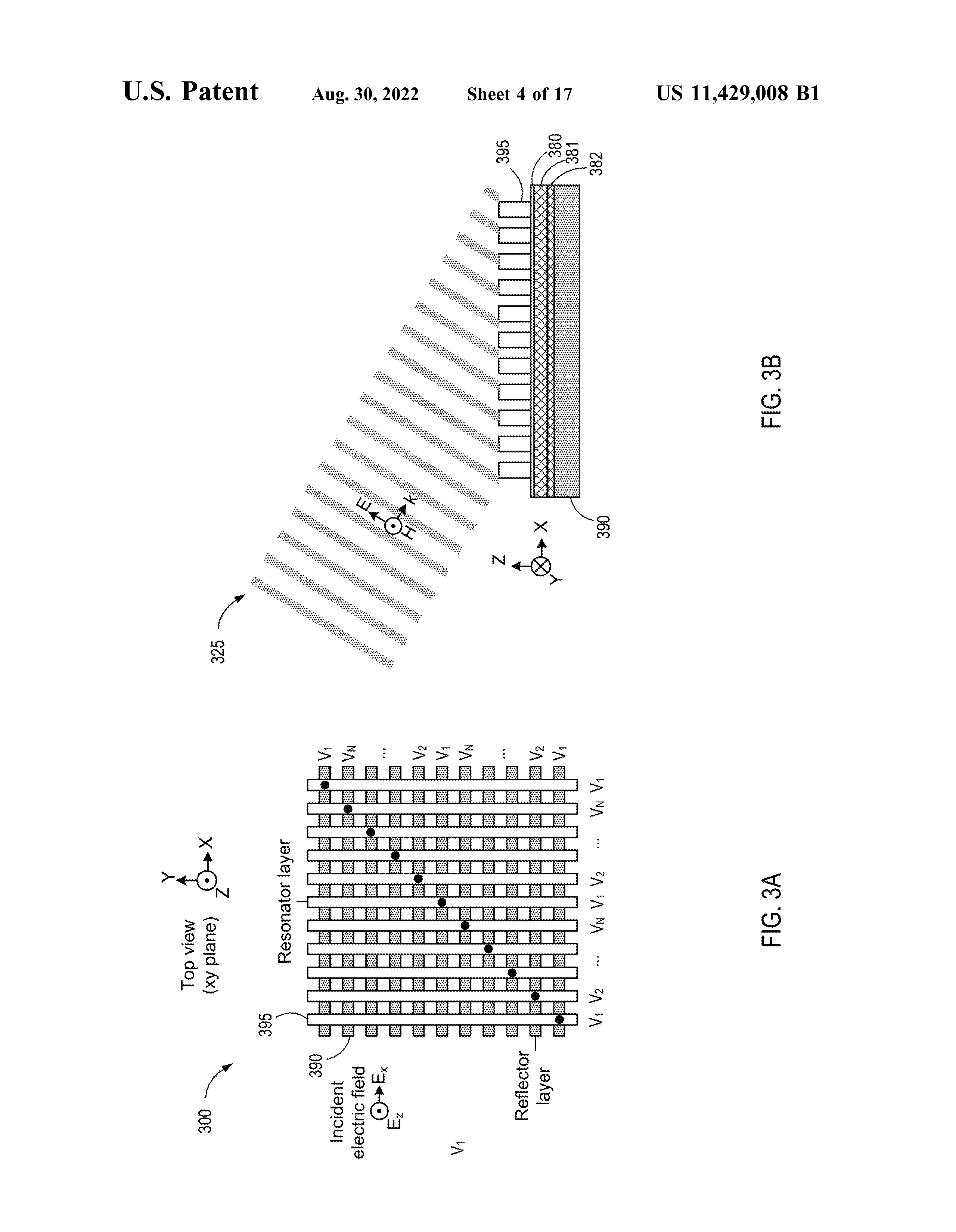
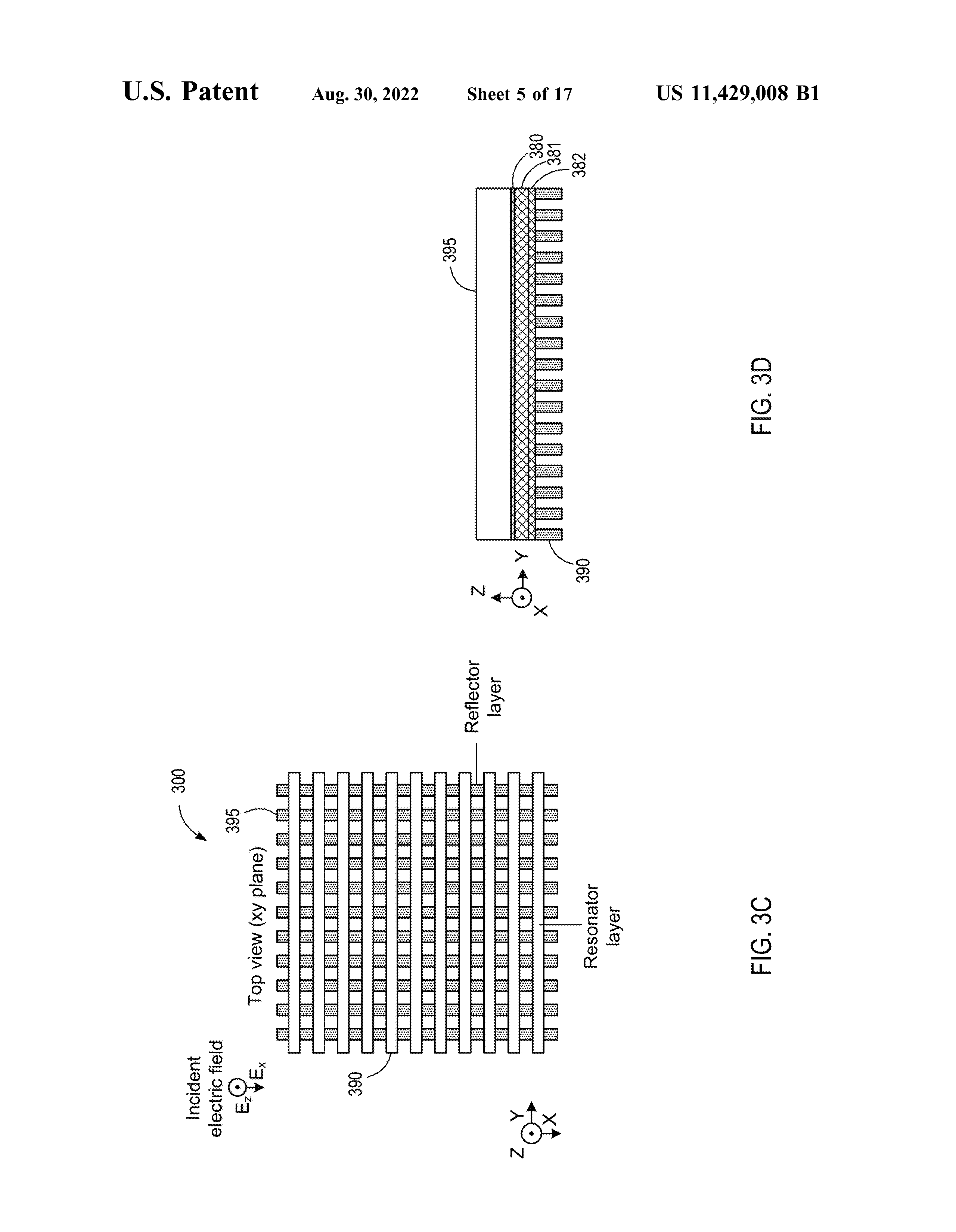
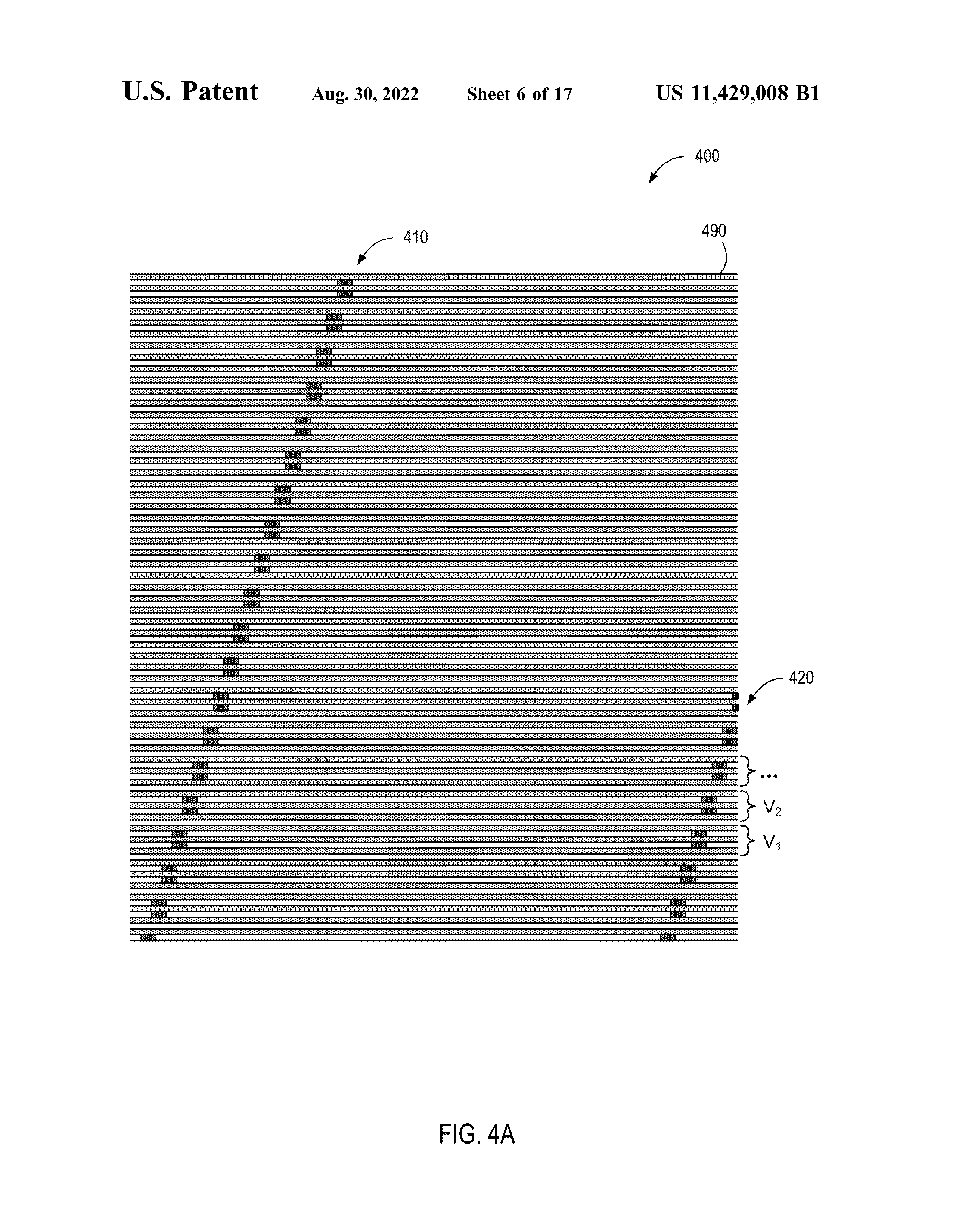
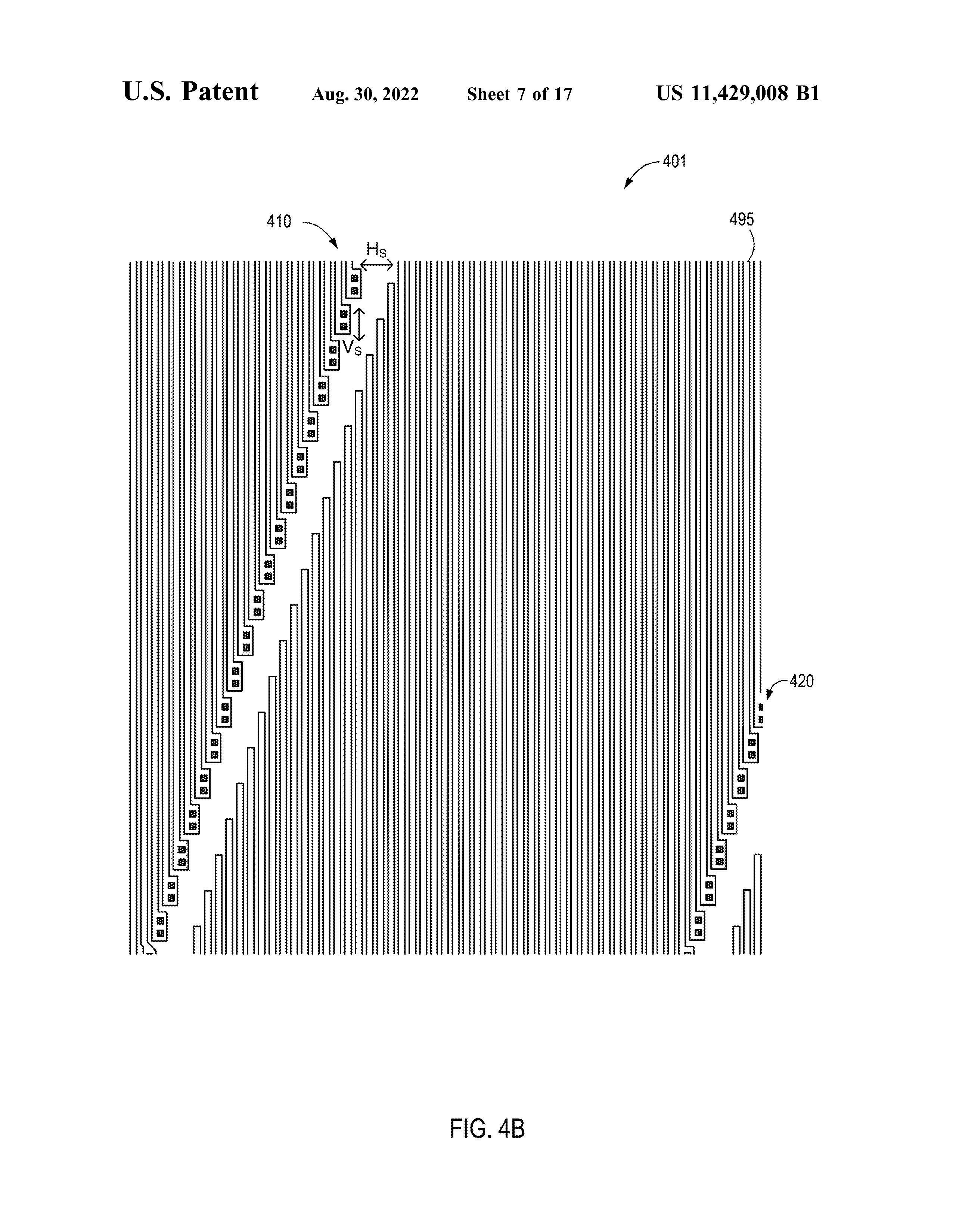
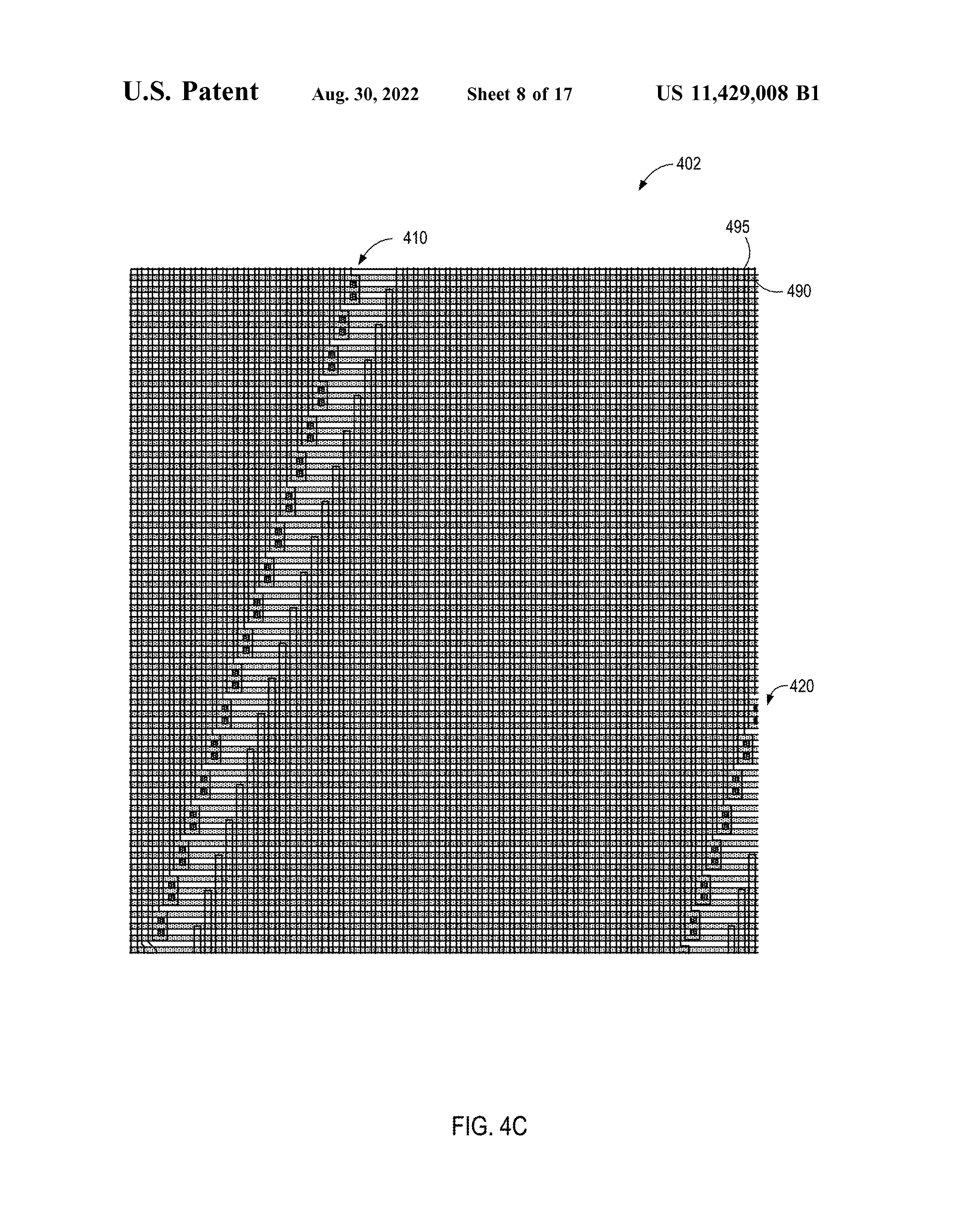
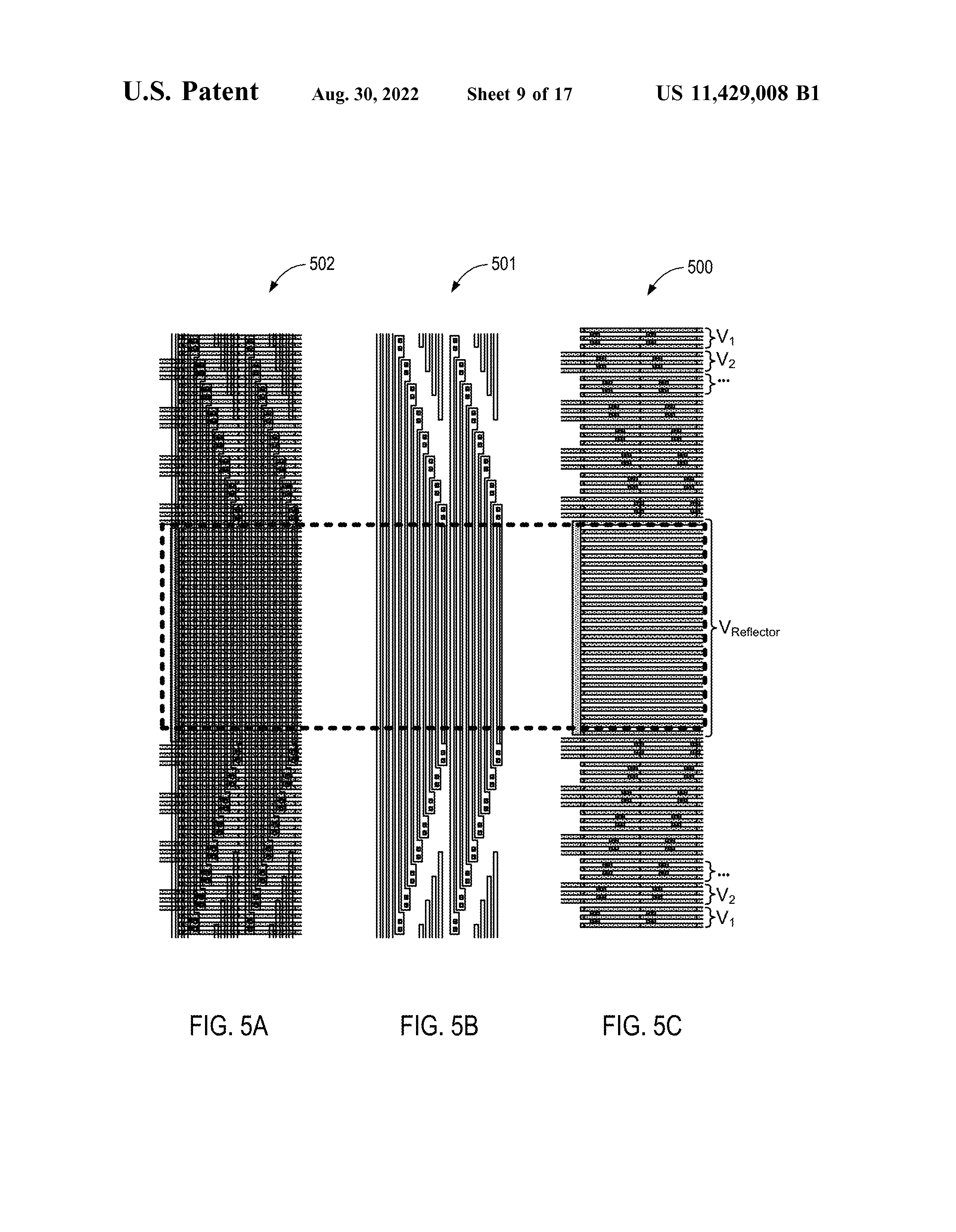
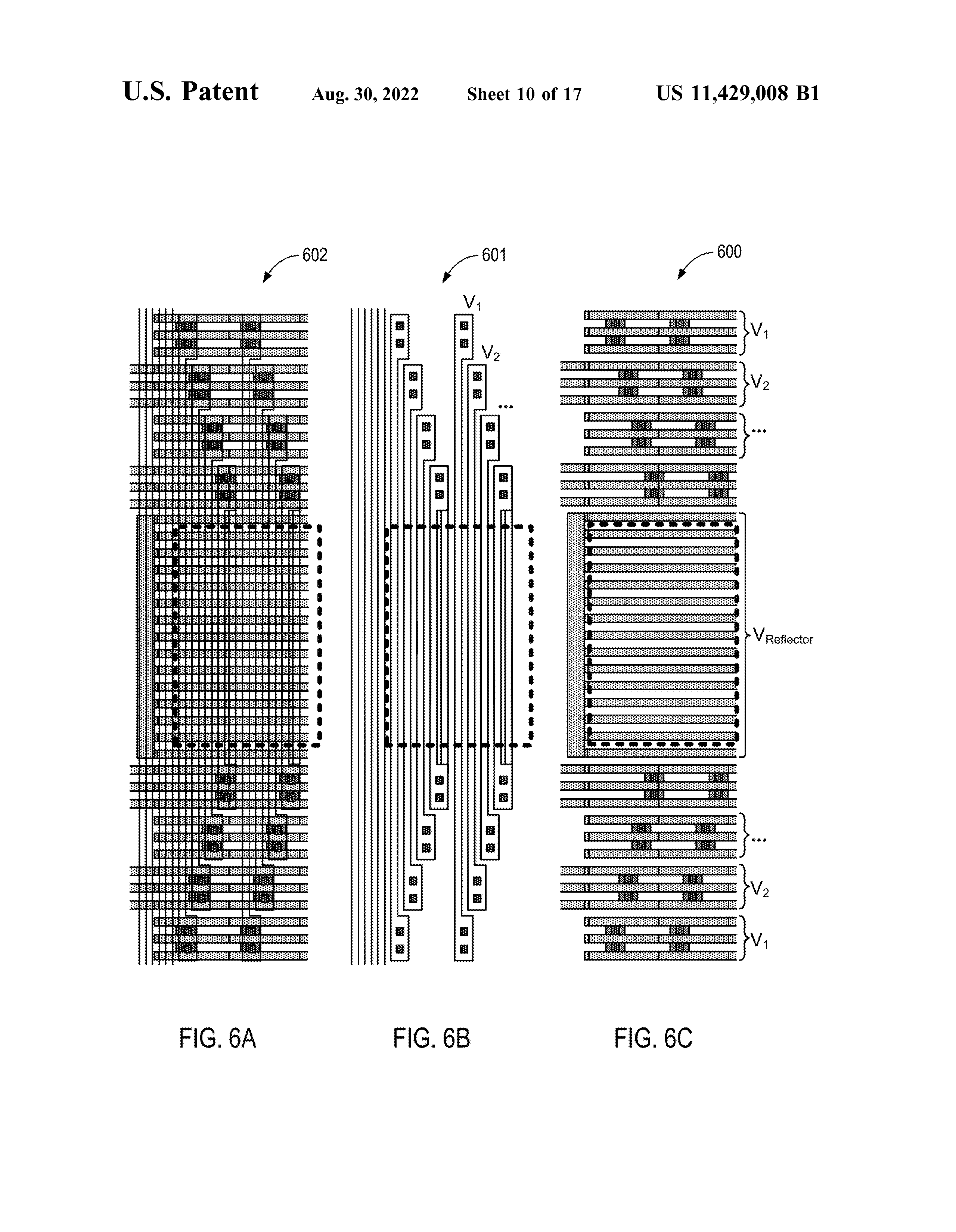
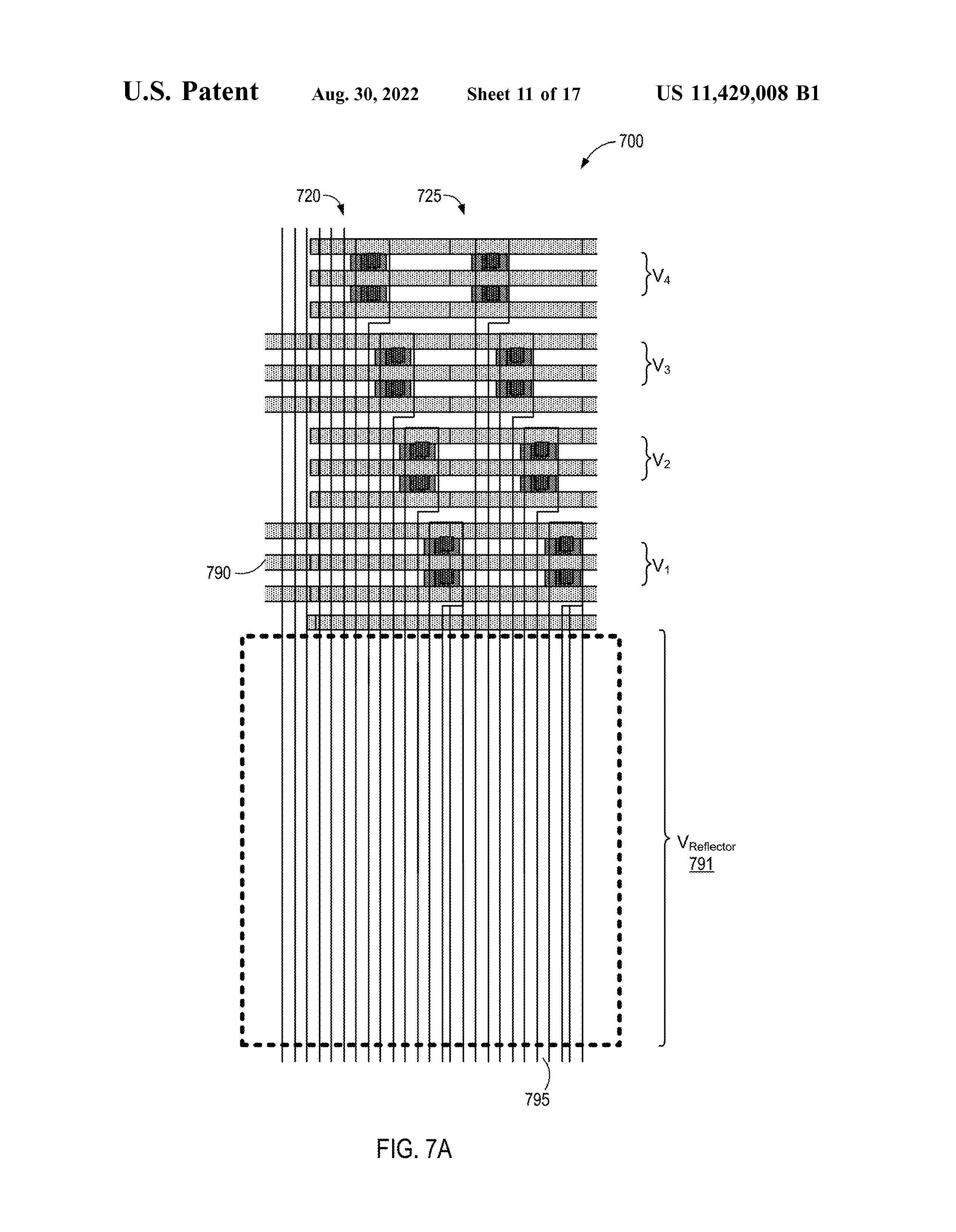
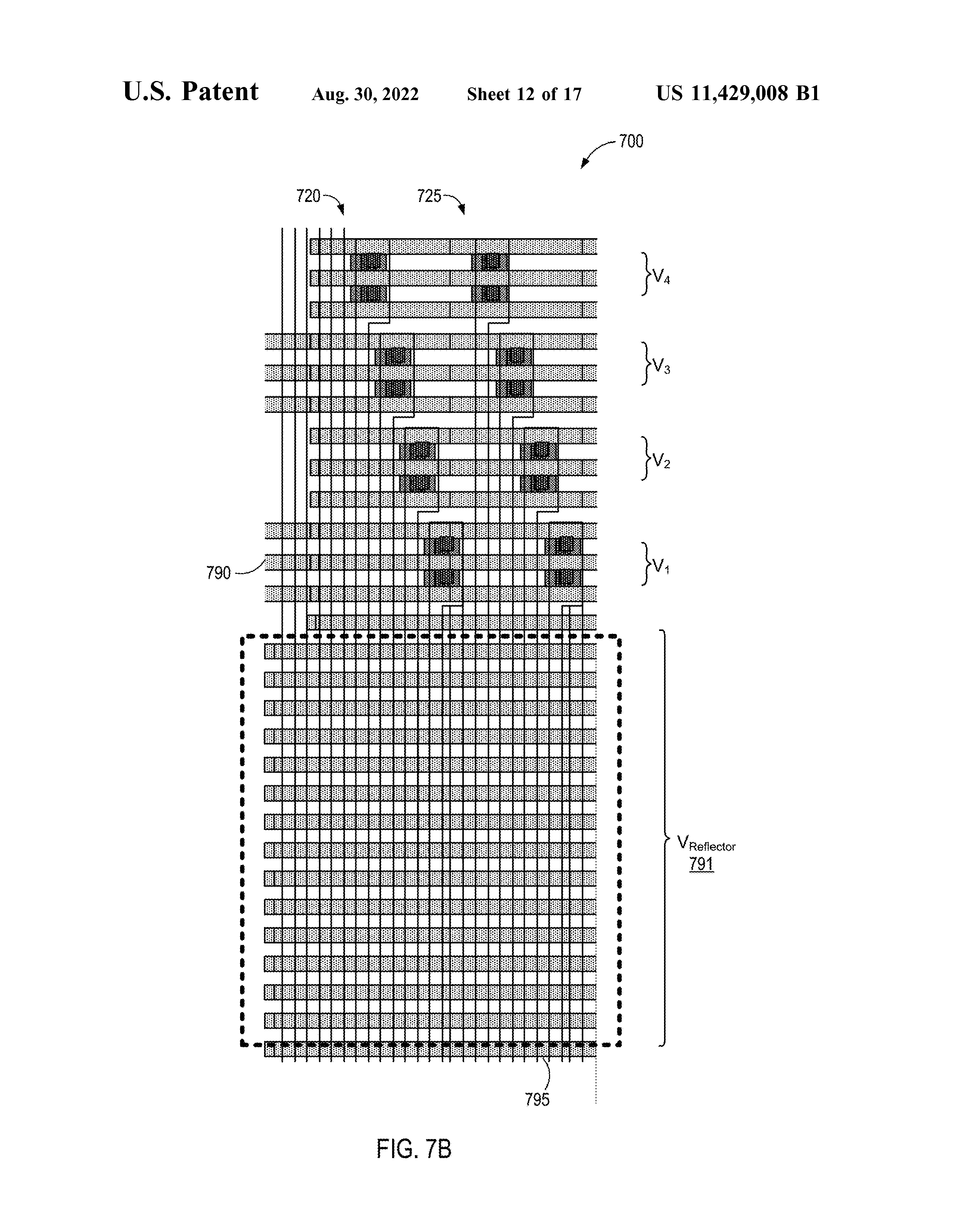
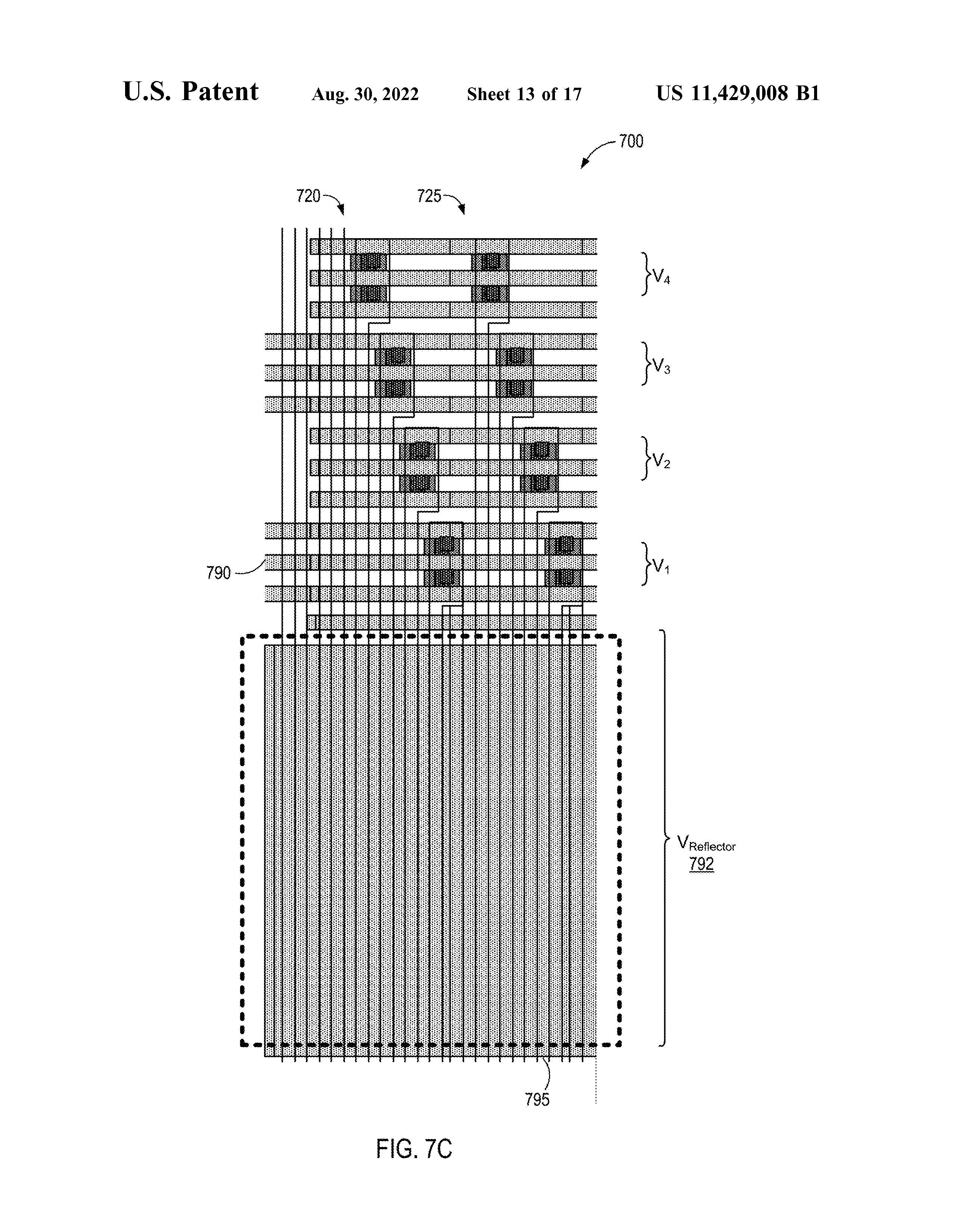
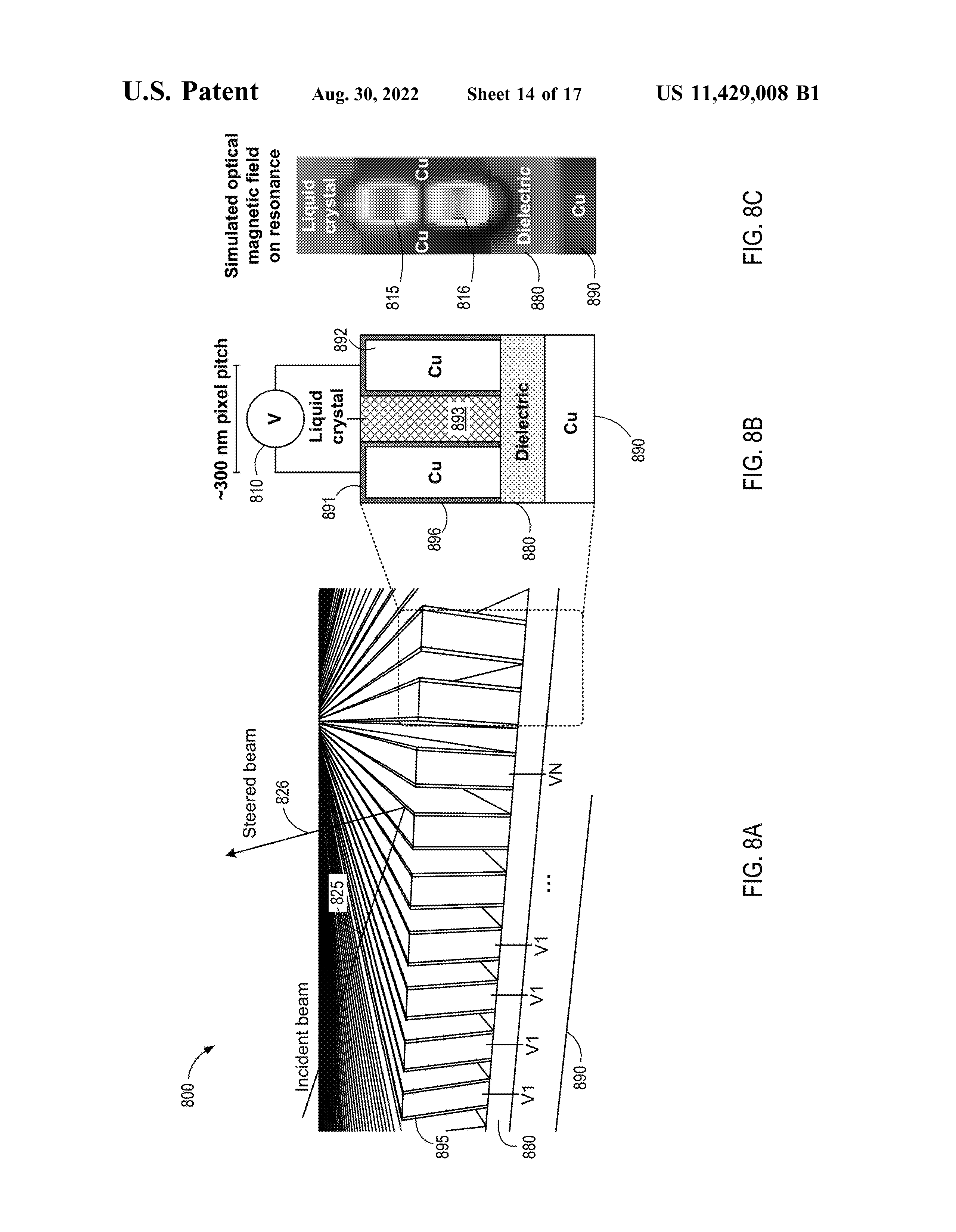
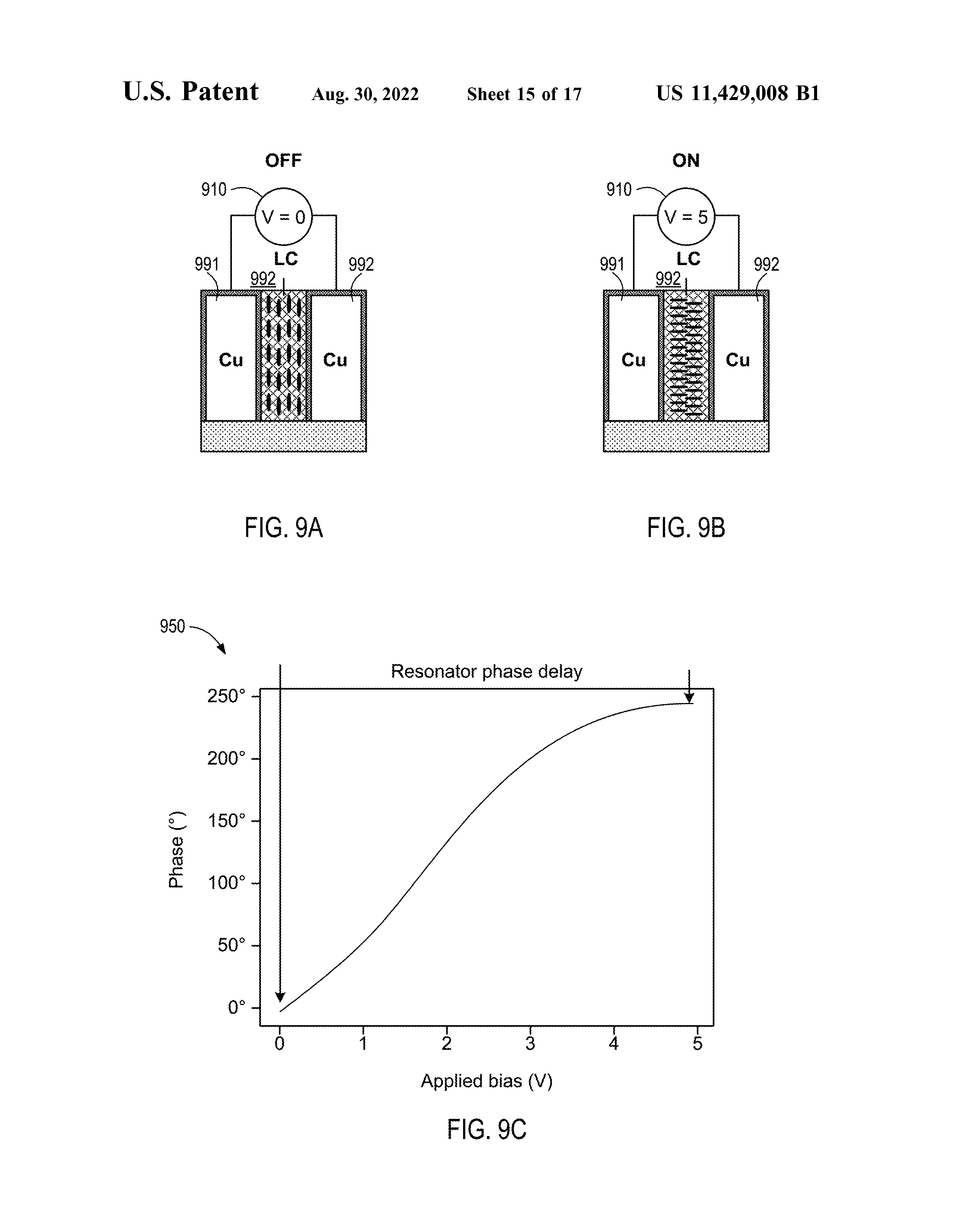
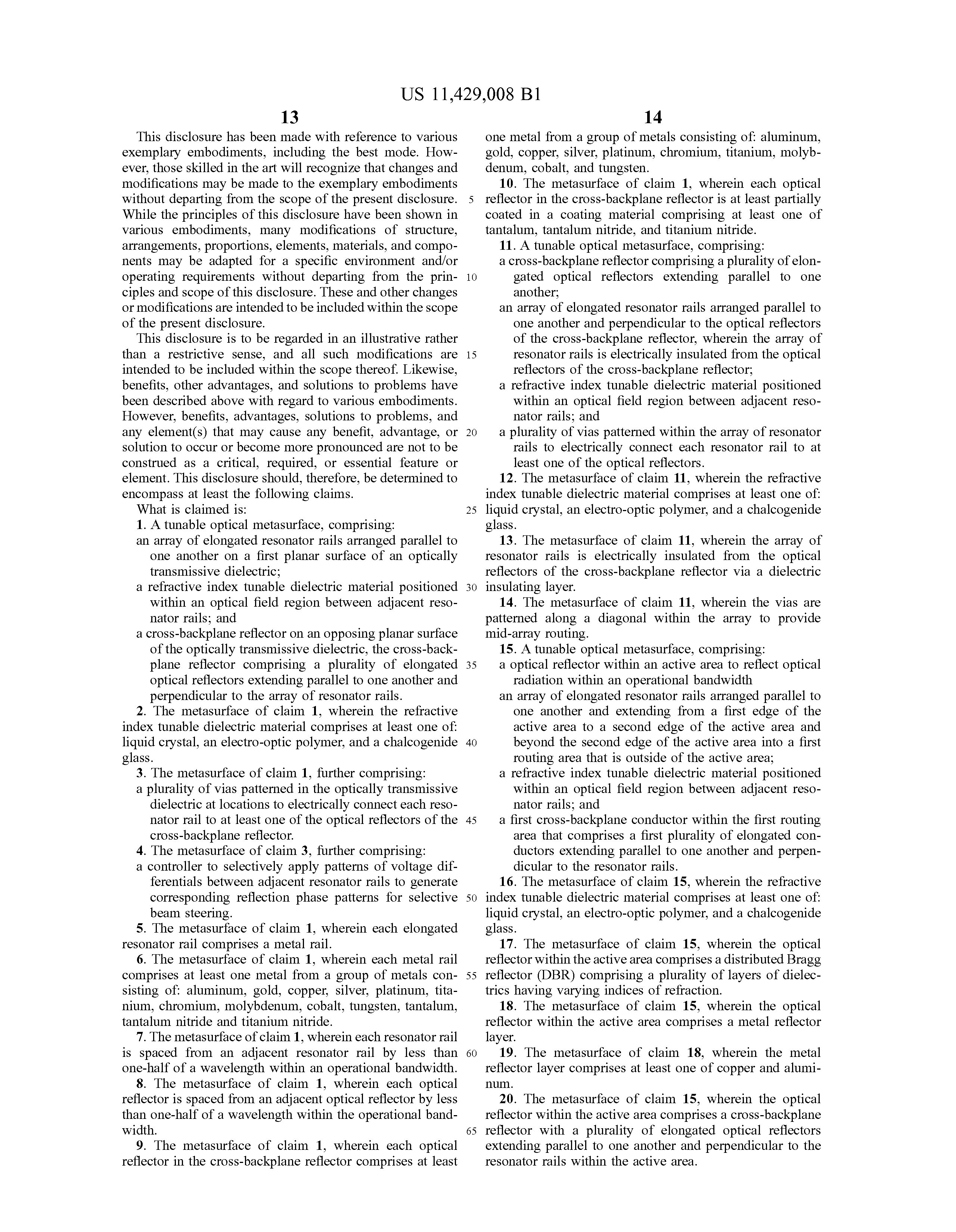
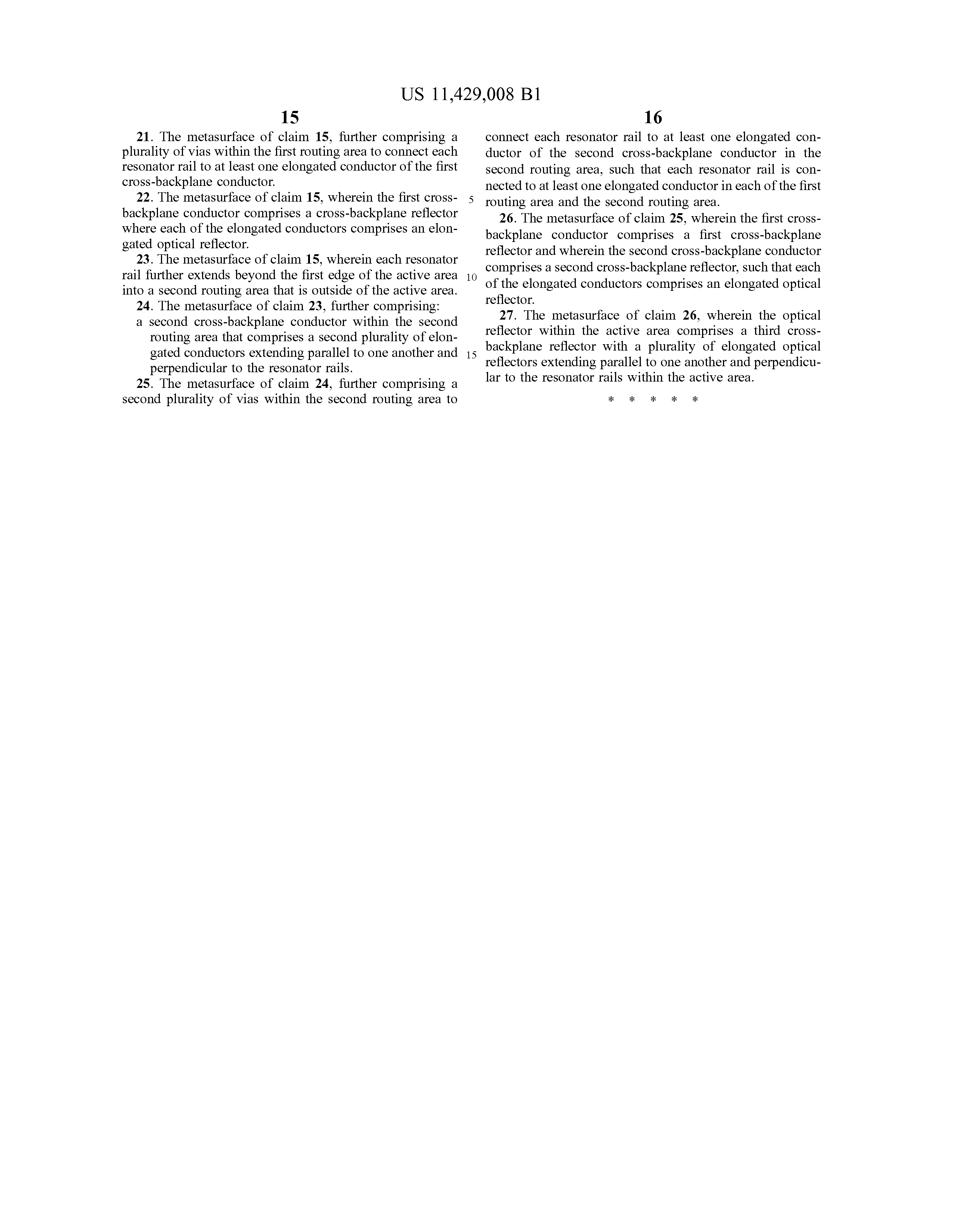
This patent describes a novel design for liquid crystal metasurfaces that incorporate cross-backplane optical reflectors, enabling enhanced control over light manipulation and improved device performance for advanced photonic applications.
1. Sidelobe suppression in metasurface devices
Published:
Abstract:
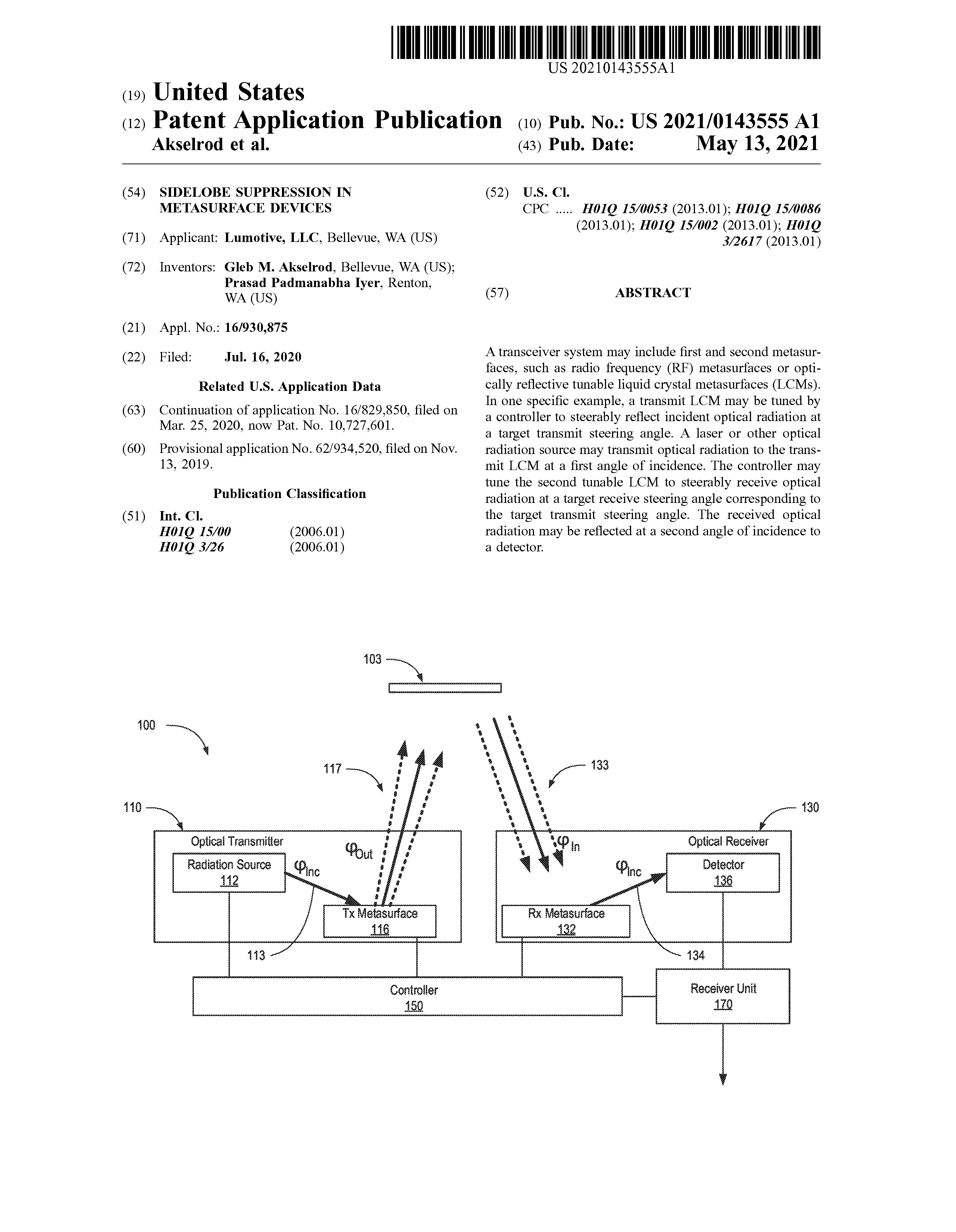
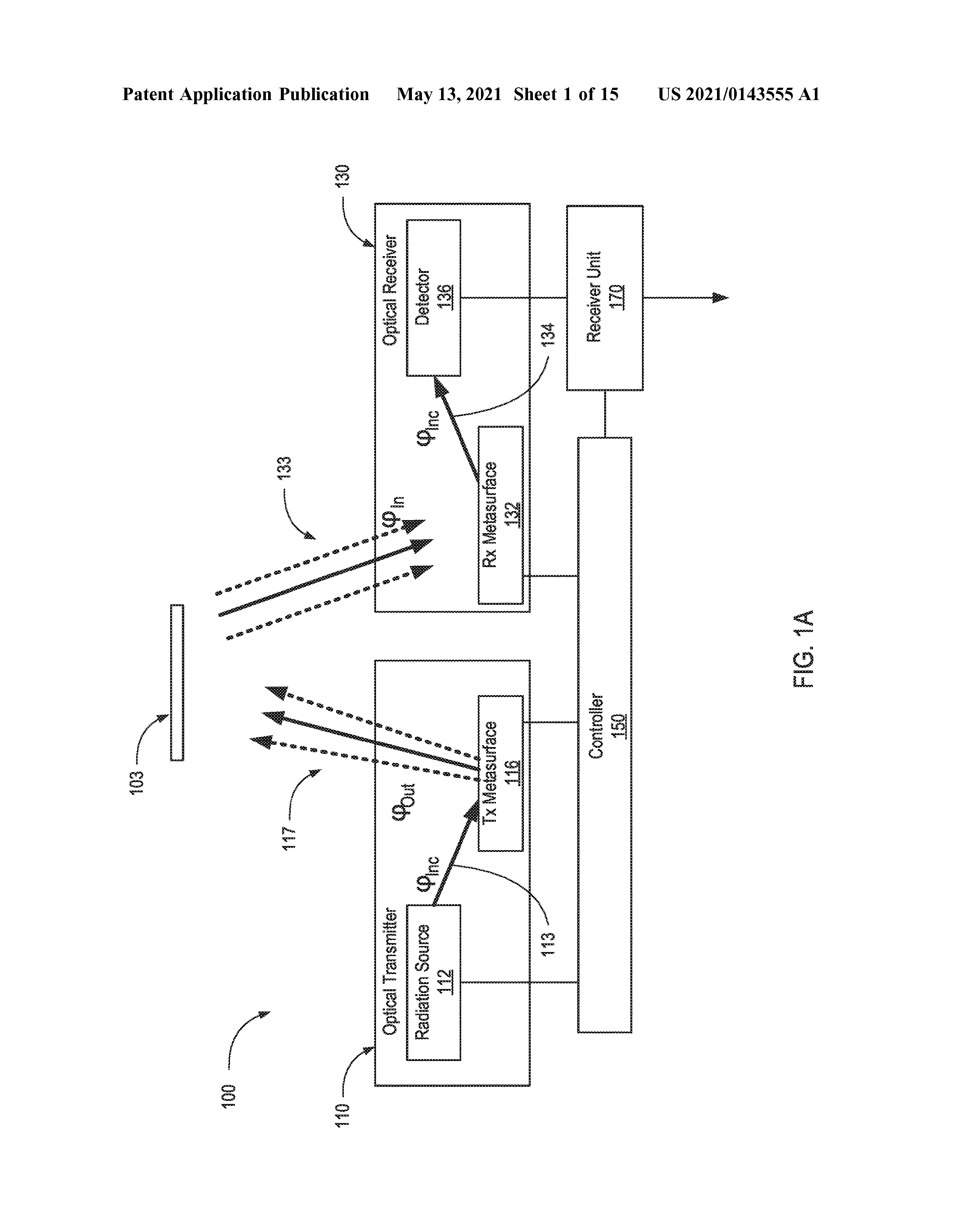
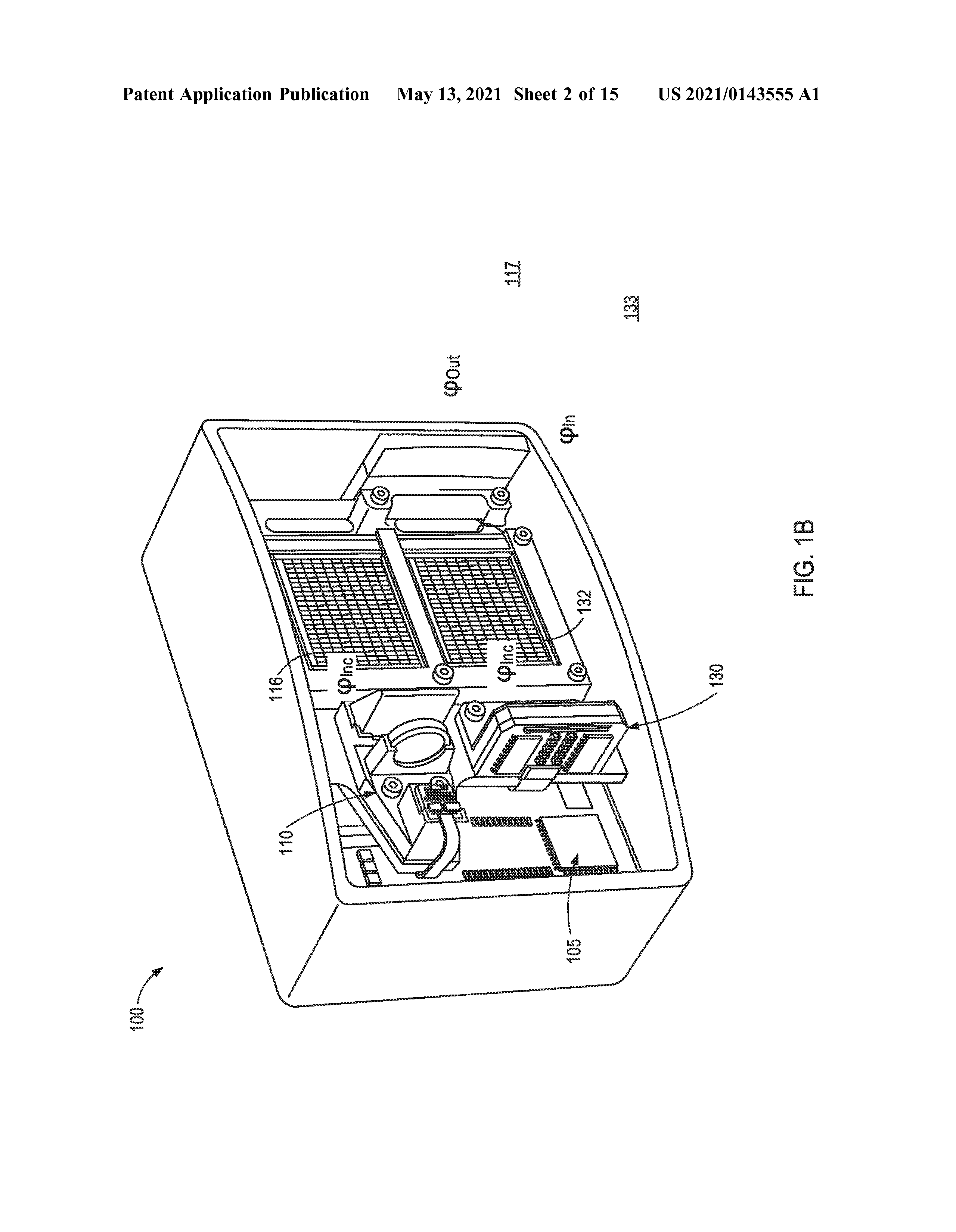
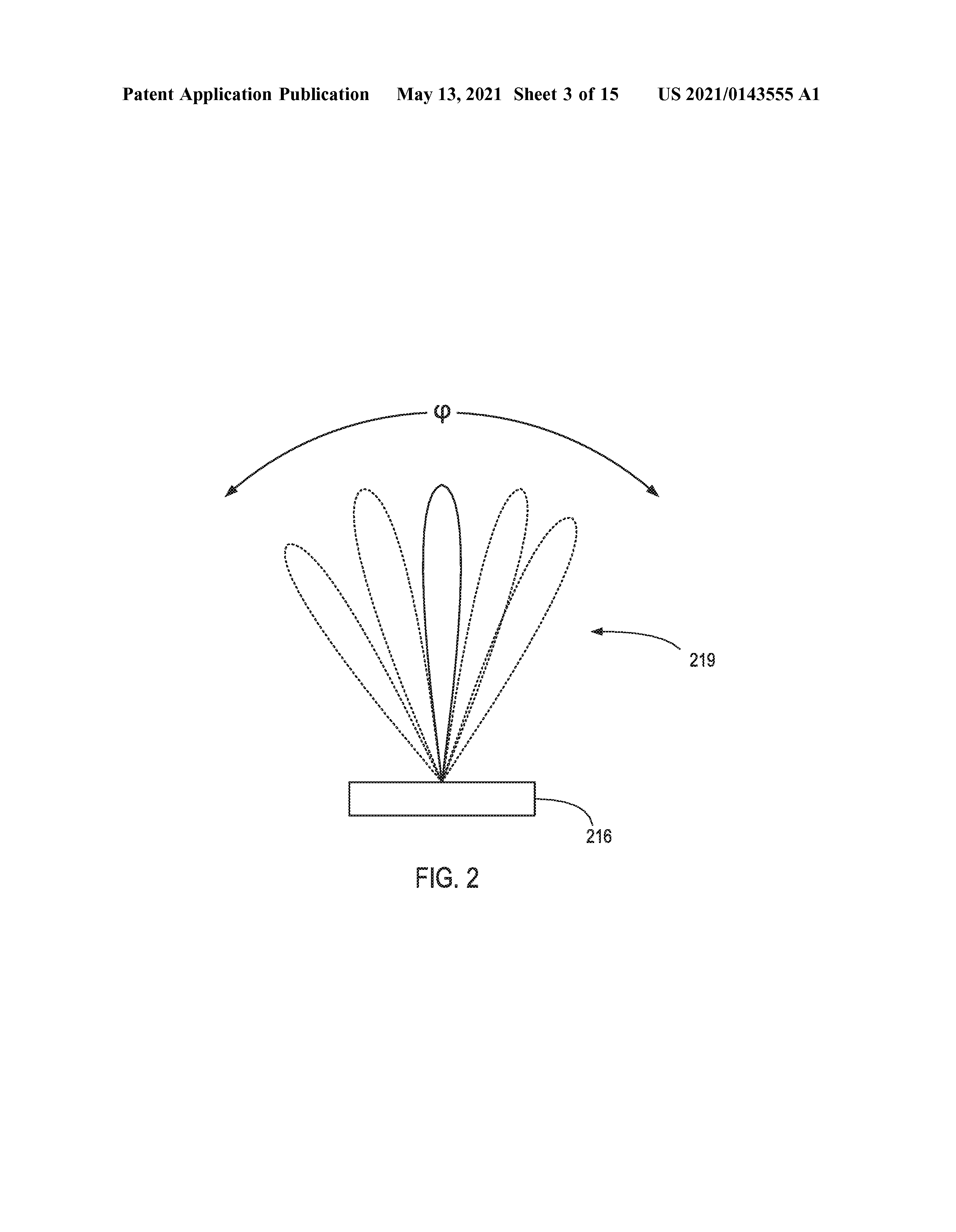
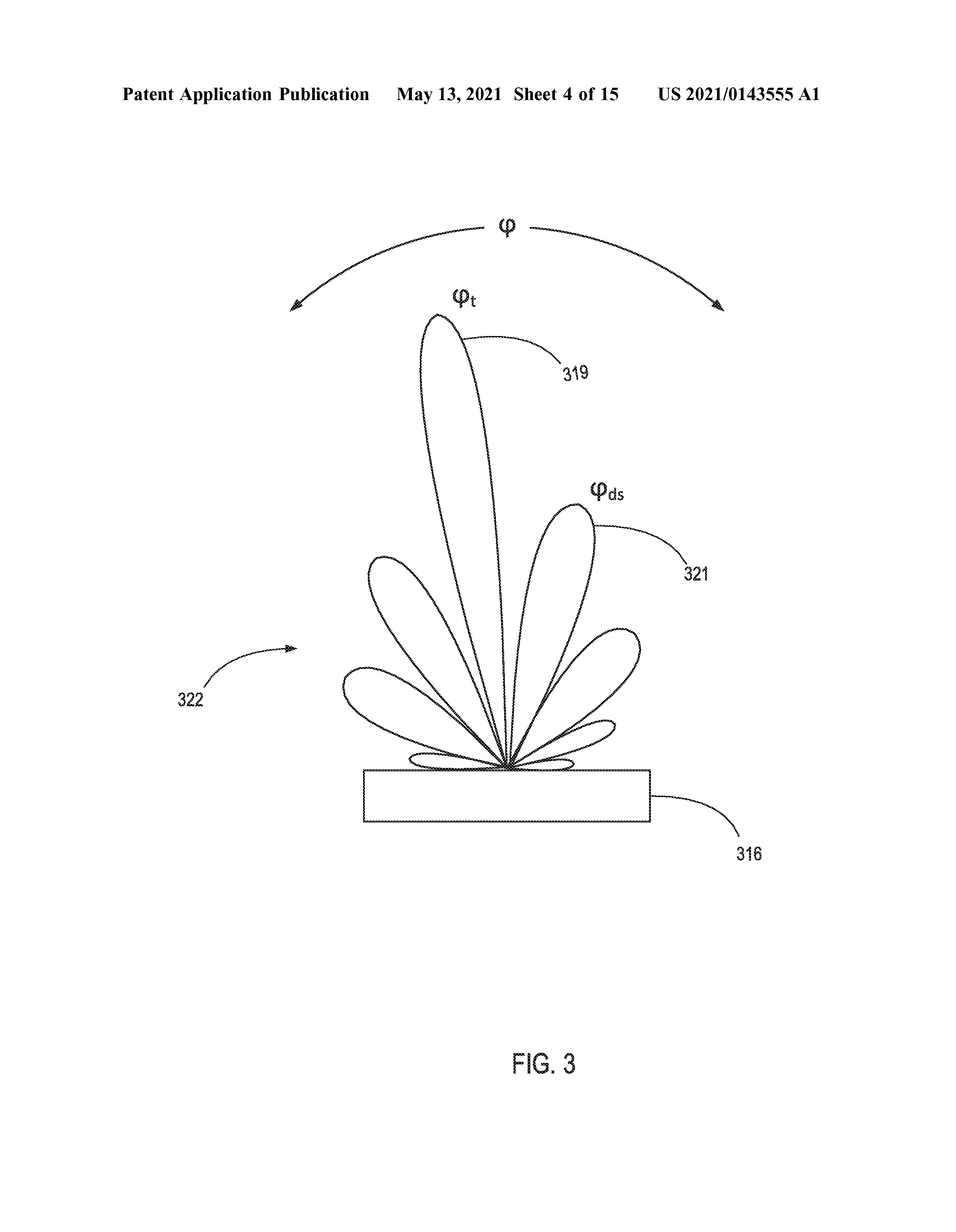
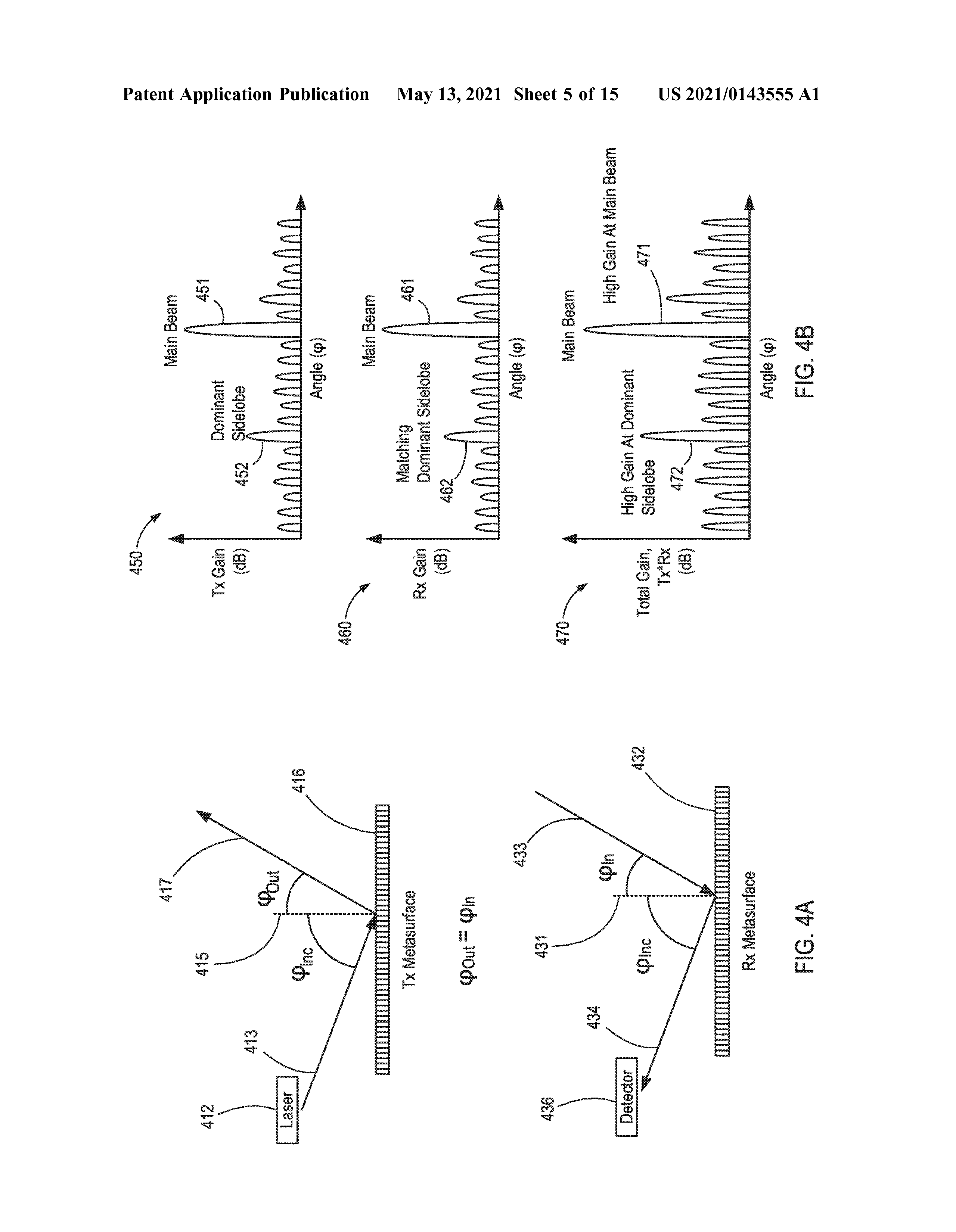
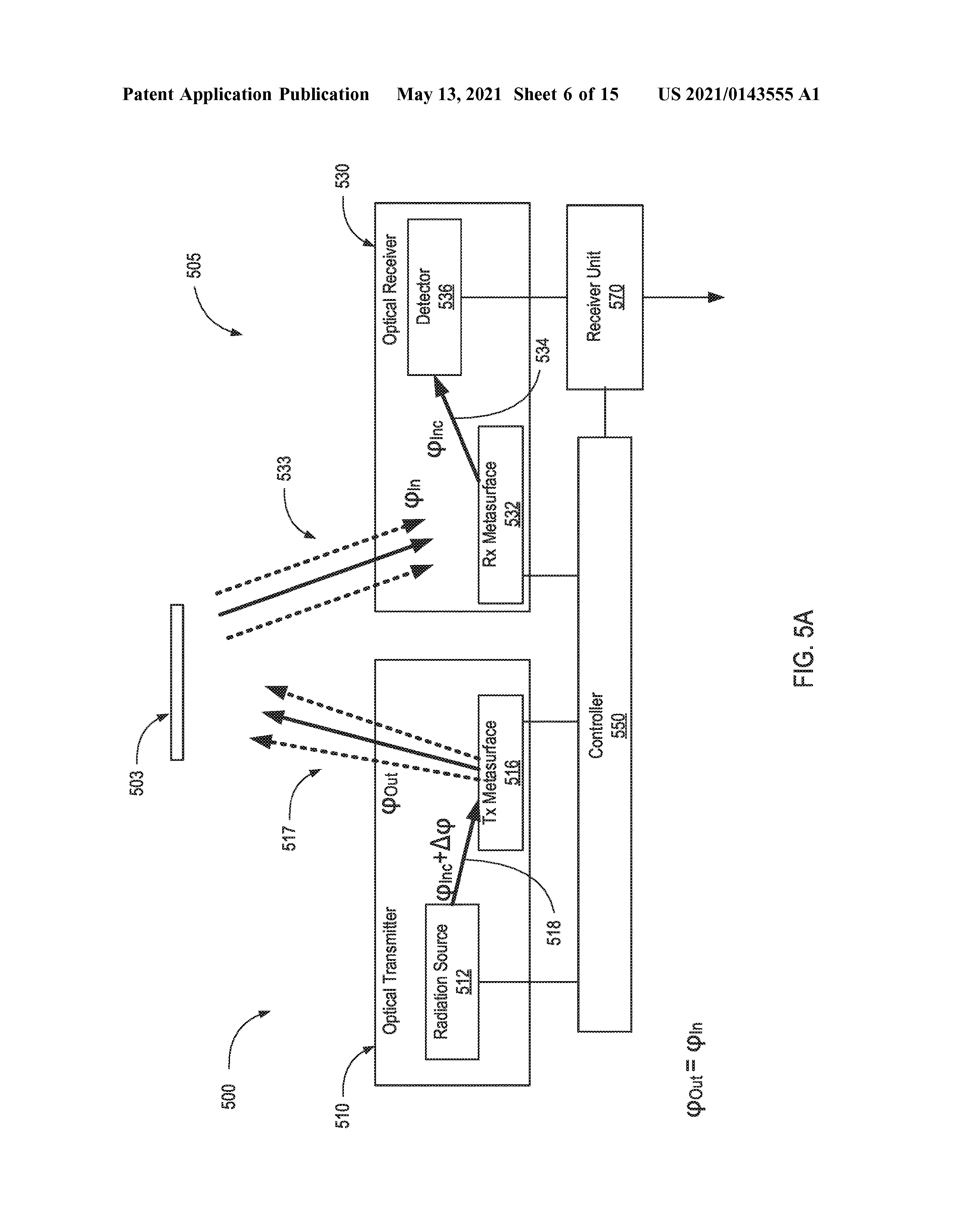
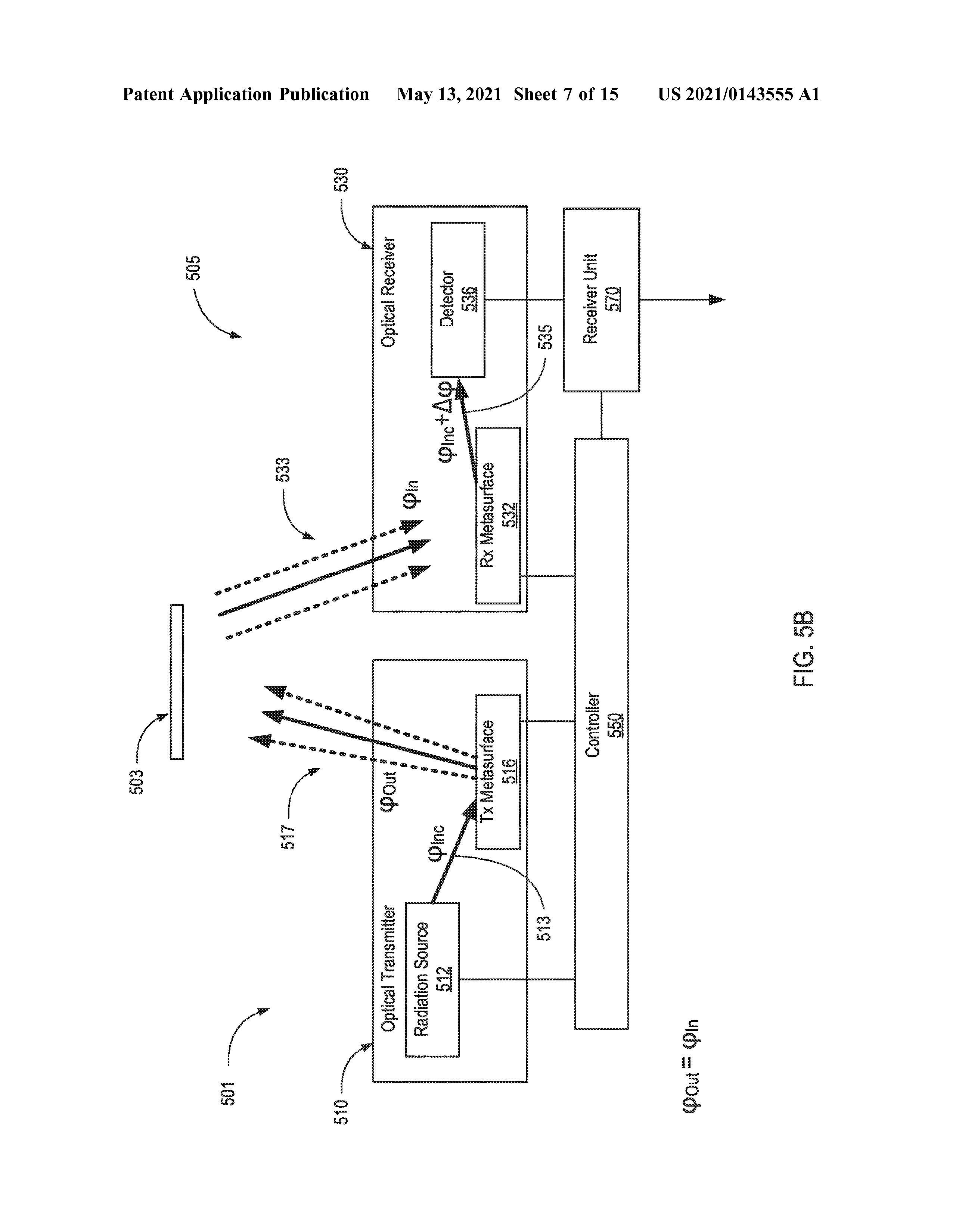
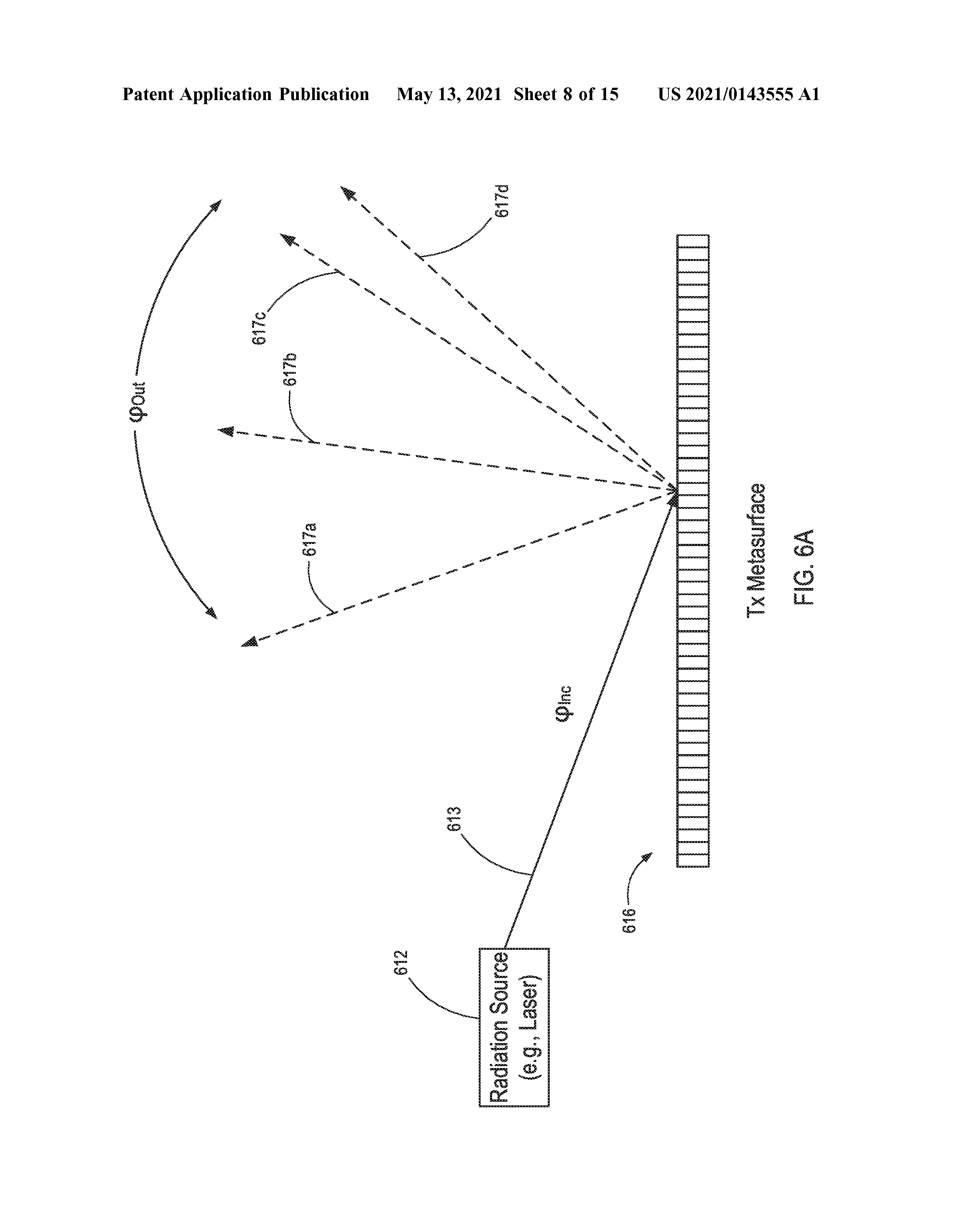
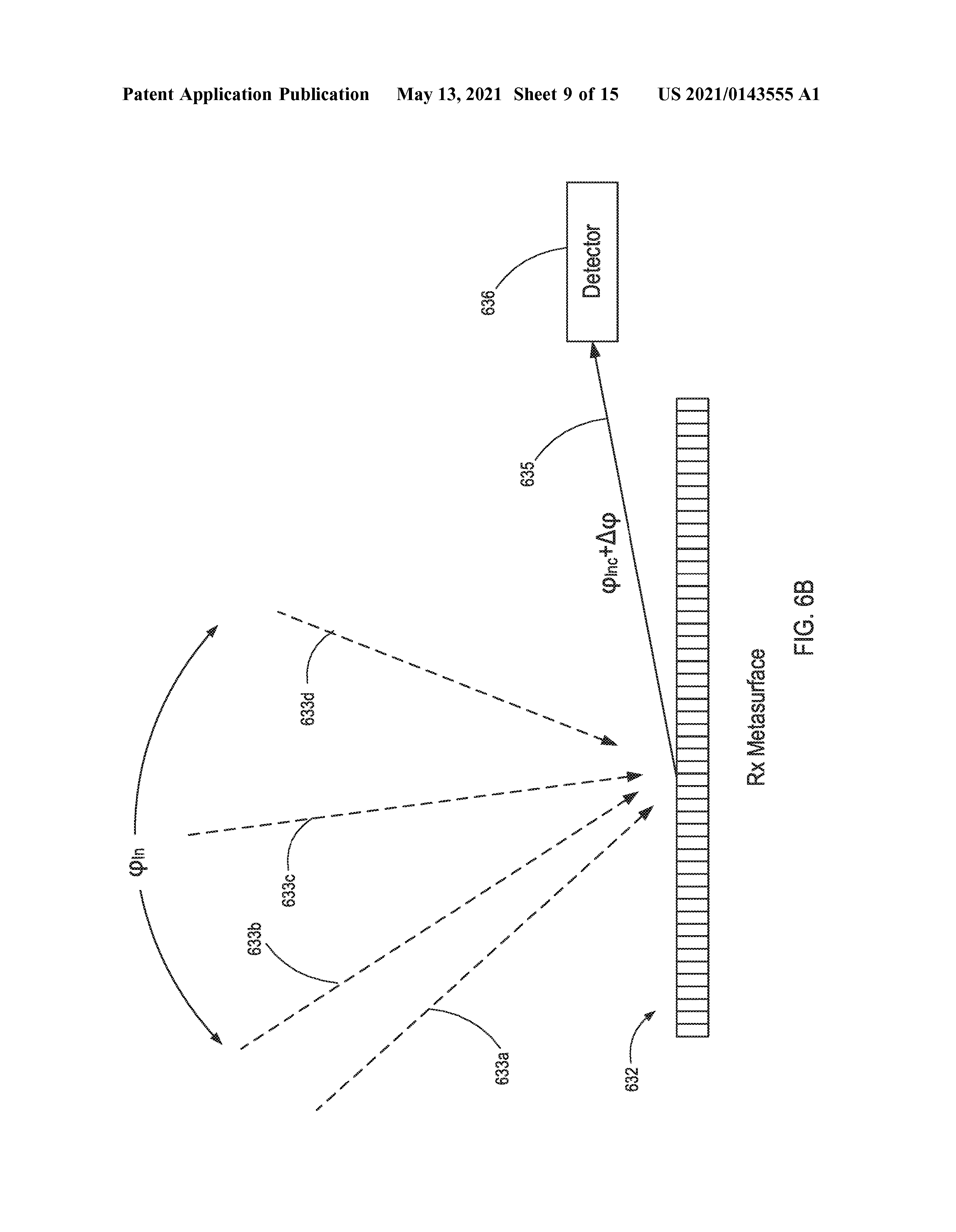
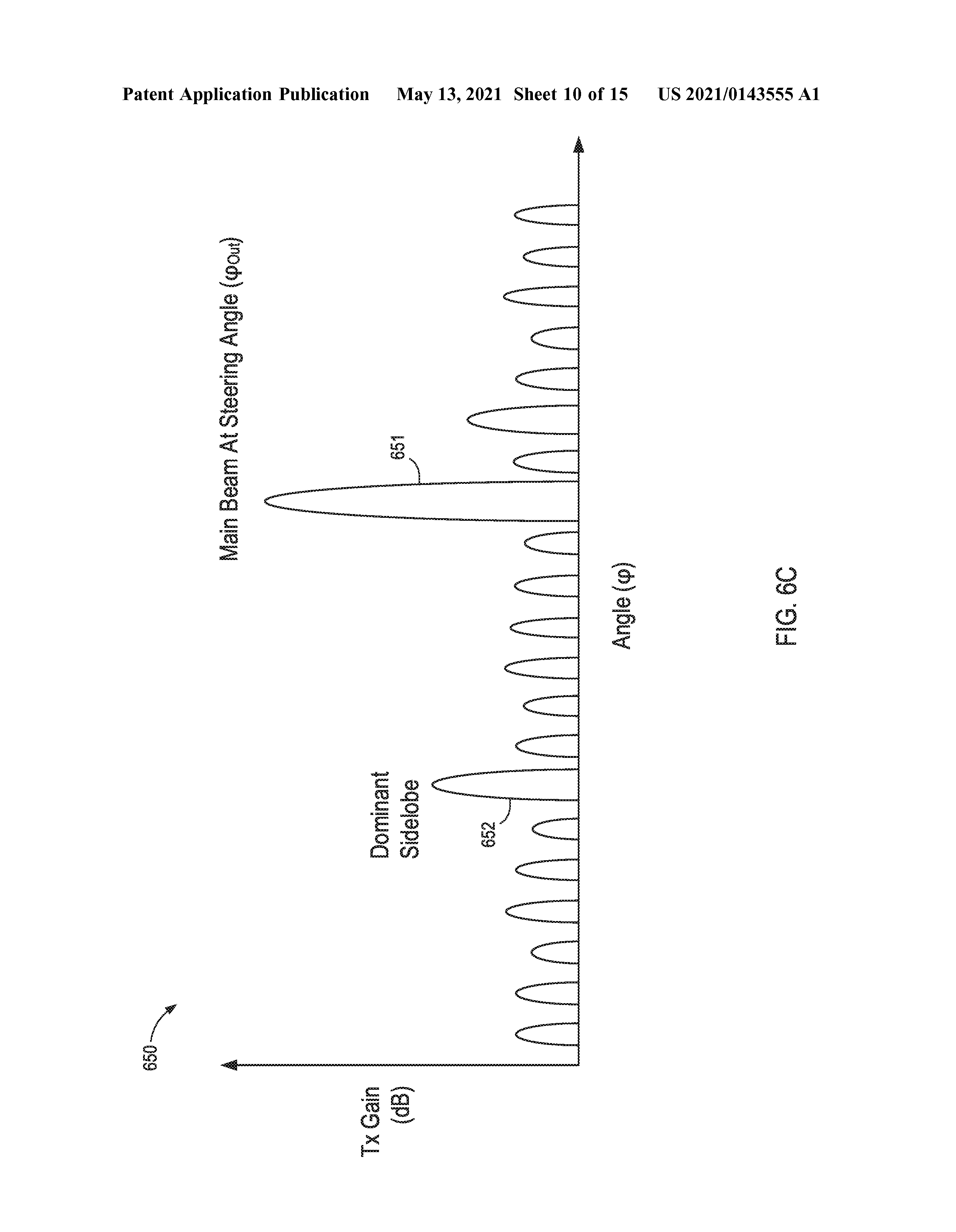
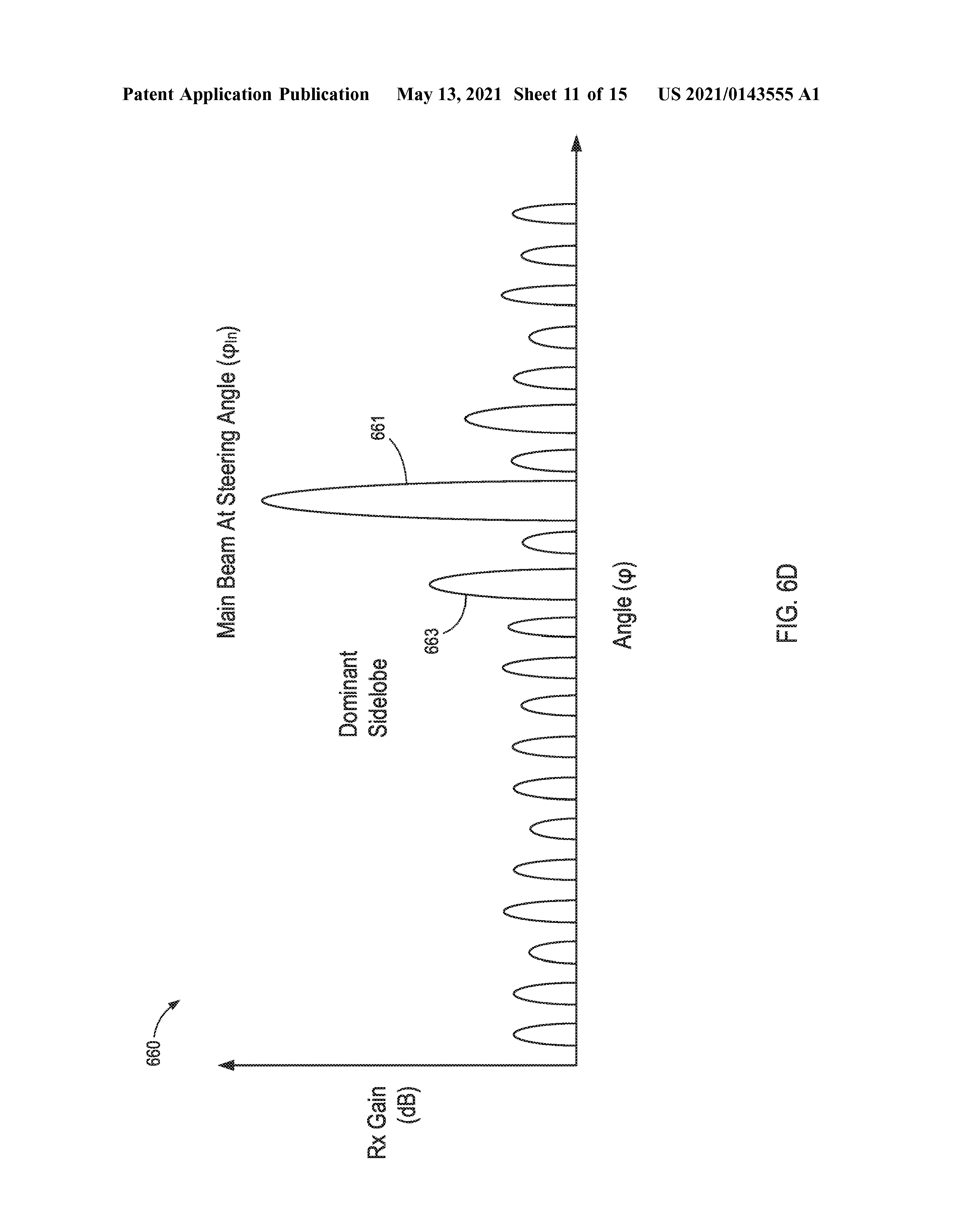
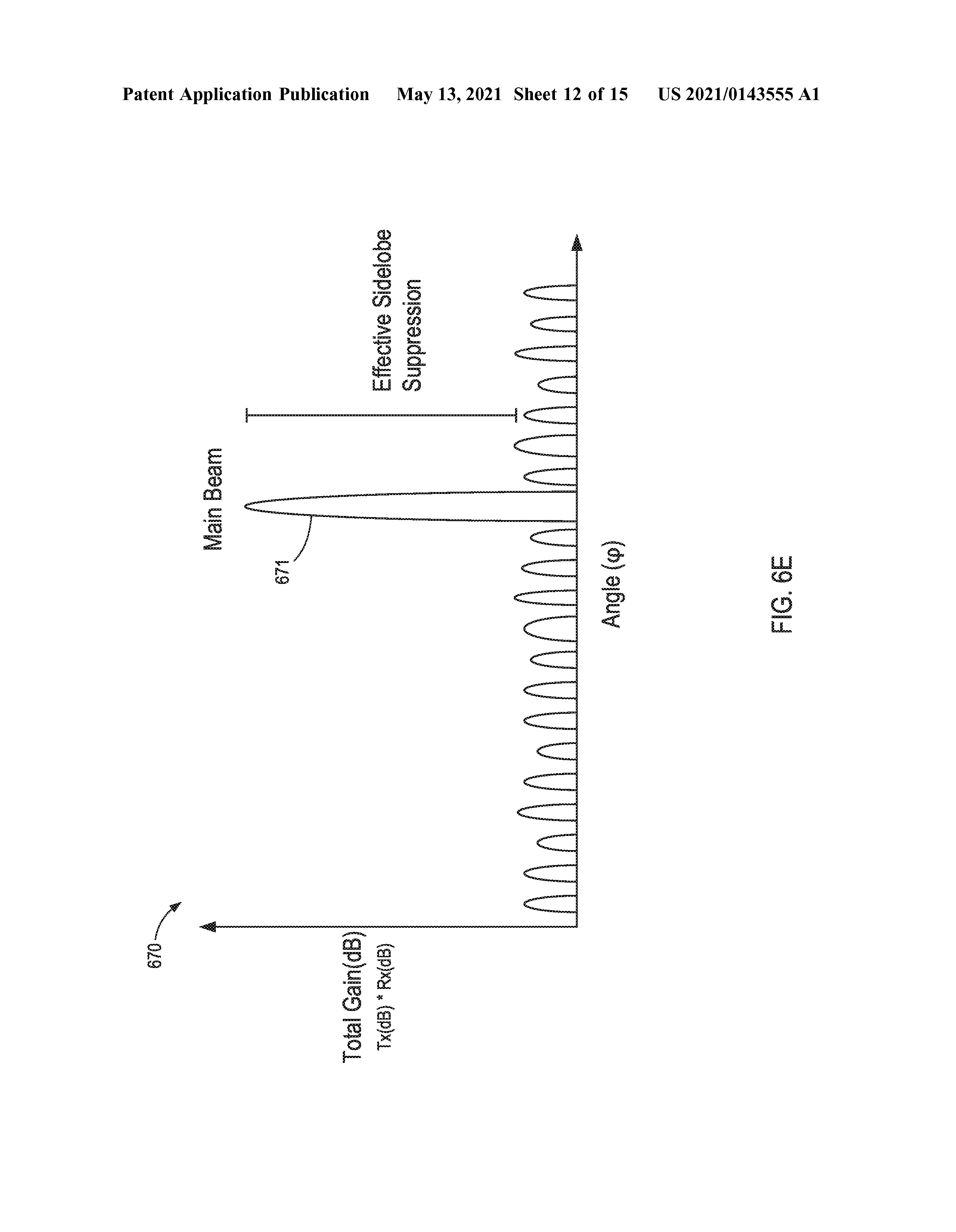
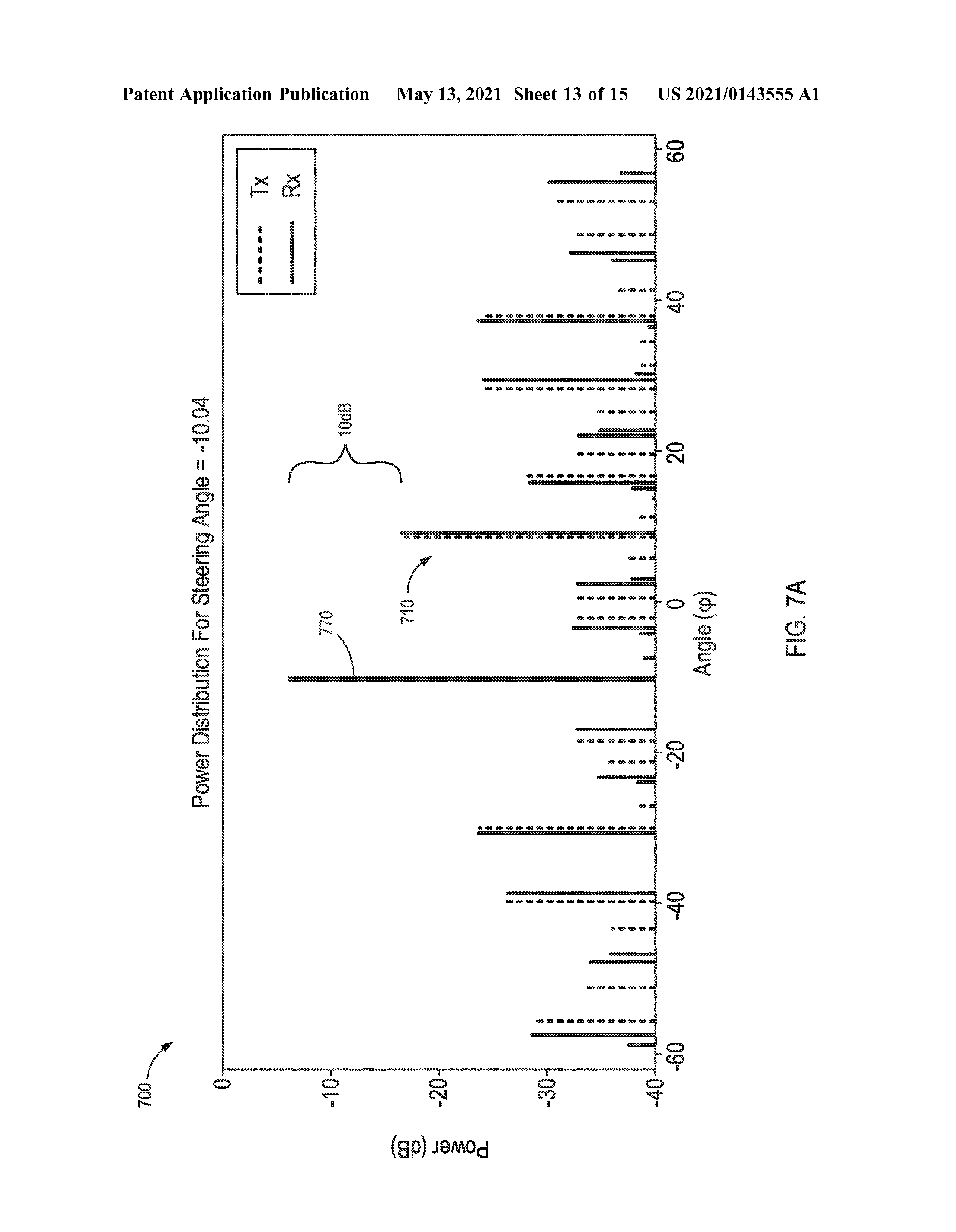
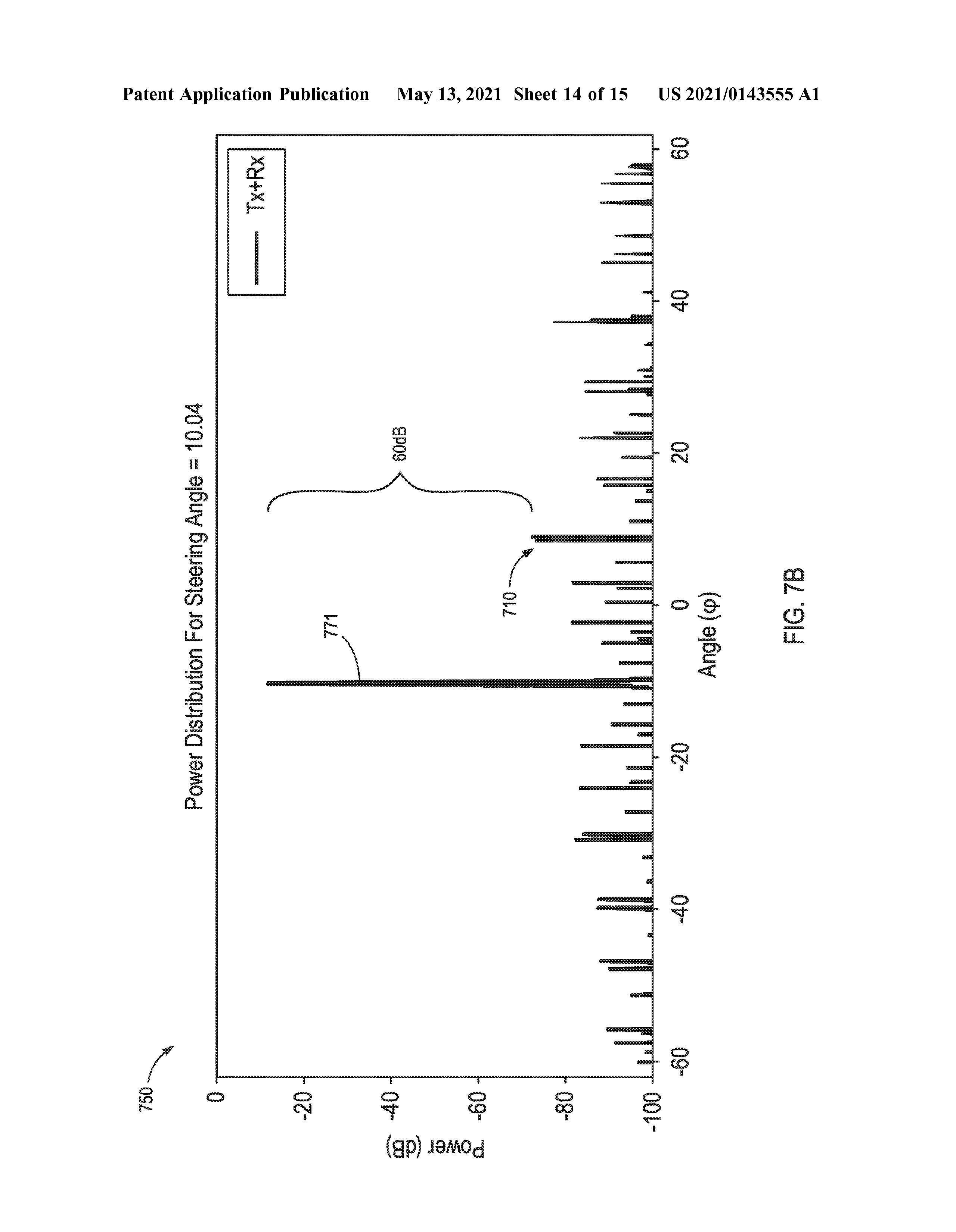
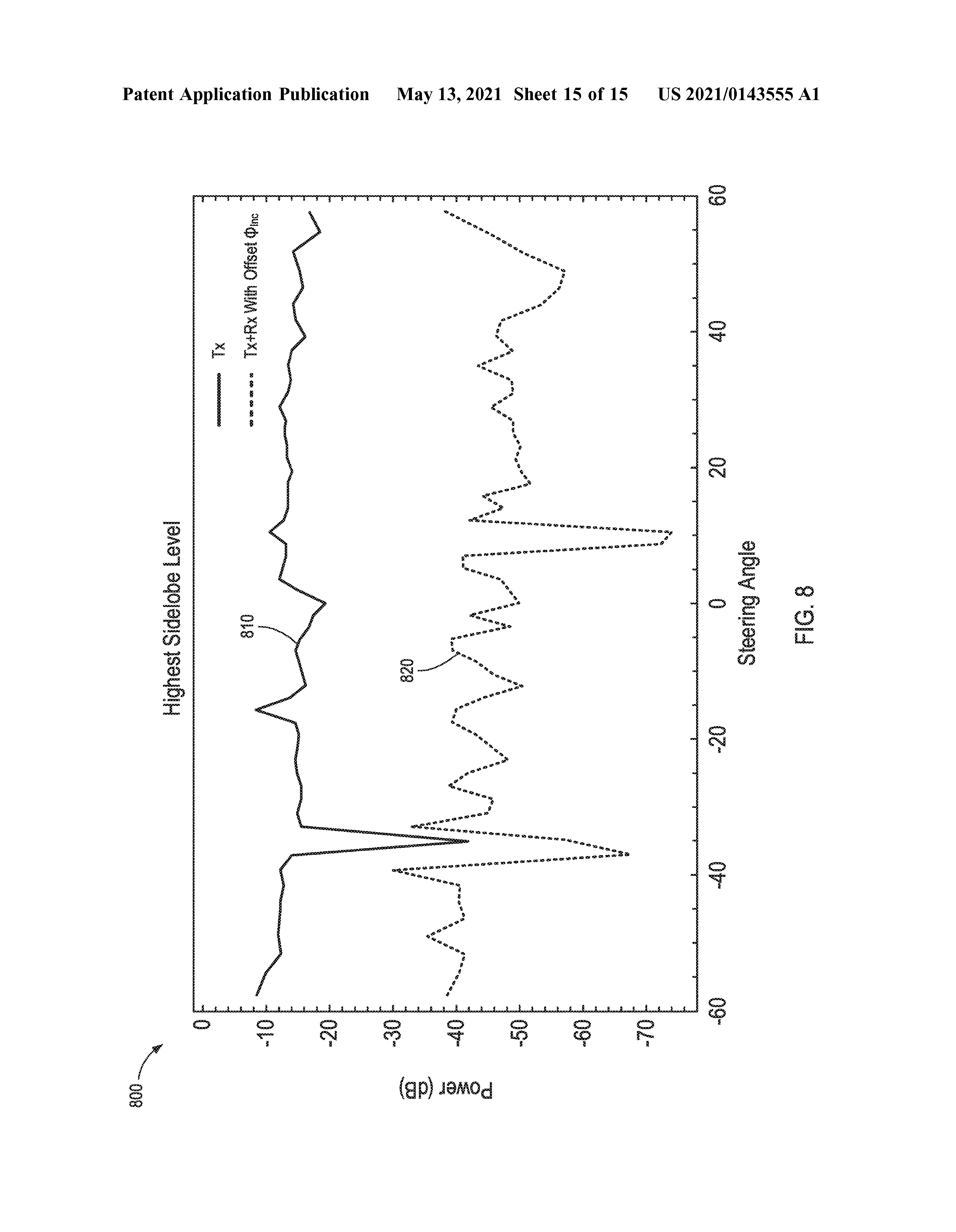
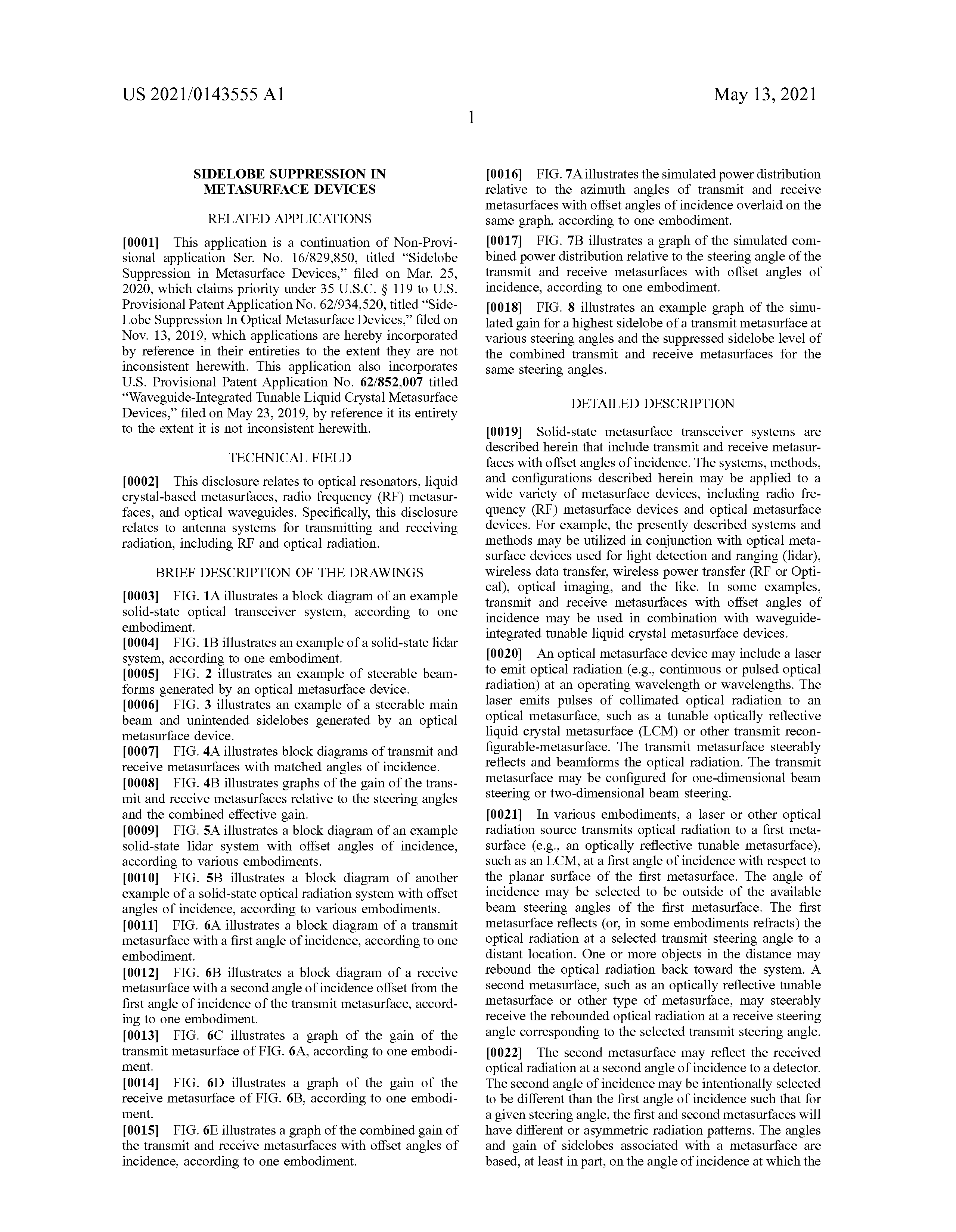
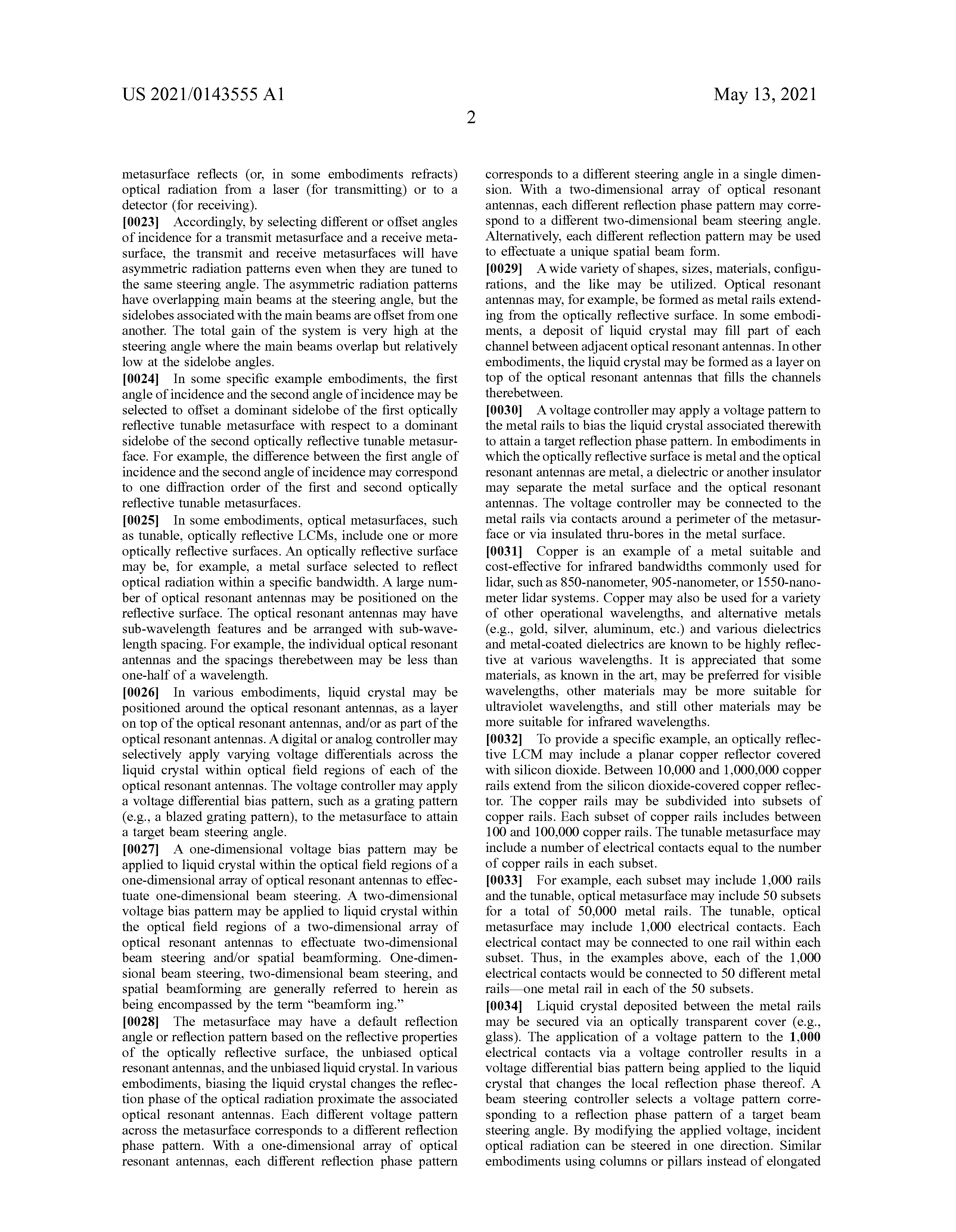
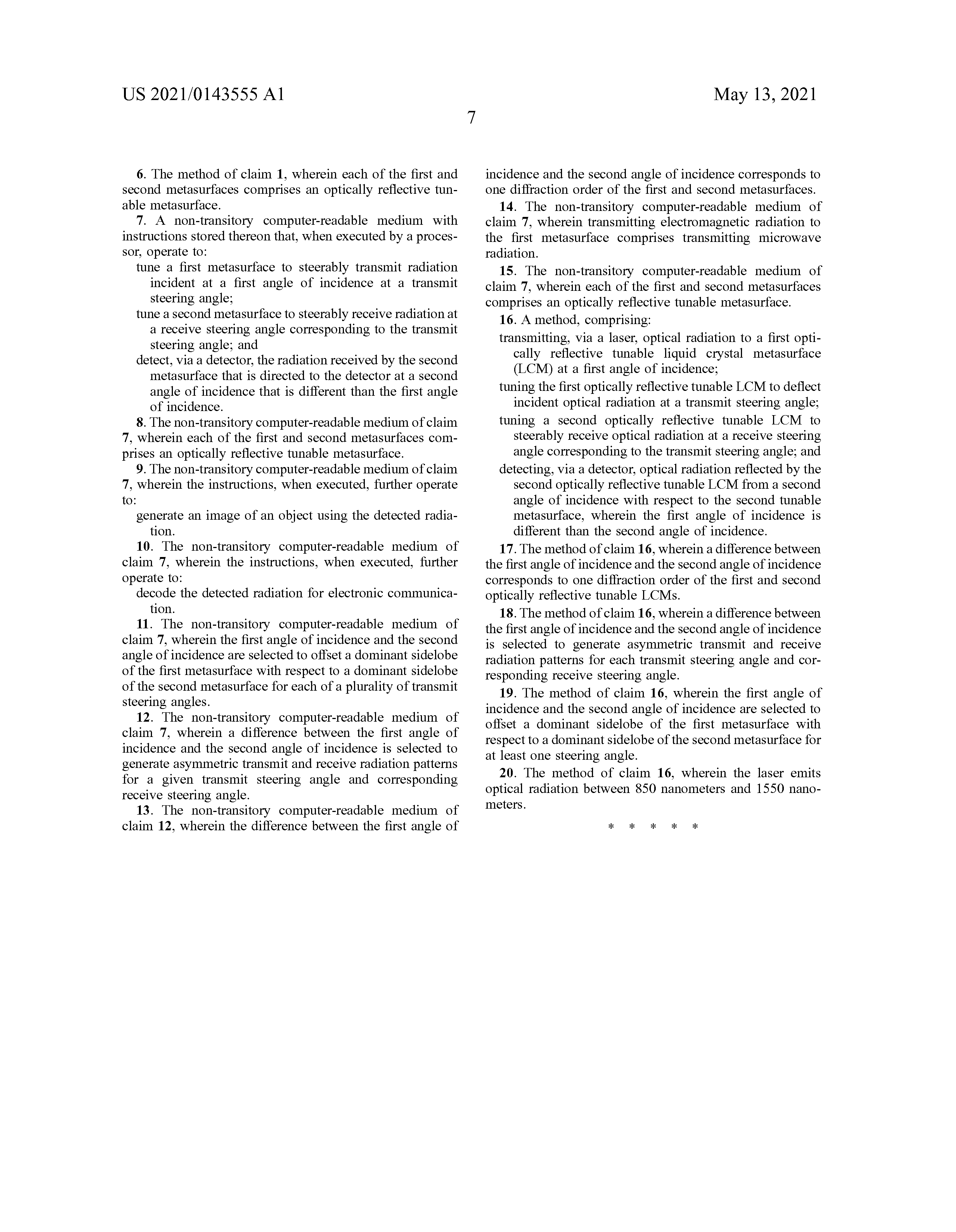
A transceiver system may include first and second metasurfaces, such as radio frequency (RF) metasurfaces or optically reflective tunable liquid crystal metasurfaces (LCMs). In one specific example, a transmit LCM may be tuned by a controller to steerably reflect incident optical radiation at a target transmit steering angle. A laser or other optical radiation source may transmit optical radiation to the transmit LCM at a first angle of incidence. The controller may tune the second tunable LCM to steerably receive optical radiation at a target receive steering angle corresponding to the target transmit steering angle. The received optical radiation may be reflected at a second angle of incidence to a detector.